
Remote Moiré Modulation in Twisted Trilayer Graphene for Future Electronics
Twisted trilayer graphene allows for remote electronic control of a decoupled layer, a breakthrough in moiré physics that could enable cleaner quantum devices.
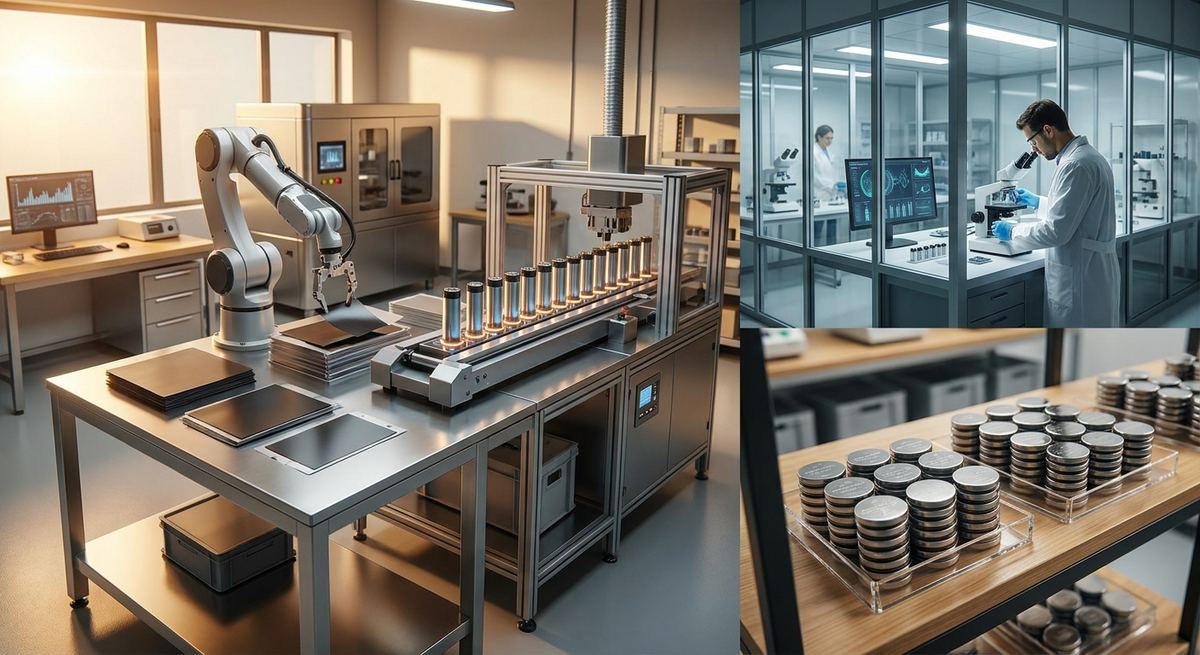
The energy storage industry is undergoing a massive transformation, and the days of traditional lithium-ion dominance are numbered. For the technically minded entrepreneur, starting a micro-factory to produce graphene-enhanced batteries represents one of the most lucrative and high-growth opportunities of the decade. This guide provides a comprehensive, practical roadmap to building a small-scale graphene battery manufacturing business, focusing on high-margin niche markets, exact startup costs, and step-by-step production processes.
To sell a premium product, you must first understand the underlying science that makes it superior. Traditional lithium-ion batteries face three major bottlenecks: thermal degradation, slow charging times, and limited cycle life. When a standard lithium battery charges quickly, internal resistance generates heat, which degrades the chemical components and creates a fire hazard.
Graphene, a single layer of carbon atoms arranged in a two-dimensional honeycomb lattice, solves these problems. By integrating graphene nanoplatelets into the battery's electrodes—typically as a conductive additive in the cathode or as a composite in the anode—you fundamentally alter the battery's performance. Graphene possesses extraordinary electrical and thermal conductivity. It allows electrons to flow with almost zero resistance, meaning the battery can charge up to five times faster than a standard lithium-ion cell without overheating.
Furthermore, graphene provides structural stability to the electrodes. Standard batteries lose capacity after 300 to 500 charge cycles because the electrodes physically expand and contract, causing them to crack. A graphene matrix holds the active materials together, extending the cycle life to 1,500 or even 3,000 cycles. For the consumer, this means a battery that charges in minutes, runs cooler, and lasts four times as long.
You might wonder how a small startup can compete with mega-factories owned by Tesla, Panasonic, or CATL. The simple answer is: you do not compete with them. Mega-factories are designed to produce millions of standardized cells (like the 18650 or 4680 formats) for electric vehicles and massive grid storage. Their business model relies on economies of scale, and they will not halt their production lines to fulfill an order of 5,000 custom-shaped batteries for a boutique drone manufacturer.
This creates a massive void in the market known as the high-mix, low-volume sector. Small producers can thrive by targeting niche industries that require specialized form factors, extreme performance characteristics, or custom voltage configurations. Customers in these niches are not looking for the cheapest battery; they are looking for the best battery, and they are willing to pay a 200 to 300 percent premium for graphene-enhanced performance. A well-run micro-factory operating out of a 2,000-square-foot space can generate between $500,000 and $1,500,000 in annual revenue by servicing these ignored segments.
Starting a micro-factory requires a specialized environment and precise machinery. You do not need a billion-dollar gigafactory, but you do need industrial-grade equipment. Here is a practical breakdown of the capital required to set up a small-batch pouch cell production line.
Facility Requirements: You will need a 1,500 to 2,500 square foot light industrial space. The most critical aspect of your facility is the dry room. Battery chemicals, particularly the electrolyte, react violently with moisture in the air. You must construct a climate-controlled room that maintains humidity below 1 percent.
Cost Breakdown:
Dry Room Installation and Dehumidification HVAC: $35,000
Vacuum Planetary Slurry Mixer (20 Liter capacity): $8,500
Roll-to-Roll Slot Die Coating Machine: $25,000
Calendering Roll Press (to compress coated electrodes): $12,000
Electrode Slitting and Cutting Machine: $6,000
Argon-Filled Glovebox (for electrolyte filling and sealing): $15,000
Ultrasonic Tab Welder: $4,500
Pouch Forming Machine: $3,500
Battery Formation and Testing System (512 channels): $8,000
Safety Equipment, Fume Hoods, and Tools: $12,500
Total Equipment and Facility Setup Cost: Approximately $130,000.
It is highly recommended to have $200,000 in liquid capital to cover the equipment, initial raw materials, facility deposits, and operational runway for the first six months.
As a battery manufacturer, you are assembling chemicals, not synthesizing them from scratch. You will not be making your own graphene; you will source it from specialized chemical suppliers.
The primary materials you need are:
Active Cathode Material: For a startup, Lithium Iron Phosphate (LFP) is the safest and most forgiving chemistry, though Lithium Nickel Manganese Cobalt (NMC) offers higher energy density. Cost: $15 to $25 per kilogram.
Graphene Nanoplatelets: You need highly conductive graphene powder to mix into your cathode slurry (typically making up 1 to 3 percent of the total weight). Source this from companies specializing in carbon nanomaterials. Cost: $50 to $150 per kilogram depending on purity.
Conductive Carbon Black: Used alongside graphene. Cost: $5 per kilogram.
Binder: Polyvinylidene fluoride (PVDF). Cost: $20 per kilogram.
Solvent: N-Methyl-2-pyrrolidone (NMP). Cost: $5 per liter.
Foils: Copper foil for the anode and Aluminum foil for the cathode. Cost: $10 to $15 per kilogram.
Electrolyte: LiPF6 dissolved in carbonate solvents. Cost: $25 per liter.
Separator Membrane and Aluminum Laminated Pouch Film: Approximately $3 per square meter.
Establish relationships with suppliers on platforms like Alibaba for initial small-batch orders, but transition to direct contracts with chemical manufacturers in North America or Europe as you scale to ensure strict quality control.
Battery manufacturing is essentially a high-tech baking process. Precision and cleanliness are your highest priorities. Here is the daily workflow for your micro-factory.
Step 1: Slurry Mixing
In your vacuum planetary mixer, combine the active material (e.g., LFP), conductive carbon, your graphene nanoplatelets, and the PVDF binder. Slowly add the NMP solvent. The vacuum removes all air bubbles. The resulting slurry should have the consistency of thick pancake batter.
Step 2: Coating
Transfer the slurry to the slot die coater. The machine rolls the aluminum or copper foil through a coating head, applying a perfectly uniform layer of slurry (usually around 100 microns thick). The foil then passes through an integrated oven to evaporate the NMP solvent, leaving a dry, solid coating.
Step 3: Calendering
The coated foil is passed through the heavy rollers of the calendering press. This compresses the material, increasing its density and ensuring perfect contact between the active materials and the foil current collector.
Step 4: Cutting and Stacking
The continuous roll of electrode is slit to the correct width and cut into rectangular sheets. You then interleave the anode sheets, separator membrane, and cathode sheets.
Step 5: Tab Welding and Pouching
Using the ultrasonic welder, attach aluminum tabs to the cathodes and nickel/copper tabs to the anodes. Place the stacked cell into a pre-formed aluminum laminated pouch and heat-seal three of the four sides.
Step 6: Electrolyte Filling and Final Seal
Transfer the unsealed pouches into the argon-filled glovebox. Inject the precise amount of liquid electrolyte. Apply a vacuum to the pouch to remove any gases, and heat-seal the final edge.
Step 7: Formation
The battery is fully assembled but holds no charge. It is placed on the testing rack for formation. This is a carefully controlled first charge and discharge cycle that creates the Solid Electrolyte Interphase (SEI) layer on the anode, which is critical for the battery's stability and lifespan.
Quality control is what separates a profitable business from a bankrupt one. A single catastrophic battery failure in the field can result in lawsuits and the destruction of your brand.
Your reject rate must be kept below 3 percent. After formation, every single cell must undergo aging. Store the batteries in a fireproof bunker for 7 to 14 days. After aging, measure the open-circuit voltage and internal resistance using an AC impedance meter. If the voltage has dropped, the cell has an internal micro-short and must be recycled.
You must also conduct destructive testing on a random sample from every batch. This includes the nail penetration test (driving a steel nail through a fully charged cell to ensure it does not catch fire), thermal runaway tests in an oven, and overcharge testing. Document all test results meticulously; your commercial clients will demand to see these reports.
To achieve high margins, you must target the right customers. Do not try to sell batteries for standard consumer electronics like power banks or laptops.
First Niche: FPV Drones and UAVs
First-Person View (FPV) drones and commercial Unmanned Aerial Vehicles require massive bursts of power. Standard batteries suffer from voltage sag under these heavy loads. Graphene batteries excel here, offering discharge rates of 100C or higher. Reach out directly to drone racing teams, cinematic drone operators, and agricultural drone manufacturers. Send them free sample packs. When their drones fly 10 percent faster and the batteries do not puff up from heat, they will become lifelong customers.
Second Niche: Custom E-Bikes and Electric Skateboards
Boutique builders of high-performance e-bikes and electric skateboards struggle to find batteries that fit their custom frames while delivering high torque. You can design custom pouch cell configurations specifically for their chassis.
Third Niche: Medical Devices and Robotics
These industries require ultra-reliable power sources with long cycle lives to minimize maintenance. High-end robotics companies are willing to pay top dollar for a battery that reduces the weight of their robot while doubling its operational lifespan.
Pricing strategy is critical. Let us look at the economics of producing a high-performance 4000mAh 4S (14.8V) graphene battery pack for the commercial drone market.
Direct Material Costs per pack: $9.50
Direct Labor and Overhead per pack: $6.50
Total Cost of Goods Sold (COGS): $16.00
The retail market price for a premium graphene 4S drone battery is between $65.00 and $85.00.
If you sell directly to consumers via your website, your gross profit is roughly $49.00 per unit.
If you sell wholesale to a drone manufacturer or hobby shop, your wholesale price should be $40.00, yielding a gross profit of $24.00 per unit.
If your micro-factory produces just 100 battery packs a day, and you sell them all at wholesale, your daily gross profit is $2,400. Operating 20 days a month, that equates to $48,000 in monthly gross profit, or $576,000 annually. This easily covers facility rent, loan repayments for equipment, insurance, and salaries for a small team of three technicians, leaving a healthy six-figure net profit for the founder.
Lithium and graphene batteries are classified as Class 9 Dangerous Goods. You cannot simply drop them in the mail. Navigating these regulations is a barrier to entry for many, which protects your business once you are established.
Before you can ship your batteries legally, they must pass UN38.3 certification. This is a series of rigorous safety tests including altitude simulation, extreme temperature cycling, vibration, shock, and external short circuiting. You will need to send a batch of your batteries to a certified third-party testing laboratory. The cost for UN38.3 certification is typically between $3,000 and $5,000 per battery model. Factor this into your R&D budget.
Once certified, you must use specialized hazmat shipping protocols. You will need to sign dangerous goods contracts with carriers like FedEx or UPS. Your packaging must meet strict UN guidelines, using specific fire-retardant materials and warning labels. Additionally, you must carry comprehensive product liability insurance, which will cost approximately $5,000 to $10,000 annually depending on your volume.
Once your micro-factory is running at maximum capacity (typically around 300 to 500 cells a day with manual transfer between machines), it is time to scale.
The transition from micro-factory to mid-sized manufacturer involves replacing manual labor with automation. The first upgrade should be an automated stacking machine ($40,000) to replace manual electrode interleaving, which is the biggest bottleneck. Next, invest in a continuous coating line with multi-zone drying ovens to speed up electrode production.
As revenue grows, hire a dedicated chemical engineer to optimize your slurry formulation. By tweaking the ratio of graphene to active material, you can develop proprietary chemistries tailored for specific clients, such as ultra-cold weather batteries for aerospace or ultra-fast charging packs for power tools.
Starting a graphene battery factory is not simple. It requires technical diligence, strict safety protocols, and upfront capital. However, by leveraging the superior physics of graphene, keeping overhead low with a micro-factory model, and aggressively targeting high-margin niche markets, you can build a highly profitable manufacturing business on the cutting edge of energy technology.
Serious about B2B integration? Test our premium Pulsed Electrical Resistive Carbon Heating turbostratic graphene in your lab. 100g sample packs available now.
Explore More
Twisted trilayer graphene allows for remote electronic control of a decoupled layer, a breakthrough in moiré physics that could enable cleaner quantum devices.

Learn a practical, polymer-free method for building a graphene FET using muscovite mica for clean transfer, assembly, and contact patterning.

New research reveals that graphene can accept energy from a 2D semiconductor in a highly selective, momentum-dependent way, paving the path for next-gen...