Acoustic Vibrational Exfoliation Accelerates Room-Temperature Graphene Production by Tenfold
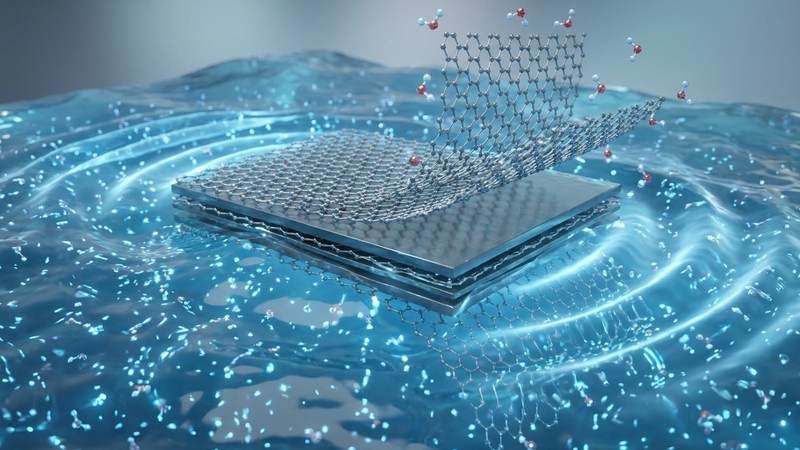
The commercialization of two-dimensional nanomaterials has historically been bottlenecked by prohibitive production costs and toxic chemical requirements, but a profound paradigm shift is currently emerging from the University of Birmingham. An interdisciplinary engineering team comprising Dr. Jason Stafford, Aadam Rabani, Faysal A. Khaleel, Fahad S. Al-Gburi, Irwing Ramirez, and Tomislav Friscic has successfully demonstrated a revolutionary room-temperature manufacturing protocol utilizing high-intensity vibrational exfoliation. Their pioneering methodology demonstrates an unprecedented capacity to accelerate production rates by an order of magnitude compared to legacy systems while entirely eliminating the reliance on hazardous solvents. This structural advancement fundamentally rewrites the economic viability equations for bulk graphene synthesis across global industrial supply chains. Industrial manufacturers have long sought a scalable pathway that balances high-yield output with stringent environmental compliance, and this acoustic resonance approach directly answers that critical market demand. The successful implementation of this fluid dynamic process represents a definitive leap forward in the scalable synthesis of advanced nanomaterials.
The empirical foundation for this manufacturing leap was formally established in the peer-reviewed literature, providing a rigorous technical basis for immediate industrial evaluation. The comprehensive research findings were published in the prestigious journal Small in April 2026 under the digital object identifier 10.1002/smll.202511652. Within this seminal paper, the engineering team outlines how applying intense acoustic vibrations to graphite precursors suspended in a benign aqueous medium yields pristine, atomically thin nanosheets. The documentation includes exhaustive validations utilizing advanced electron microscopy and spectroscopic analysis to confirm the structural integrity of the synthesized two-dimensional materials. Such rigorous peer-reviewed validation is absolutely essential for materials science companies looking to justify the capital expenditure required to transition away from entrenched legacy production lines. The publication serves as a comprehensive operational blueprint for translating complex laboratory fluid dynamics into commercially viable manufacturing protocols.
Protecting the intellectual property associated with this disruptive manufacturing process represents a crucial step toward widespread commercial deployment and licensing. Dr. Jason Stafford already holds twenty distinct patents in the engineering domain and serves as the primary inventor on a new patent application explicitly covering this high-throughput nanomaterial processing technique. The University of Birmingham Enterprise is currently managing the strategic details and commercialization pathways for this specific patent application. Securing robust intellectual property rights ensures that early adopters and industrial partners can invest confidently in scaling the vibrational exfoliation technology without the immediate threat of unlicensed replication. This strategic approach to commercialization signals a mature understanding of how breakthrough laboratory science must be packaged to survive the rigorous demands of the global advanced materials market. Corporate stakeholders rely heavily on such secure legal frameworks to justify massive infrastructural investments in next-generation manufacturing capabilities.
The Mechanics of High-Intensity Vibrational Exfoliation
Understanding the underlying physics of this breakthrough requires examining the precise fluid dynamic phenomena generated within a resonant acoustic mixing system. Unlike conventional mechanical agitation, which relies on localized impellers to generate shear forces, acoustic resonance transfers low-frequency, high-intensity acoustic energy uniformly throughout the entire liquid medium. Multiphase computational fluid dynamics simulations conducted by the research team revealed that this uniform energy distribution creates highly specific micro-mechanical actions upon the suspended graphite particles. The intense acoustic waves induce rapid pressure fluctuations that force the bulk crystalline structures to experience extreme mechanical stress without raising the ambient temperature of the reaction vessel. Maintaining a room-temperature environment throughout the exfoliation cycle drastically reduces the energy consumption profile of the facility while preventing thermal degradation of the delicate carbon lattices. This thermal stability is a critical operational advantage for facilities looking to minimize their overall carbon footprint and utility expenditures.
The precise mechanism of delamination observed during this process diverges significantly from the blunt force trauma associated with traditional milling or the localized cavitation bubbles of sonication. Microscopic analysis indicates that the high-intensity vibrations initially cause the rigid graphite particles to fold over at their terminal edges. This edge-folding phenomenon creates localized points of extreme structural vulnerability within the van der Waals forces that bind the individual atomic layers together. Once these edges are compromised, the continuous acoustic energy forces the bulk material to split into progressively thinner stratified layers within the aqueous suspension. This elegant mechanical peeling process preserves the enormous lateral dimensions of the resulting nanosheets, which is a critical quality metric for advanced electronic and composite applications. Retaining these large lateral dimensions ensures optimal electrical conductivity and mechanical reinforcement properties in the final commercial products.
Following the initial structural splitting, the transitional particles are subjected to immense strain rates generated by the acoustic waves propagating through the fluid phase. These extremely high strain rates act as the final catalyst to separate the few-layer stacks into pristine monolayer and few-layer graphene sheets. The uniform nature of the acoustic field ensures that every particle within the reactor experiences these optimal strain conditions simultaneously, leading to an exceptionally narrow and predictable particle size distribution. Predictability in dimensional output is perhaps the most highly valued characteristic for industrial buyers who require absolute consistency batch after batch. Consequently, this vibrational exfoliation technique essentially guarantees a level of quality control that has historically eluded bulk-scale top-down manufacturing approaches. Delivering a mathematically predictable yield profile allows manufacturers to sign strict commercial supply agreements with demanding downstream aerospace and automotive clients.
The scalability of resonant acoustic mixing represents another massive advantage over highly localized shear mixing architectures that suffer from dead zones within large-volume reactors. Because the acoustic energy operates at the resonant frequency of the entire mechanical system, the mixing intensity remains virtually identical regardless of whether the vessel holds one liter or one thousand liters. This linear scaling dynamic eliminates the need for complex, highly speculative redesigns of internal impeller geometries when moving from laboratory prototypes to full-scale industrial pilot plants. Manufacturers can therefore project their capital expenditure and operational costs with a much higher degree of accuracy when transitioning to this acoustic platform. The ability to seamlessly scale up production while maintaining the exact fluid dynamic parameters of the laboratory model is a transformative development for chemical process engineers. It drastically compresses the commercialization timeline by removing the engineering bottlenecks traditionally associated with volume expansion.
Overcoming the Limitations of Legacy Production Methods
The commercial graphene landscape has been heavily constrained by the inherent limitations and negative externalities associated with legacy top-down exfoliation methodologies. Traditional sonication techniques rely on the violent collapse of cavitation bubbles to rip graphite apart, a highly energetic process that notoriously damages the basal plane of the carbon lattice and introduces severe structural defects. Furthermore, sonication is notoriously difficult to scale because the ultrasonic waves attenuate rapidly as they travel away from the probe, creating vast zones of inactivity within larger industrial processing tanks. High-shear mixing attempts to solve this volume problem by utilizing massive rotor-stator assemblies, but these mechanical systems consume exorbitant amounts of electricity and frequently require multiple prolonged passes to achieve acceptable yields. By increasing production rates by up to a factor of ten, the newly developed acoustic resonance method completely shatters the throughput ceilings established by these older technologies. This massive acceleration in processing time directly correlates to higher facility profitability and vastly improved supply chain responsiveness.
The issue of chemical contamination remains one of the most persistent hurdles preventing the integration of exfoliated nanomaterials into highly sensitive medical and microelectronic applications. Ball milling, a ubiquitous industrial technique for particle size reduction, relies on the continuous collision of heavy metallic or ceramic media to crush the bulk precursor materials. Over extended processing cycles, these grinding media inevitably degrade, shedding microscopic particulate contaminants directly into the final graphene powder. This unavoidable cross-contamination fundamentally ruins the electrical conductivity and biological compatibility of the resulting product, rendering it useless for high-margin downstream applications. Vibrational exfoliation entirely bypasses this physical degradation problem by utilizing the fluid medium itself as the primary force vector, ensuring the final nanosheets remain exceptionally pristine and free of foreign metallic debris. Supplying an ultra-pure product opens access to lucrative emerging markets such as implantable biosensors and solid-state battery manufacturing.
Beyond physical contamination, the environmental footprint of conventional liquid-phase exfoliation has drawn intense scrutiny from regulatory bodies and sustainability advocates across the globe. Traditional processing heavily relies on massive volumes of harsh organic solvents, such as N-methyl-2-pyrrolidone or dimethylformamide, to match the surface energy of graphite and prevent the exfoliated sheets from immediately reaggregating. Procuring, handling, and eventually disposing of these toxic chemicals incurs massive operational costs and exposes manufacturing personnel to significant occupational health hazards. The solvent recovery systems required to capture and recycle these volatile organic compounds add layers of profound engineering complexity and massive capital expenses to any commercial facility. Eliminating these hazardous solvents from the production equation entirely removes a massive regulatory burden and aligns nanomaterial manufacturing with modern environmental, social, and governance mandates. This shift fundamentally derisks the regulatory compliance profile for massive multinational chemical corporations.
The economic implications of this technological pivot cannot be overstated for commodity chemical producers and advanced materials startups currently operating on razor-thin margins. Reducing the processing time by a full order of magnitude dramatically lowers the specific energy consumption required per kilogram of finished nanomaterial. This massive reduction in operational expenditure allows manufacturers to price their premium two-dimensional materials far more competitively against legacy carbon black or synthetic graphite additives. Lower market prices will inevitably stimulate downstream demand across sectors like automotive manufacturing, aerospace engineering, and grid-scale energy storage, where strict cost-to-performance ratios dictate material adoption. Ultimately, replacing slow, toxic, and energy-intensive processes with rapid, benign, room-temperature operations creates a highly lucrative economic moat for early adopters of this acoustic technology. The financial metrics surrounding acoustic exfoliation offer an incredibly compelling argument for immediate industrial integration and widespread commercial adoption.
Green Chemistry and the Role of Tannic Acid
The complete elimination of volatile organic compounds from the exfoliation process is made possible through the strategic application of benign, naturally occurring stabilizing agents. The University of Birmingham research team successfully utilized a simple aqueous solution modified with tannic acid to facilitate the exfoliation and stabilization of the atomic layers. Tannic acid is a highly abundant, naturally occurring polyphenol derived from renewable plant sources such as oak bark, making it incredibly inexpensive and globally accessible. When dissolved in water, the molecular structure of tannic acid interacts favorably with the hydrophobic surface of the graphite precursors through strong non-covalent interactions. This elegant biomimetic approach effectively lowers the surface tension of the water to perfectly match the energetic requirements needed to peel the carbon layers apart. Utilizing plant-derived chemistry effectively bridges the gap between high-performance materials engineering and stringent ecological stewardship.
The role of tannic acid extends far beyond merely facilitating the initial separation of the bulk crystalline structure during the acoustic bombardment. Once the high-intensity vibrations shear the individual layers away from the parent particle, the tannic acid molecules rapidly adsorb onto the freshly exposed basal planes of the nanosheets. This dense molecular coating provides robust steric hindrance and electrostatic repulsion, completely preventing the exfoliated layers from restacking back into bulk graphite under the influence of strong van der Waals forces. Maintaining this stable dispersion in a purely aqueous environment ensures that the final product boasts an exceptionally long shelf life, a critical logistical requirement for global shipping and warehousing. Manufacturers can now distribute highly concentrated, stable aqueous graphene slurries without the restrictive hazardous materials classifications associated with traditional solvent-based dispersions. This logistical advantage drastically lowers global freight costs and simplifies cross-border customs processing for international chemical distributors.
Sourcing processing chemicals from renewable biological feedstocks addresses a major supply chain vulnerability that currently plagues the advanced synthetic materials industry. The reliance on petroleum-derived organic solvents closely ties the production cost of legacy graphene to the highly volatile global crude oil market. By substituting these petrochemicals with widely available plant-derived polyphenols, producers can effectively insulate their operational expenditures from unpredictable macroeconomic energy shocks. Furthermore, the aqueous tannic acid effluent generated by this process is dramatically easier and cheaper to treat in standard industrial wastewater facilities compared to complex organic solvent waste streams. This fundamental shift toward genuine green chemistry principles ensures that the mass production of next-generation materials does not come at an unacceptable ecological cost. Future-proofing the supply chain against impending petrochemical regulations provides massive strategic value to corporate chemical producers looking decades into the future.
Expanding the Two-Dimensional Material Library
While the implications for carbon-based nanotechnology are profound, the true industrial value of this vibrational exfoliation technique lies in its proven material agnosticism. The researchers successfully demonstrated that their acoustic resonance system is equally adept at processing a diverse array of bulk inorganic precursors beyond standard graphite. By simply adjusting the operating parameters, the team effectively synthesized pristine nanosheets of hexagonal boron nitride, a highly sought-after material often referred to as white graphene due to its structural similarity. Hexagonal boron nitride possesses extraordinary thermal conductivity while remaining electrically insulating, making it an incredibly valuable dielectric component for advanced thermal management systems in high-power microelectronics. The ability to produce this exotic material at scale using the same equipment platform dramatically lowers the barrier to entry for thermal interface material manufacturers. Diversifying the product catalog without requiring entirely new manufacturing infrastructure is a massive victory for process engineers.
The methodology also proved highly effective for delaminating transition metal dichalcogenides, specifically molybdenum disulfide and tungsten disulfide, which are critical for next-generation semiconductor architectures. Unlike graphene, which famously lacks a natural bandgap, these transition metal dichalcogenides possess highly tunable direct bandgaps when isolated down to the monolayer level. This unique optoelectronic property makes them indispensable for the development of ultra-thin flexible logic circuits, advanced photodetectors, and high-efficiency photovoltaic cells. Historically, producing commercial quantities of pure molybdenum disulfide nanosheets required extremely slow and expensive chemical vapor deposition techniques that are completely unsuitable for bulk manufacturing. Unlocking a high-throughput, liquid-phase production route for these specific semiconducting nanomaterials could rapidly accelerate the commercialization of post-silicon electronic devices. Providing the semiconductor industry with a scalable source of these exotic materials removes a massive bottleneck in the global electronics supply chain.
The integration of these diverse two-dimensional materials into complex multi-functional composites represents the frontier of modern materials science and industrial engineering. Industrial designers frequently require a careful blending of highly conductive graphene networks with the lubricating properties of molybdenum disulfide to create advanced tribological coatings for aerospace components. Because this acoustic exfoliation technique processes all of these distinct materials in the exact same benign aqueous environment, creating perfectly homogenized hybrid dispersions becomes a trivial engineering task. Manufacturers can theoretically co-exfoliate multiple bulk precursors simultaneously within the same resonant acoustic mixer to produce highly customized, application-specific nanocomposite slurries in a single step. This unprecedented level of processing flexibility empowers chemical suppliers to offer highly specialized, tailored material solutions to their downstream clients without retooling their entire production line. Offering bespoke multi-material dispersions opens highly lucrative custom manufacturing contracts previously deemed technologically impossible.
Commercial Scaling and Intellectual Property Landscape
Transitioning a laboratory-scale breakthrough into a dominant industrial standard requires rigorous intellectual property protection and a clear strategic pathway toward commercial deployment. Dr. Jason Stafford brings a wealth of commercialization experience to this endeavor, possessing an impressive portfolio of twenty recognized patents in the advanced engineering sector. The specific patent application for this high-throughput nanomaterial processing technology is strategically managed by the University of Birmingham Enterprise, an entity highly experienced in navigating complex industrial licensing agreements. This robust legal framework provides major chemical manufacturers and advanced materials startups with the necessary confidence to commit substantial capital toward licensing and integrating the technology. Securing these exclusive operational rights allows progressive companies to establish a dominant market position before competing firms can adapt to the new economic realities of the graphene sector. Robust intellectual property portfolios act as essential defensive mechanisms ensuring heavy infrastructural investments retain their long-term value.
From a capital expenditure perspective, implementing resonant acoustic mixing infrastructure represents a highly attractive proposition for established chemical manufacturing facilities. The equipment required to generate low-frequency, high-intensity acoustic fields is already utilized in several niche pharmaceutical and aerospace mixing applications, meaning the supply chain for the core hardware is relatively mature. Retrofitting existing liquid-phase chemical plants with these acoustic reactors is significantly less expensive than constructing the custom high-temperature vacuum chambers required for chemical vapor deposition. Furthermore, the complete elimination of hazardous volatile organic compounds removes the necessity for explosion-proof electrical routing and incredibly expensive solvent recovery distillation columns. This streamlined infrastructure requirement drastically lowers the financial barrier to entry, allowing regional specialty chemical producers to enter the lucrative nanomaterials market. Lowering initial capital requirements democratizes advanced manufacturing and decentralizes the global supply chain for critical nanomaterials.
The overarching trajectory of the global two-dimensional materials market is heavily dependent upon solving exactly the types of bottlenecks addressed by this vibrational exfoliation method. As international regulatory bodies continuously tighten restrictions on toxic chemical usage and industrial carbon emissions, heavily polluting legacy manufacturing techniques will face severe financial penalties. Adopting a rapid, room-temperature, water-based processing methodology perfectly aligns commercial nanomanufacturing with strict global sustainability targets and corporate environmental governance frameworks. Industrial buyers are increasingly demanding comprehensive lifecycle assessments from their material suppliers, and products derived from green chemistry utilizing renewable stabilizers like tannic acid will command a significant premium. Ultimately, the successful commercialization of this acoustic resonance technology promises to permanently disrupt the supply dynamics of the entire advanced materials ecosystem. Companies that fail to transition away from legacy solvent-based extraction methods risk complete obsolescence in the rapidly modernizing industrial landscape.
FAQ
What exactly is high-intensity vibrational exfoliation and how does it function? High-intensity vibrational exfoliation is an advanced manufacturing technique that uses low-frequency acoustic resonance to separate layered bulk materials into ultra-thin nanosheets. Unlike traditional mechanical mixing that uses impellers, this process distributes powerful acoustic waves uniformly throughout a liquid medium. The intense vibrations cause the precursor particles, such as graphite, to fold at their edges and split apart under extreme mechanical strain. This process occurs entirely at room temperature, preserving the delicate atomic structure of the resulting two-dimensional materials. It essentially uses controlled fluid dynamics to peel microscopic layers apart without resorting to destructive blunt force.
How does this new acoustic method compare to traditional sonication or high-shear mixing? Traditional sonication and shear mixing are widely used but suffer from significant efficiency and scalability limitations in commercial industrial settings. Sonication relies on localized cavitation bubbles that frequently damage the material structure and cannot easily scale to massive industrial volumes. Shear mixing requires massive amounts of electrical energy to turn heavy rotor-stator assemblies and generally yields a highly inconsistent particle size distribution. The vibrational exfoliation method developed at the University of Birmingham increases production speeds by up to a factor of ten compared to these legacy systems. Furthermore, it achieves this massive throughput increase while utilizing significantly less energy and maintaining exceptional product quality control.
Why is the substitution of volatile organic solvents with tannic acid and water considered a major industrial breakthrough? Historically, producing high-quality graphene dispersions required suspending the carbon material in highly toxic, expensive, and heavily regulated volatile organic solvents. The recent research completely replaces these hazardous chemicals with a simple mixture of standard water and tannic acid, a natural plant derivative. Tannic acid effectively lowers the surface tension of the water and coats the newly exfoliated nanosheets to prevent them from clumping back together. This transition to a benign aqueous environment eliminates immense occupational health hazards and drastically reduces commercial waste disposal costs. It represents a massive leap forward for green chemistry in the advanced nanomaterials manufacturing sector.
What other advanced nanomaterials can be produced using this specific acoustic resonance technology? While graphene remains a primary focus, the acoustic resonance technology is highly versatile and capable of exfoliating a wide array of inorganic bulk precursors. The researchers successfully utilized the exact same equipment to produce atomically thin layers of hexagonal boron nitride, a crucial material for advanced thermal management applications. They also successfully delaminated transition metal dichalcogenides, including molybdenum disulfide and tungsten disulfide, which are vital for next-generation flexible semiconductors. This remarkable material agnosticism allows chemical manufacturers to produce an entire catalog of diverse two-dimensional materials using a single centralized hardware platform. Such operational flexibility is incredibly rare and highly valuable in the rapidly evolving specialty chemicals market.
How is the intellectual property for this vibrational exfoliation process being strategically managed? Protecting the commercial rights to this disruptive manufacturing technology is a critical priority for the research team and their parent academic institution. Dr. Jason Stafford, who already possesses twenty distinct patents in engineering, is listed as the primary inventor on a newly filed patent application covering this exact methodology. The strategic commercialization and licensing of this intellectual property are being actively managed by the University of Birmingham Enterprise. This formalized legal structure ensures that industrial partners can safely license the technology and invest heavily in commercial scaling without fearing immediate intellectual property theft. It provides a clear, legally secure pathway for transferring this academic breakthrough directly onto the global factory floor.
Conclusion
The successful demonstration of room-temperature vibrational exfoliation by the University of Birmingham engineering team marks a definitive turning point in the commercialization of two-dimensional nanomaterials. By fundamentally redefining the mechanical approach to liquid-phase exfoliation, this process entirely circumvents the historical compromises between production volume, material quality, and environmental sustainability. The ability to accelerate manufacturing throughput by an order of magnitude while simultaneously eliminating hazardous organic solvents completely alters the economic calculus for bulk nanomaterial production. As heavy industries continuously seek stronger, lighter, and more conductive materials to meet modern engineering challenges, scalable and clean production methods become absolutely indispensable. The transition from heavily polluting legacy systems to elegant acoustic resonance technologies reflects a maturation of the entire nanotechnology sector. Adopting such advanced methodologies ensures the steady supply of premium materials necessary for the next generation of technological innovation.
Moving forward, the rapid industrial adoption of this patented methodology will likely catalyze an unprecedented acceleration in downstream application development across multiple high-tech sectors. With the cost barriers and supply chain bottlenecks effectively mitigated, engineers can freely incorporate premium graphene, hexagonal boron nitride, and transition metal dichalcogenides into everyday commercial products. The strategic management of the intellectual property by the University of Birmingham Enterprise ensures a structured and orderly deployment of this technology into the global marketplace. Ultimately, harnessing the power of acoustic fluid dynamics and green chemistry provides a robust blueprint for the sustainable future of advanced materials manufacturing. The era of incredibly expensive, highly toxic nanomaterial synthesis is rapidly drawing to a close, paving the way for ubiquitous two-dimensional material integration. The global supply chain stands on the precipice of a massive transformation driven entirely by acoustic resonance.
Evaluate Our Quality
Serious about B2B integration? Test our premium Pulsed Electrical Resistive Carbon Heating turbostratic graphene in your lab. 100g sample packs available now.