
A New Era of Graphene Engineering: Pre-Designing Twist Angles on Demand
Researchers have developed a breakthrough method for growing twisted bilayer graphene with pre-designed angles, a key step toward manufacturable quantum...
The industrial scaling of two-dimensional materials has long been constrained by a persistent bottleneck at the exfoliation stage, where yield, purity, and environmental sustainability rarely align. A transformative paradigm shift has now emerged from the Department of Mechanical Engineering at the University of Birmingham, led by a research consortium comprising Dr. Jason Stafford, Aadam Rabani, Faysal A. Khaleel, Fahad S. Al-Gburi, Irwing Ramirez, and Tomislav Friscic. This engineering collective has successfully demonstrated a groundbreaking technique for mass-producing high-quality graphene and other nanomaterials at room temperature using a highly advanced vibrational exfoliation mechanism. By leveraging resonant acoustic mixing, their methodology sidesteps the severe thermal and chemical requirements that have historically plagued commercial synthesis protocols. The resulting process achieves production rates up to an order of magnitude higher than conventional liquid-phase extraction techniques while operating entirely within a benign aqueous environment. Such an advancement signals a critical inflection point for the advanced materials sector, offering a viable pathway to decouple high-throughput nanomaterial manufacturing from toxic solvent dependencies.
For over a decade, commercial producers of atomically thin carbon frameworks have relied heavily on a handful of well-documented but inherently flawed top-down extraction methodologies. Sonication, perhaps the most ubiquitous technique in laboratory and early-stage industrial settings, relies on the phenomenon of acoustic cavitation to strip layers from bulk graphite. While effective at producing high-quality flakes, sonication suffers from severe scalability issues, immense energy consumption, and an unavoidable reliance on harsh organic solvents to stabilize the resulting dispersions. Similarly, high-shear mixing utilizes intense fluid mechanical forces generated by rapidly spinning rotor-stator assemblies to physically tear graphite apart. This shear-based approach scales slightly better than sonication but frequently results in highly fragmented, structurally compromised flakes with broad size distributions that are suboptimal for advanced electronic applications. Unfortunately, the abrasive nature of ball milling introduces significant structural defects and high levels of metallic contamination from the milling media itself, further eroding the economic viability of these legacy techniques due to slow processing times and immense capital expenditure for downstream waste management.
The Birmingham team circumvented these traditional mechanical limitations by developing a sophisticated approach based on high-intensity vibrational exfoliation. At the core of this methodology is a resonant acoustic mixing apparatus that applies low-frequency, high-amplitude mechanical energy directly to a liquid medium containing bulk material precursors. Unlike sonication, which relies on localized and highly chaotic micro-bubble implosions, resonant acoustic mixing generates a uniform and highly controlled field of acoustic energy throughout the entire reaction vessel. This uniform energy distribution ensures that every particle of graphite within the suspension experiences consistent mechanical forces, thereby drastically narrowing the size distribution of the resulting nanomaterial flakes. The vibrational energy essentially forces the liquid medium to act as a highly dynamic wedge, penetrating the weak van der Waals forces that bind the individual atomic layers of the bulk crystal together. Because the process operates efficiently at standard room temperature, it preserves the pristine hybridized carbon lattice structure without inducing the thermal degradation commonly associated with aggressive shear or localized cavitation hotspots. Consequently, manufacturers can achieve theoretical yields approaching ten times those of legacy methods without sacrificing the fundamental electronic or mechanical properties of the extracted nanosheets.
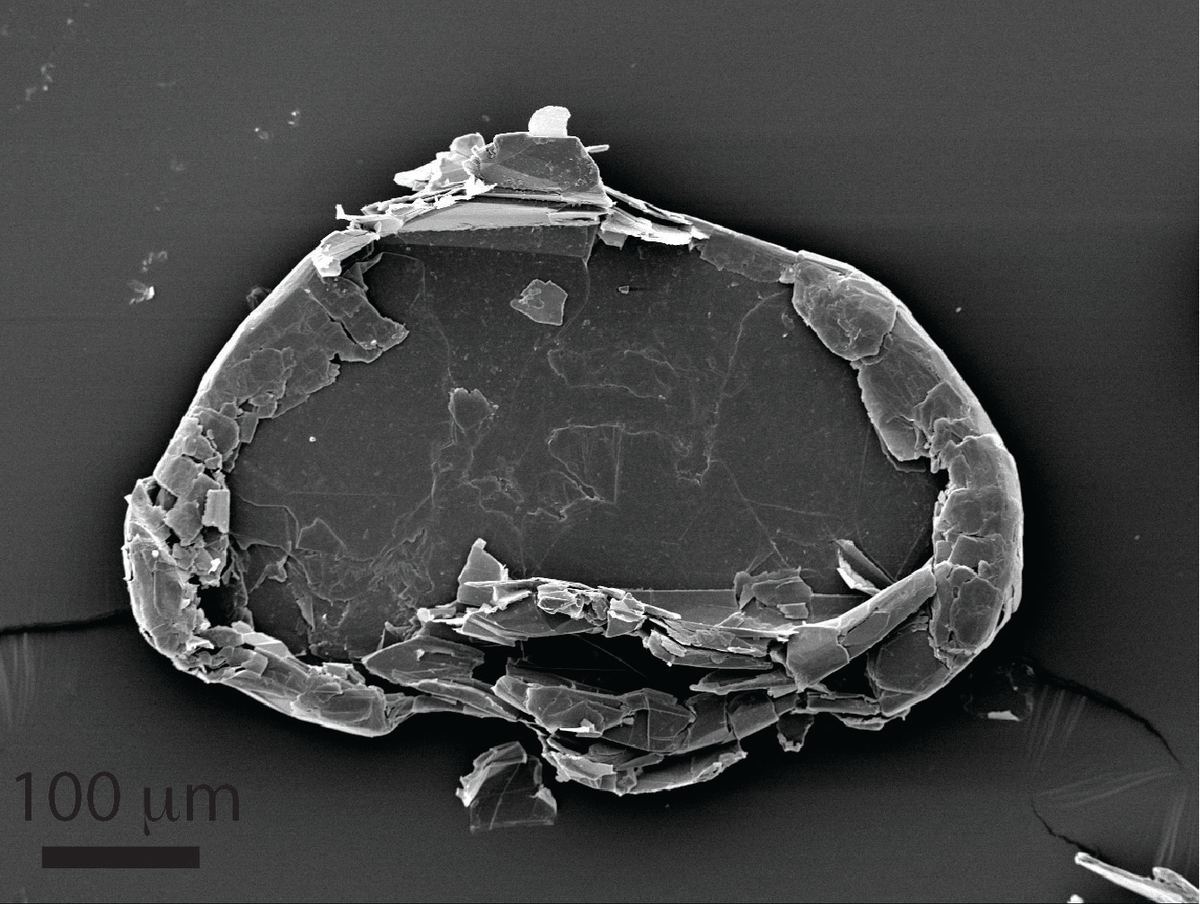
Understanding the exact physical mechanisms driving this rapid delamination required the researchers to look far beyond standard empirical observations. The team integrated sophisticated multiphase computational fluid dynamics simulations with high-resolution electron microscopy and advanced spectroscopic analysis to map the microscopic fluid-structure interactions occurring within the mixing vessel. These highly detailed computational models revealed a fascinating sequence of events initiated by the high-intensity vibrations propagating through the fluid. As the acoustic waves strike the dispersed graphite particles, the resulting hydrodynamic forces cause the edges of the bulk crystals to physically fold back upon themselves. This stress-induced edge folding creates critical initiation points where the internal structural integrity of the crystal becomes temporarily compromised under the sustained mechanical load. Once these edges are folded, the continuous high strain rates generated within the liquid phase systematically split the particles into progressively thinner stratified layers. This highly orchestrated sequence of folding and splitting ultimately yields exceptionally pristine few-layer and monolayer graphene sheets at rates previously thought impossible in a purely mechanical fluid system.
While the implications for single-layer carbon production are profound, the true industrial value of this vibrational methodology lies in its universal applicability across a broad spectrum of layered precursor materials. The researchers successfully applied their resonant acoustic mixing protocol to isolate atomically thin nanosheets of hexagonal boron nitride, a material highly prized for its exceptional thermal conductivity and electrical insulation properties. Hexagonal boron nitride is notoriously difficult to exfoliate uniformly due to the strong lip-lip interactions between its layers, yet the vibrational method achieved remarkable yield and structural preservation. Furthermore, the team demonstrated the protocol efficacy in exfoliating transition metal dichalcogenides, specifically targeting molybdenum disulfide and tungsten disulfide. These semiconductor materials are critical components in next-generation optoelectronics, flexible logic circuits, and advanced catalytic energy storage systems. By proving that high-intensity vibrational forces can overcome the distinct interlayer binding energies of these varied chemical structures, the research establishes a singular, highly adaptable manufacturing platform. Facilities equipped with this technology could theoretically pivot between producing conductive carbon additives, insulating dielectric layers, and active semiconducting channels using the exact same hardware infrastructure.
A defining feature of this manufacturing breakthrough is the complete elimination of hazardous volatile organic compounds from the exfoliation environment. Traditional liquid-phase exfoliation protocols heavily depend on solvents like dimethylformamide, which pose severe occupational health risks, require specialized handling, and demand energy-intensive recycling loops. Instead, the Birmingham researchers optimized their high-throughput process using a completely benign aqueous solution augmented with tannic acid. Tannic acid is a naturally occurring, environmentally friendly polyphenol that acts as a highly effective stabilizing agent in the fluid matrix. As the vibrational forces shear the bulk materials into nanosheets, the tannic acid molecules rapidly adsorb onto the freshly exposed basal planes of the two-dimensional structures. This instantaneous molecular coating provides robust steric stabilization, preventing the newly liberated layers from restacking or agglomerating back into bulk form. The reliance on water and plant-derived stabilizers not only slashes the operational expenditures associated with chemical procurement and disposal but also fundamentally aligns advanced material manufacturing with global sustainability mandates.
The profound industrial implications of this research are fully documented in the peer-reviewed literature, having been published in the journal Small in April 2026 under the digital object identifier 10.1002/smll.202511652. The specific paper, titled "Vibrational Exfoliation of 2D Materials," outlines the complete mathematical and empirical framework supporting this extraction protocol. Recognizing the immense commercial value of a scalable, solvent-free production methodology, the intellectual property surrounding this technique has been rigorously secured. Dr. Jason Stafford, who already maintains an extensive portfolio as a co-inventor on twenty distinct patents in the engineering sector, is the principal inventor on a newly filed patent application covering this specific high-throughput nanomaterial processing method. The patent application details and subsequent commercialization strategies are currently being actively managed by University of Birmingham Enterprise. This aggressive approach to intellectual property protection signals a clear intent to transition the technology from the academic laboratory into full-scale industrial deployment.
The successful commercialization of vibrational exfoliation technology promises to resolve the most persistent economic friction points currently stifling the widespread adoption of two-dimensional materials. For years, the advanced materials market has been locked in a frustrating cycle where high production costs limit application development, and limited application development prevents economies of scale. By increasing production throughput by a factor of ten while simultaneously eliminating expensive solvent recovery systems, this new methodology effectively shatters that economic deadlock. Manufacturers integrating resonant acoustic mixing systems will benefit from drastically reduced batch processing times and significantly lower energy consumption per kilogram of material produced. Furthermore, the precise control over flake size and the elimination of metallic contamination will allow producers to guarantee the stringent quality metrics demanded by the aerospace, automotive, and semiconductor sectors. Ultimately, this room-temperature, water-based process transitions the production of ultrathin nanomaterials from a bespoke chemical synthesis into a predictable, high-volume industrial manufacturing operation.
The physical footprint and operational simplicity of resonant acoustic mixing equipment offer distinct logistical advantages for established chemical and material processing facilities. Unlike massive shear mixing vats or continuous ball milling circuits, vibrational exfoliation reactors can be seamlessly integrated into modular production lines with minimal structural modification to the factory floor. The equipment requires standard industrial power supplies and does not necessitate the installation of complex vapor recovery systems or explosion-proof enclosures typically mandated for volatile organic solvent handling. Facility managers can utilize automated dosing systems to continuously feed bulk graphite, pure water, and tannic acid into the acoustic chamber, establishing a highly efficient semi-continuous manufacturing loop. Because the process operates entirely at room temperature, it eliminates the need for energy-intensive industrial chillers or heating jackets, drastically simplifying the thermal management profile of the plant. This plug-and-play compatibility ensures that both legacy manufacturers and emerging startups can rapidly upgrade their extraction capabilities without incurring catastrophic capital expenditures or enduring prolonged facility downtime.
The concept of high-intensity vibrational exfoliation represents a significant departure from traditional mechanical extraction frameworks used in advanced materials science. Industry professionals frequently inquire about the fundamental mechanics driving this specific processing methodology. Understanding the core physical dynamics of this system is essential for evaluating its potential integration into existing manufacturing pipelines. What exactly is high-intensity vibrational exfoliation, and how does it function at the microscopic level?
High-intensity vibrational exfoliation is a novel mechanical process that utilizes resonant acoustic mixing to separate bulk layered materials into atomically thin sheets. Instead of relying on spinning blades or localized cavitation, the technique applies low-frequency, high-amplitude acoustic energy uniformly throughout a liquid medium. This creates intense, consistent hydrodynamic forces that gently pry the layers apart without causing structural damage. The entire process occurs at room temperature and is highly effective at producing pristine nanomaterials at an industrial scale. It fundamentally replaces older, less efficient methods like sonication and ball milling while maximizing overall yield.
The legacy of nanomaterial production is heavily intertwined with the widespread use of acoustic cavitation equipment across both academic and commercial sectors. Given the ubiquity of these older systems, manufacturers must clearly understand the operational distinctions between legacy equipment and modern vibrational platforms. Facility upgrades require a comprehensive cost-benefit analysis based on these specific technological differences. How does this newly developed vibrational method differ from traditional sonication protocols?
Traditional sonication relies on the rapid formation and violent collapse of microscopic bubbles within a liquid, a phenomenon known as acoustic cavitation. While cavitation can tear layers off bulk graphite, it is highly localized, energy-intensive, and often damages the atomic structure of the resulting flakes. In contrast, the vibrational methodology developed at the University of Birmingham distributes mechanical energy evenly across the entire reaction vessel. This uniform energy application ensures a much tighter control over the physical dimensions of the extracted sheets while preserving their structural integrity. Furthermore, the vibrational method achieves a production rate up to ten times faster than standard sonication protocols, drastically altering the unit economics of production.
Chemical stabilization is a critical phase in liquid-exfoliation, historically demanding the utilization of highly regulated and hazardous volatile organic compounds. The introduction of natural stabilizing agents represents a monumental shift toward green chemistry in the advanced materials sector. Procurement and safety officers are particularly interested in the operational mechanics of these sustainable chemical alternatives. Why is the use of tannic acid so significant in this specific vibrational exfoliation process?
Tannic acid serves as a crucial, environmentally benign stabilizing agent during the liquid-phase exfoliation process. Historically, separating graphite into single atomic layers required toxic organic solvents to prevent the newly formed sheets from immediately clumping back together. Tannic acid eliminates this requirement by rapidly coating the freshly exposed surfaces of the nanomaterials as they split apart in a simple water bath. This natural polyphenol creates a steric barrier that keeps the individual flakes suspended and stable within the aqueous dispersion. The use of tannic acid thereby transforms a hazardous chemical process into a highly sustainable, green manufacturing operation that avoids expensive solvent recycling.
The commercial viability of any new manufacturing hardware is heavily dependent on its versatility and cross-material compatibility. Facilities prefer to invest in agnostic platforms capable of processing a wide array of precursor chemicals rather than highly specialized, single-use machinery. The ability to pivot production based on market demands is a massive logistical advantage for advanced material suppliers. Can this vibrational technique produce materials other than carbon-based nanosheets?
The resonant acoustic mixing protocol is highly versatile and extends far beyond the extraction of single-layer carbon networks. Researchers have successfully utilized the exact same vibrational platform to exfoliate hexagonal boron nitride, a critical material used for thermal management and electrical insulation. The system also effectively processes transition metal dichalcogenides, yielding high-quality nanosheets of molybdenum disulfide and tungsten disulfide. This broad material compatibility indicates that the hydrodynamic forces generated by the process can overcome various types of interlayer van der Waals bonding. Such versatility makes the technology an ideal universal platform for manufacturing diverse semiconductor and dielectric components across multiple high-tech industries.
The transition of academic breakthroughs into the commercial sector relies entirely on the establishment of a robust and defensible intellectual property framework. Industrial partners and venture capital firms require clear legal pathways before committing capital to scale new manufacturing processes. The strategic management of these patent portfolios dictates the eventual market availability of the underlying technology. What are the specific commercial implications of the patent application managed by University of Birmingham Enterprise?
The patent application managed by University of Birmingham Enterprise represents a major step toward commercializing a highly disruptive manufacturing technology. Because the process increases throughput tenfold while eliminating the need for expensive chemical disposal protocols, it drastically alters the unit economics of nanomaterial production. Companies that license this technology could produce high-purity additives and semiconductor channels at a fraction of the current market cost. This cost reduction is expected to accelerate the integration of these advanced materials into consumer electronics, energy storage devices, and lightweight composite structures. The secure intellectual property framework ensures a structured and highly profitable pathway for industrial scaling, protecting future licensees from competitive infringement.
The transition from laboratory curiosity to ubiquitous industrial integration has always been the ultimate hurdle for the advanced materials sector. The pioneering research emerging from the University of Birmingham provides a definitive solution to the throughput and purity challenges that have historically marginalized two-dimensional nanomaterials. By harnessing the precise mechanical forces of high-intensity vibrational exfoliation, engineers have unlocked a scalable, solvent-free pathway to mass production that aligns perfectly with modern ecological and economic demands. The detailed computational modeling of the folding and splitting mechanisms proves that this is not merely an iterative improvement, but a fundamental leap forward in fluid-dynamics-driven manufacturing. With robust patent protection already established and a clear trajectory toward commercial deployment, this methodology is poised to redefine the global supply chain. The era of slow, toxic, and prohibitively expensive nanomaterial synthesis is rapidly drawing to a close, making way for a highly efficient, sustainable industrial future.
Serious about B2B integration? Test our premium Pulsed Electrical Resistive Carbon Heating turbostratic graphene in your lab. 100g sample packs available now.
Explore More
Researchers have developed a breakthrough method for growing twisted bilayer graphene with pre-designed angles, a key step toward manufacturable quantum...

Learn how deep learning is revolutionizing the structural characterization of twisted bilayer materials, accelerating the development of next-generation...

Learn to build a prototype graphene FET biosensor for sensitive DNA detection. This guide covers materials, fabrication, and testing for point-of-care...