
Beyond Perfection: How Electrons Hop in Real-World Graphene Electronics
Discover how hopping-mediated charge transport explains graphene's electrical behavior beyond the ideal ballistic regime, a key insight for creating...
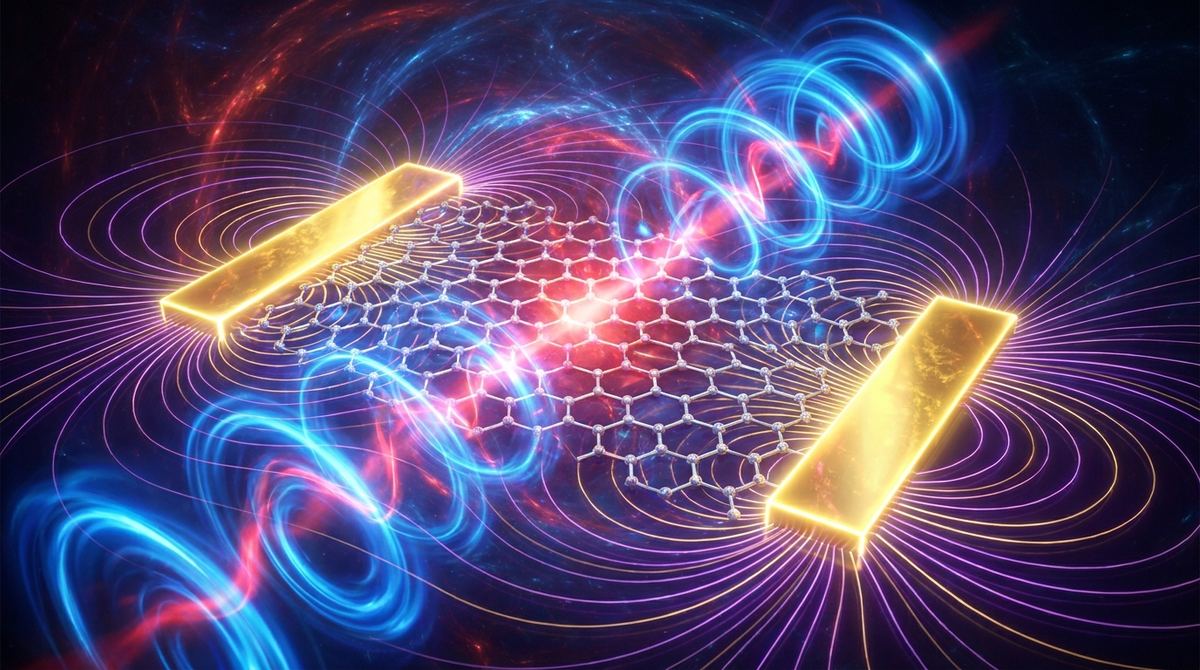
Researchers led by Sergey Kovalev, Hassan A. Hafez, Klaas-Jan Tielrooij, Jan-Christoph Deinert, Igor Ilyakov, Nilesh Awari, David Alcaraz, Karuppasamy Soundarapandian, David Saleta, Semyon Germanskiy, Min Chen, Mohammed Bawatna, Bertram Green, Frank H. L. Koppens, Martin Mittendorff, Mischa Bonn, Michael Gensch, Dmitry Turchinovich have conducted a study that fundamentally reshapes our understanding of optoelectronic material capabilities. Their research demonstrates that graphene possesses an unprecedented level of nonlinear optical coefficients within the terahertz frequency range. This extreme nonlinearity surpasses that of conventional materials by numerous orders of magnitude under ambient conditions. By harnessing this unique property, scientists can achieve extremely efficient up-conversion of sub-terahertz electronic input signals directly into the much higher terahertz frequency domain. The implications of this discovery are vast, establishing a concrete foundation for the development of practical ultrahigh-frequency electronic technologies based on graphene architectures.
The core breakthrough of this comprehensive investigation lies in the ability to actively control the terahertz nonlinearity of graphene through straightforward electrical gating. Applying minimal gating voltages as low as a few volts can dynamically modulate the optoelectronic response of the two-dimensional carbon lattice. This tuning capability essentially allows engineers to switch the material from a nearly perfectly linear and inert electronic state into a configuration exhibiting the highest theoretically possible terahertz nonlinearity. Such profound tunability effectively bridges the gap between static material properties and dynamic, responsive electronic components suitable for real-time signal processing. Consequently, this research provides the essential blueprint for designing next-generation devices that operate efficiently within the notoriously challenging terahertz spectrum.
The terahertz frequency range has long represented a persistent technological bottleneck in the electromagnetic spectrum, often referred to as the terahertz gap. Traditional silicon-based electronics struggle to operate at these ultra-high frequencies due to inherent limitations in charge carrier mobility and parasitic capacitance. Conversely, conventional optical technologies utilizing lasers and nonlinear crystals lack the necessary efficiency and miniaturization potential to bridge this gap effectively. Graphene emerges as an ideal candidate to resolve these limitations owing to its unique Dirac cone band structure and massless charge carriers. The material exhibits an inherently strong interaction with electromagnetic radiation, particularly in the low-energy terahertz regime where conventional semiconductors remain largely opaque or unresponsive. This robust interaction forms the basis for revolutionary high-frequency applications.
The extraordinary optoelectronic properties of graphene stem directly from its two-dimensional honeycomb lattice, which dictates the relativistic behavior of its electrons. When subjected to terahertz radiation, these charge carriers undergo rapid intraband transitions that generate a highly nonlinear current response. This nonlinear behavior is the fundamental prerequisite for frequency multiplication, a process where input signals are converted into higher harmonics. Unlike traditional nonlinear crystals that require phase-matching and significant interaction lengths, graphene can achieve massive nonlinear conversions within a single atomic layer. Such an atomic-scale footprint is highly advantageous for integrating terahertz functionalities into densely packed microelectronic circuits without encountering prohibitive thermal or spatial constraints.
The newly published research successfully highlights how these intrinsic properties can be exploited for practical device applications at room temperature. Operating under ambient conditions is a critical requirement for commercial viability, as many competing terahertz technologies necessitate bulky and expensive cryogenic cooling systems. The researchers observed that the nonlinear optical coefficients of graphene in the terahertz range are not merely marginally better, but fundamentally superior to alternative materials by several orders of magnitude. This massive enhancement translates to significantly lower power requirements for driving nonlinear optical processes, thereby reducing the overall energy consumption of the system. Ultimately, this positions graphene not just as an alternative material, but as the premier platform for future ultra-high-frequency signal processing networks.
To fully appreciate the magnitude of this scientific advancement, one must delve into the physical mechanisms governing terahertz nonlinearity in Dirac fermions. In pristine graphene, the conduction and valence bands meet precisely at the Dirac point, creating a gapless energy spectrum characterized by a linear dispersion relation. When an external terahertz electric field is applied, it accelerates the charge carriers, shifting their momentum distribution away from thermal equilibrium. Because the velocity of these electrons is constant and independent of their momentum, the resulting current is inherently a highly nonlinear function of the driving electric field. This fundamental deviation from classical ohmic behavior is what generates the robust higher-order harmonics observed in the experimental data.
The efficiency of this harmonic generation process is heavily dependent on the thermodynamic state of the electron gas within the graphene lattice. As the ultrafast terahertz pulses interact with the charge carriers, they rapidly transfer energy to the electronic system, causing extreme heating of the electron population. The temperature of this electron gas can surge to several thousand Kelvin within a fraction of a picosecond, while the underlying carbon lattice remains relatively cool. This transient thermal disparity drastically alters the chemical potential and the Fermi-Dirac distribution of the carriers, further amplifying the nonlinear optoelectronic response. Understanding and controlling this rapid heating and subsequent cooling cycle is paramount for optimizing the material for sustained high-frequency signal conversion.
The thermodynamic balance maintained within this hot electron gas dictates the ultimate limit of the terahertz nonlinearity achievable in the device. The researchers developed a comprehensive physical model that perfectly captures the time-dependent evolution of this electronic population during its interaction with the ultrafast electric fields. Their model accounts for the intricate interplay between the energy absorbed from the incoming terahertz radiation and the energy dissipated through optical and acoustic phonon emission. By accurately simulating these competing thermodynamic processes, the researchers achieved quantitative agreement with their empirical measurements across a wide range of operating conditions. This theoretical framework now serves as a robust predictive tool for engineering graphene-based components with tailored nonlinear characteristics.
A particularly fascinating aspect of this mechanism is how the nonlinearity scales with the intensity of the incident terahertz radiation. In classical materials, the nonlinear response typically follows a perturbative regime where higher harmonics emerge only under exceedingly strong electric fields. In stark contrast, the unique band structure of graphene allows non-perturbative nonlinear effects to manifest even at relatively modest field strengths. The charge carriers can traverse the Dirac point during their field-driven oscillations, triggering a sudden reversal in their velocity that generates a sharp, highly nonlinear current spike. This ease of accessing the non-perturbative regime is precisely what enables graphene to perform efficient up-conversion using the relatively weak sub-terahertz signals typical of modern electronic communications.
The most transformative aspect of the current study is the demonstration that this immense terahertz nonlinearity can be actively tuned via electrical gating. By incorporating the graphene layer into a field-effect transistor geometry, the researchers could precisely control the Fermi level, or chemical potential, of the material. Applying a small gate voltage injects or removes charge carriers from the lattice, shifting the Fermi level away from the Dirac point and into the conduction or valence bands. This shift fundamentally alters the initial thermodynamic state of the electron gas before the arrival of the terahertz pulse. Consequently, the gate voltage acts as a highly sensitive tuning knob that dictates the magnitude and nature of the subsequent nonlinear optical response.
When the Fermi level is situated precisely at the Dirac point, the density of states is minimal, and the material exhibits a specific baseline nonlinear behavior. However, as the gate voltage shifts the Fermi level to higher energies, the available phase space for carrier acceleration and intraband transitions expands dramatically. The researchers discovered that there exists an optimal electrical gating point where the terahertz nonlinearity reaches an absolute maximum. At this optimized chemical potential, the delicate balance between carrier density, heat capacity of the electron gas, and the field-driven velocity modulation aligns perfectly. This alignment synergistically enhances the generation of higher harmonics, proving that static material properties can be dynamically sculpted by simple electronic controls.
The magnitude of control achieved through this gating technique is nothing short of extraordinary within the context of nonlinear optics. The study reveals that a variation of just a few volts on the gate electrode can enhance the power conversion efficiency of the material by approximately two orders of magnitude. This massive enhancement factor effectively allows the graphene device to function as an active, voltage-controlled terahertz frequency multiplier. In practical terms, this means that a device could be switched in real-time from a state of passive linear transmission to a state of aggressive nonlinear harmonic generation. Such dynamic switching capabilities are essential for the development of advanced modulators, mixers, and signal processors operating in the ultra-high-frequency domain.
Furthermore, the ability to control the nonlinearity with such low voltages ensures that these devices are highly compatible with existing complementary metal-oxide-semiconductor technologies. Traditional methods of modulating nonlinear optical responses often require high-voltage drivers, intense secondary optical pumping, or complex mechanical tuning mechanisms. The low-voltage electrical gating demonstrated in this research circumvents all these practical hurdles, paving the way for seamless integration into standard silicon-based microchips. This compatibility significantly lowers the barrier to entry for commercializing graphene-based terahertz technologies, moving them from isolated laboratory experiments to scalable industrial applications. The researchers have thus provided a highly practical solution to one of the most persistent challenges in modern high-frequency electronics.
To quantify the impact of electrical tunability, the research team focused extensively on the process of third-harmonic generation within the graphene samples. Third-harmonic generation is a nonlinear optical process where three photons of the fundamental input frequency combine to create a single photon at exactly three times the original frequency. In the context of terahertz electronics, this process is critical for up-converting baseband signals into much higher frequency bands for rapid data transmission. The experimental setup involved illuminating the gated graphene with intense fundamental terahertz pulses and carefully measuring the emitted radiation at the tripled frequency. The intensity of this third-harmonic signal served as the primary metric for evaluating the nonlinear conversion efficiency of the material under various gating conditions.
The experimental results demonstrated a profound correlation between the applied gate voltage and the resulting power conversion efficiency of the third-harmonic signal. At sub-optimal gate voltages, where the graphene behaves essentially as a linear and inert material, the third-harmonic emission was barely detectable above the background noise. However, as the gate voltage was tuned towards the theoretically predicted optimal value, the third-harmonic signal intensity surged dramatically. This surge corresponds to the aforementioned two-orders-of-magnitude enhancement, definitively proving the efficacy of the electrical tuning mechanism. The sheer scale of this efficiency boost highlights the transformative potential of gated graphene for practical frequency multiplication applications in telecommunications and spectroscopy.
Achieving such high power conversion efficiencies at room temperature is a monumental milestone for the field of terahertz photonics. Historically, up-conversion in this frequency range has suffered from abysmal efficiency rates, often converting only minuscule fractions of a percent of the input power. The optimized graphene devices demonstrated in this study disrupt this historical trend by providing a highly efficient, compact, and tunable platform for signal up-conversion. The researchers meticulously calibrated their detection systems to ensure that the measured enhancements were entirely attributable to the intrinsic nonlinearity of the gated graphene rather than experimental artifacts. Their rigorous methodology provides absolute confidence in the validity of the reported efficiency metrics and their underlying physical causes.
The implications of this enhanced third-harmonic generation extend far beyond simple frequency multiplication, impacting the broader landscape of ultra-high-frequency signal processing. High-efficiency up-conversion allows for the generation of coherent, easily detectable terahertz radiation using relatively inexpensive and robust sub-terahertz electronic oscillators as the primary source. This architectural shift could drastically reduce the cost and complexity of terahertz communication networks, enabling widespread deployment of ultra-broadband wireless systems. Moreover, the ability to dynamically modulate the conversion efficiency via the gate voltage introduces the possibility of encoding information directly onto the up-converted harmonic signals. This paradigm shift firmly establishes the foundation for novel, high-speed optoelectronic components that merge the best features of electronics and photonics.
The exceptional experimental results are deeply rooted in a rigorous theoretical framework that models the thermodynamic balance of the graphene electronic system. Unlike conventional semiconductors where carrier dynamics can often be approximated by simple kinetic models, graphene requires a comprehensive thermodynamic approach due to its extreme carrier heating. The researchers constructed a sophisticated physical model that tracks the energy flow between the incident electromagnetic field, the hot electron gas, and the surrounding crystal lattice. This model dynamically calculates the time-dependent electron temperature and the corresponding shifts in the chemical potential during the ultrashort duration of the terahertz pulse. The accuracy of this model is crucial for understanding the transient states that give rise to the observed non-perturbative nonlinearities.
Central to this thermodynamic model is the concept of electron-phonon coupling, which acts as the primary cooling mechanism for the highly excited electron gas. As the terahertz field pumps energy into the electronic system, the electrons begin to scatter off optical and acoustic phonons, transferring their excess kinetic energy to the lattice. The rate of this energy transfer is highly dependent on the initial Fermi level set by the electrical gate, explaining the profound tunability of the nonlinear response. The model perfectly captures this complex interplay, demonstrating that optimal nonlinearity occurs when the heating and cooling rates achieve a specific transient equilibrium. This delicate balance ensures that the electron gas reaches the maximum possible temperature without prematurely dissipating the absorbed energy.
The quantitative agreement between this thermodynamic model and the empirical data represents a major triumph for the research team and the broader theoretical physics community. The model accurately predicts not only the magnitude of the third-harmonic generation but also its precise dependence on both the gate voltage and the input field strength. This level of predictive accuracy confirms that the fundamental physical assumptions regarding the massless Dirac fermions and their thermodynamic behavior are inherently correct. By validating this theoretical framework, the researchers have provided engineers with a reliable mathematical tool for simulating and optimizing future graphene-based terahertz devices. This eliminates the need for exhaustive trial-and-error experimentation, accelerating the development cycle for commercial applications.
Furthermore, the thermodynamic model provides critical insights into the temporal dynamics of the nonlinearity, which is essential for processing ultrafast signals. The simulations reveal that the heating and cooling cycles occur on sub-picosecond timescales, allowing the graphene to respond quasi-instantaneously to rapid variations in the terahertz field. This ultrafast response time guarantees that the material can process high-bandwidth data streams without introducing significant signal distortion or temporal lag. The model also indicates that the nonlinear response remains robust across a wide range of ambient temperatures, further solidifying the suitability of graphene for real-world deployment. Ultimately, this comprehensive physical understanding bridges the gap between fundamental condensed matter physics and applied electronic engineering.
An essential requirement for any versatile optoelectronic material is its ability to process various types of electromagnetic signals with equal proficiency. The researchers explicitly demonstrated the gating control of terahertz nonlinearity for both ultrashort single-cycle pulses and quasi-monochromatic multi-cycle input signals. Single-cycle pulses are characterized by their extremely broad bandwidth and ultrashort duration, making them ideal for time-domain spectroscopy and ultrafast impulse radar applications. The graphene devices successfully modulated the nonlinear response of these broadband transients, preserving the temporal integrity of the up-converted signals while massively boosting their intensity. This proves that the thermodynamic heating mechanisms are sufficiently rapid to respond to the steepest possible electromagnetic gradients.
Conversely, quasi-monochromatic multi-cycle signals represent the standard continuous-wave or narrow-band pulses utilized in traditional telecommunications and high-resolution continuous-wave spectroscopy. Processing these signals requires the nonlinear material to sustain its harmonic generation efficiency over many optical cycles without suffering from thermal degradation or carrier depletion. The electrically gated graphene exhibited remarkable stability and consistent conversion efficiency when subjected to these extended multi-cycle terahertz waveforms. The thermodynamic balance maintained within the electron gas proved robust enough to handle the continuous energy input, dissipating excess heat to the lattice efficiently. This dual capability ensures that the proposed graphene technology is highly adaptable to a multitude of different operational paradigms.
The successful demonstration across diverse signal types validates the universality of the underlying physical mechanisms governing the tunable nonlinearity. Whether the input is a sudden, violent electromagnetic shockwave or a steady, oscillating carrier wave, the gated Dirac fermions respond with predictable and highly efficient frequency multiplication. This versatility is highly attractive for commercial device manufacturers who seek standardized material platforms capable of addressing varied market requirements. Engineers can utilize the exact same graphene-based component for broadband ultrafast switching and for continuous-wave frequency mixing by simply adjusting the operational parameters. Consequently, this research dramatically expands the potential application space for carbon-based nanoelectronics in the ultra-high-frequency domain.
The culmination of these experimental and theoretical breakthroughs establishes a clear and immediate pathway for the realization of practical graphene-based ultrahigh-frequency electronic technology. The ability to achieve highly efficient, room-temperature up-conversion of sub-terahertz signals addresses the most critical hardware limitation currently hindering the expansion of the terahertz gap. By utilizing simple electrical gating to dynamically tune this nonlinearity, device architectures can remain remarkably simple, compact, and compatible with existing fabrication methodologies. This study effectively transitions graphene from a subject of intense fundamental curiosity into a highly practical, ready-to-deploy engineering material for advanced optoelectronics. The researchers have provided the essential blueprint required to bring these next-generation communication and sensing technologies to the commercial market.
Looking forward, the integration of these tunable nonlinear graphene elements into highly complex monolithic microwave integrated circuits represents the next logical frontier in this field. By combining the exceptional frequency multiplication capabilities of graphene with standard silicon amplifiers and logic gates, engineers can create entirely new classes of hybrid microchips. These integrated circuits will be capable of transmitting and receiving data at unprecedented bitrates, far surpassing the limitations of current fifth-generation wireless networks. The foundational knowledge provided by this research ensures that the design of such devices will be straightforward, accurate, and rooted in verified thermodynamic principles. The era of true terahertz electronics, long considered an elusive goal, is now firmly within reach thanks to the extraordinary properties of gated graphene.
Ultimately, this paradigm-shifting research highlights the enduring value of investigating the fundamental physics of low-dimensional quantum materials for practical applications. The unprecedented nonlinear optoelectronic coefficients discovered and controlled in this study serve as a testament to the unique capabilities of two-dimensional Dirac systems. As the demand for faster, more efficient electronic signal processing continues to grow exponentially, materials that can seamlessly bridge the electronic and photonic domains will become increasingly vital. The comprehensive findings presented by the research team ensure that graphene will remain at the absolute forefront of this technological revolution. The accurate design of devices based on these principles will undoubtedly shape the future landscape of global telecommunications and ultra-high-frequency sensing systems.
One frequently asked question concerns the specific mechanism by which electrical gating alters the behavior of graphene from linear to highly nonlinear. The answer lies in the modulation of the chemical potential, which determines the initial state of the charge carriers before they interact with terahertz radiation. By applying a gate voltage, researchers shift the Fermi level away from the Dirac point, optimizing the available phase space for carrier acceleration and intraband transitions. This precise alignment of the Fermi level maximizes the transient heating of the electron gas, which is the primary driver of the non-perturbative nonlinear response. Ultimately, this simple electrical adjustment dictates the thermodynamic balance, transforming the material into an exceptionally efficient frequency multiplier.
Another common inquiry involves understanding why graphene outperforms traditional nonlinear optical materials specifically in the terahertz frequency range. The response to this question is rooted in the unique, gapless band structure of graphene and its massless Dirac fermions, which interact extremely strongly with low-energy photons. Traditional nonlinear crystals rely on bound electron anharmonicity and require strict phase-matching conditions, making them highly inefficient and physically bulky at terahertz wavelengths. In contrast, the intraband transitions in graphene occur instantaneously within a single atomic layer, circumventing phase-matching limitations entirely while producing massive nonlinear currents. Therefore, graphene provides an elegant, atomic-scale solution that vastly exceeds the efficiency of classical macroscopic crystals in this specific spectral gap.
People often ask about the practical significance of achieving high power conversion efficiency in third-harmonic generation using graphene devices. The answer is that this efficiency directly enables the up-conversion of lower-frequency, easily generated electronic signals into the difficult-to-reach terahertz domain. Historically, generating coherent terahertz radiation required complex, energy-intensive, and expensive laser systems or cryogenic cooling apparatuses. By utilizing the highly efficient third-harmonic generation in gated graphene, engineers can use standard sub-terahertz electronic oscillators to produce usable terahertz power at room temperature. This capability drastically lowers the cost and complexity of terahertz hardware, paving the way for ubiquitous ultra-high-frequency communication and imaging systems.
A crucial technical question relates to how the thermodynamic physical model validates the experimental findings observed in the laboratory. The answer is that the model accurately simulates the complex, time-dependent energy exchange between the incoming terahertz field, the hot electron gas, and the crystal lattice. By calculating the precise heating and cooling rates of the charge carriers, the model predicts the exact gate voltages that yield the maximum nonlinear optical response. The quantitative agreement between these theoretical predictions and the empirical measurements confirms that the underlying physical assumptions regarding Dirac fermion dynamics are correct. This validation provides engineers with a highly reliable mathematical tool for designing future devices without relying solely on empirical trial and error.
Finally, researchers frequently question whether this tunable nonlinearity is applicable to different types of electromagnetic signals used in real-world applications. The answer provided by the study is a definitive confirmation that the gating control works efficiently for both ultrashort single-cycle pulses and quasi-monochromatic multi-cycle signals. Single-cycle pulses test the ability of the material to respond to extreme, broadband electromagnetic gradients without temporal distortion, which is critical for ultrafast radar. Conversely, multi-cycle signals verify the material's capacity to sustain harmonic generation over extended periods without thermal degradation, a necessity for continuous-wave telecommunications. The success of gated graphene across both signal paradigms proves its profound versatility and readiness for diverse commercial integration scenarios.
In summary, the comprehensive investigation into the electrical tunability of terahertz nonlinearity in graphene marks a watershed moment in the field of optoelectronics. By demonstrating that a few volts of electrical gating can amplify the power conversion efficiency of third-harmonic generation by two orders of magnitude, the researchers have fundamentally redefined material limitations. This profound level of active control transforms graphene from a passive structural element into a highly dynamic, ultra-efficient engine for frequency multiplication. The rigorous validation of the underlying thermodynamic models ensures that this phenomenon is entirely predictable and scalable for industrial manufacturing processes. Consequently, the terahertz gap, which has long hindered high-frequency engineering, now possesses a viable, room-temperature solution based on carbon nanoelectronics.
The implications of this research will undoubtedly reverberate throughout the global telecommunications, spectroscopy, and sensing industries for decades to come. The ability to efficiently up-convert sub-terahertz signals into the higher terahertz domain using compact, integrated graphene devices opens the door to unprecedented data transmission speeds and novel imaging modalities. As engineers begin to implement the straightforward design principles established by this study, we will witness the rapid commercialization of ultra-high-frequency technologies previously deemed impossible. The exceptional work conducted by this international team of scientists firmly cements graphene as the premier foundational material for the next generation of advanced electronic signal processing. The future of ultra-high-frequency hardware is undeniably intertwined with the remarkable, tunable nonlinearities of two-dimensional Dirac systems.
Serious about B2B integration? Test our premium Pulsed Electrical Resistive Carbon Heating turbostratic graphene in your lab. 100g sample packs available now.
Explore More
Discover how hopping-mediated charge transport explains graphene's electrical behavior beyond the ideal ballistic regime, a key insight for creating...

A practical guide to fabricating a flexible graphene fiber sensor for the simultaneous detection of nitric oxide and H2O2, key cancer biomarkers.

Explore a new low-noise Pauli-consistent ensemble Monte Carlo simulation for graphene, a powerful computational tool for designing next-generation...