
A New Era of Graphene Engineering: Pre-Designing Twist Angles on Demand
Researchers have developed a breakthrough method for growing twisted bilayer graphene with pre-designed angles, a key step toward manufacturable quantum...
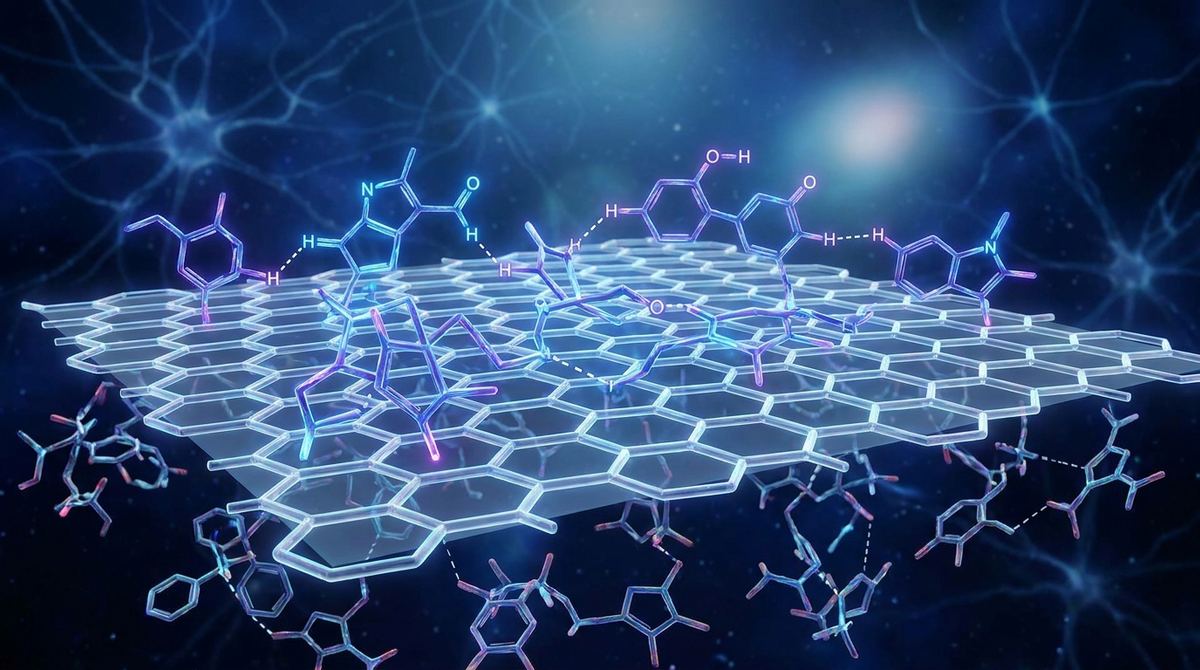
Research led by E. E. Bashmakova, M. S. Savelyev, P. N. Vasilevsky, and A. Yu. Gerasimenko has recently explored how graphene substrates can dramatically enhance the thermal stability of hydrogen-bonded molecular systems. The intersection of two-dimensional nanomaterials and high-performance polymers represents a frontier in advanced materials science. Recent numerical simulations have shed light on the profound stabilizing effects of a graphene substrate on molecular systems governed by hydrogen bonds. Researchers investigated the dynamics of planar two-layer and three-layer molecular structures utilizing advanced molecular dynamics frameworks. These structures were formed by beta-sheets of polyglycine peptide chains and parallel para-aramid molecules known commercially as Kevlar. The presence of the pristine graphene sheet fundamentally alters the thermal degradation threshold of these organic structures. This research brief explores the intricate thermodynamic interactions that allow these hybrid systems to maintain structural integrity under extreme heat.
Hydrogen bonding is a ubiquitous stabilizing force in both biological macromolecules and synthetic high-strength polymers. However, the thermal vulnerability of these bonds often limits the high-temperature application of the resulting materials. By introducing a rigid atomically flat carbon lattice as a foundational substrate, researchers have discovered a method to suppress the thermal fluctuations that typically rupture hydrogen bonds. The substrate acts as a physical constraint that minimizes out-of-plane vibrational modes in the attached polymer chains. Consequently, the threshold for thermal denaturation is pushed to unprecedented levels. The findings hold immense potential for the next generation of protective fabrics and aerospace composites.
To understand the atomistic behavior of these complex hybrid interfaces, researchers rely heavily on sophisticated numerical simulations. Molecular dynamics simulations provide a deterministic pathway to observe the time evolution of interacting atoms under specific thermodynamic ensembles. In this study, the computational models constructed planar two-layer and three-layer configurations of polyglycine and Kevlar positioned over a single layer of graphene. The simulations utilized empirical force fields parameterized to accurately capture both the strong covalent bonds within the polymer backbones and the weaker non-covalent interactions. Accurately modeling the van der Waals forces between the carbon lattice of graphene and the adjacent polymer molecules is critical for replicating physical reality. Such computational rigor ensures that the predicted thermal stability metrics align closely with theoretical expectations of macromolecular behavior.
The simulation environments were subjected to incremental thermal loading to observe the eventual breakdown of structural order. Researchers tracked the root mean square deviation of atomic positions to quantify the onset of thermal degradation. As the simulated temperature increased, the kinetic energy of the individual atoms challenged the potential energy wells established by the hydrogen bonds. The graphene substrate provided a massive, thermally conductive anchor that absorbed and redistributed localized kinetic spikes. This redistribution effectively dampened the violent molecular vibrations that typically precede structural failure in isolated polymer chains. The resulting data streams offered a high-resolution map of the phase transition from a highly ordered crystalline state to a disordered amorphous melt.
Advanced integration algorithms were employed to solve Newton equations of motion for tens of thousands of interacting atoms over nanosecond timescales. The time steps were kept infinitesimally small to capture the high-frequency vibrations of the carbon-hydrogen and nitrogen-hydrogen bonds. Thermostat algorithms were applied to carefully control the simulated kinetic temperature and simulate a realistic heating environment. By plotting the energy density and structural conformation at each temperature increment, the simulation mapped the exact thermal boundaries of the hybrid materials. These digital experiments eliminate the confounding variables often present in physical synthesis, allowing for the isolated study of substrate-polymer interactions. Ultimately, the computational framework proved that the geometrical confinement imposed by graphene directly scales with enhanced thermodynamic stability.
Polyglycine is the simplest polypeptide, lacking bulky side chains, which allows it to form highly dense and regular structural motifs. In the context of this research, polyglycine chains align to form extensive beta-sheet structures stabilized by lateral hydrogen bonds. These beta-sheets are characterized by an extended backbone conformation where the amide and carbonyl groups are optimally positioned for intermolecular bonding. When placed on a graphene substrate, the planar nature of the beta-sheet aligns perfectly with the hexagonal carbon lattice beneath it. This geometrical compatibility maximizes the contact area, thereby optimizing the attractive dispersion forces between the two distinct layers. The resulting two-layer and three-layer architectures exhibit a synergistic mechanical resilience that surpasses the sum of their individual components.
The primary mechanism of failure for isolated beta-sheets under thermal stress is the cooperative breaking of the hydrogen bond network. As temperature rises, torsional rotations around the peptide bonds introduce steric clashes that disrupt the planar hydrogen bonding geometry. However, the presence of the graphene substrate dramatically alters this degradation pathway by restricting out-of-plane torsional movements. The substrate essentially pins the polyglycine molecules in a planar configuration through continuous van der Waals interactions. Because the molecules cannot freely rotate away from the bonding plane, the hydrogen bonds are forced to remain intact even at elevated kinetic energies. The numerical simulations demonstrated that these polyglycine beta-sheets retain their structural shape up to a remarkable temperature of eight hundred Kelvin.
The stabilization effect is not merely a surface phenomenon but propagates through the layers of the molecular structure. In three-layer configurations, the intermediate polyglycine sheet benefits from bilateral confinement, sandwiched between the graphene substrate and the top polymer layer. This multi-layered architecture creates a dense network of interlocking hydrogen bonds that distribute thermal stress across a wider volume. The cooperative nature of the hydrogen bond network means that breaking a single bond requires overcoming the energetic barrier of the entire interconnected system. The graphene substrate essentially anchors the foundational layer, providing a rigid template that dictates the structural integrity of the upper tiers. This hierarchical stabilization mechanism is a testament to the power of precise nanoscale engineering in polymer science.
Hydrogen bonds are fundamentally electrostatic interactions that are highly sensitive to distance and angular orientation. In a dynamic thermal environment, atomic vibrations constantly perturb these optimal bonding geometries, leading to transient breaking and reforming of the bonds. The thermal stability of a hydrogen-bonded network is dictated by the equilibrium between the bond dissociation energy and the ambient thermal energy. Graphene modifies this thermodynamic equation by introducing an additional potential energy well that restricts the configurational entropy of the polymer chains. By limiting the available microstates of the polyglycine or Kevlar molecules, the substrate effectively lowers the entropy of the system. This entropic penalty for unfolding or disordered states translates directly to a higher required temperature for macroscopic structural degradation.
The interaction between the graphene substrate and the polymer overlayer is dominated by pi-pi stacking and London dispersion forces. While individually weak, the cumulative effect of these non-covalent interactions across the macroscopic surface area of a graphene sheet is immense. This extensive binding energy effectively couples the vibrational modes of the polymer to the rigid acoustic phonon modes of the graphene lattice. The graphene layer acts as a vast heat sink that rapidly delocalizes localized thermal hotspots that would otherwise cleave sensitive hydrogen bonds. Consequently, the energy required to initiate the unzipping of the beta-sheet or Kevlar fiber is significantly elevated. The thermodynamics of this hybridized system demonstrate a beautiful synergy between quantum mechanical dispersion forces and classical electrostatic bonding.
A critical observation from the numerical simulation is the temperature dependence of the hydrogen bond lifetimes. In isolated systems, bond lifetimes decrease exponentially as the temperature approaches the melting point of the polymer. The presence of the substrate alters this decay curve, maintaining functionally infinite bond lifetimes at temperatures where isolated polymers would rapidly denature. The graphene essentially flattens the energy landscape, making the potential wells associated with intact hydrogen bonds deeper relative to the surrounding thermal noise. This thermodynamic stabilization is particularly pronounced for the parallel chains of hydrogen bonds between the peptide groups of neighboring molecules. Understanding this thermodynamic shift is crucial for engineers looking to design high-temperature organic composites for extreme industrial applications.
Kevlar, scientifically known as poly-paraphenylene terephthalamide, is renowned for its exceptional tensile strength-to-weight ratio. The macroscopic strength of Kevlar fibers is derived directly from the highly oriented, parallel chains of hydrogen bonds linking adjacent polymer molecules. The aromatic rings in the Kevlar backbone provide immense rigidity but also create opportunities for strong pi-pi interactions with carbon nanomaterials. When parallel Kevlar molecules are placed on a graphene sheet, the structural alignment facilitates an extraordinary degree of interfacial coupling. The planar aromatic rings of the para-aramid chains stack parallel to the hexagonal lattice of the graphene substrate. This molecular docking mechanism maximizes both the van der Waals adhesion and the stability of the internal hydrogen bond network.
The numerical simulations revealed that the system of parallel Kevlar molecules exhibits an even higher thermal stability than the polyglycine beta-sheets. The parallel chains of hydrogen bonds between the peptide groups of neighboring Kevlar molecules are preserved at temperatures exceeding eight hundred Kelvin. This superior resilience is attributed to the combination of the stiff aromatic backbone and the external stabilization provided by the graphene. The rigid backbone naturally resists the torsional deformations that typically initiate thermal melting in more flexible polymers like polyglycine. When this inherent rigidity is coupled with the physical confinement of the graphene substrate, the resulting composite structure becomes incredibly robust. The simulation data clearly illustrates a delayed onset of thermal expansion and structural disorder in the Kevlar-graphene hybrid.
The interaction dynamics at the Kevlar-graphene interface also influence the mechanical load transfer capabilities of the resulting composite. In a purely thermal scenario, the strong interfacial adhesion prevents the polymer chains from sliding past one another as kinetic energy increases. This suppression of molecular slip is a direct consequence of the corrugated potential energy surface created by the underlying carbon lattice. The Kevlar molecules are effectively locked into their optimal hydrogen-bonding conformations, resisting the entropic drive toward a random coil state. This locking mechanism is particularly vital for maintaining the structural integrity of protective fibers subjected to extreme heat flashes. The profound stabilization observed in the models confirms that graphene is an ideal reinforcing agent for advanced para-aramid structures.
The thermal degradation of high-performance polymers typically involves a complex sequence of physical melting followed by chemical decomposition. In the initial stages, thermal energy overcomes the intermolecular forces, leading to a loss of crystallinity and mechanical strength. The numerical modeling performed in this study primarily focused on this physical degradation phase, specifically the rupture of the hydrogen bond network. For polyglycine beta-sheets, the graphene substrate delayed this phase transition, allowing the structure to retain its shape up to eight hundred Kelvin. This temperature is significantly higher than the typical melting point of isolated polyamides, highlighting the profound impact of substrate stabilization. The delay in physical melting provides a critical buffer zone for materials operating in high-temperature environments.
As the simulated temperature pushes beyond the stability threshold, the mechanisms of structural failure begin to emerge. The kinetic energy eventually overwhelms the combined stabilizing forces of the internal hydrogen bonds and the external van der Waals adhesion. The breakdown typically initiates at the edges of the polymer sheets, where the molecules have fewer neighboring interactions to anchor them. These edge molecules begin to peel away from the graphene substrate, initiating a cascade of bond ruptures that propagates inward. However, the simulation shows that the graphene substrate significantly slows the velocity of this degradation cascade compared to isolated systems. By hindering the propagation of structural defects, the composite material maintains functional integrity for a longer duration under extreme thermal stress.
The superior performance of the Kevlar system under these extreme conditions merits closer examination. The preservation of the parallel chains of hydrogen bonds at higher temperatures suggests a fundamentally different energy barrier for degradation. The aromatic rings in Kevlar require significantly more energy to deviate from their planar configuration compared to the flexible aliphatic backbone of polyglycine. The graphene substrate acts synergistically with this inherent stiffness, creating a dual-barrier system against thermal degradation. Even when localized bond breaking occurs, the rigid structure and strong substrate adhesion prevent the polymer chains from rapidly tangling into a melt. This characteristic is precisely what makes the addition of graphene to Kevlar fibers a transformative strategy for increasing thermal stability.
The findings from these numerical simulations carry profound implications for the manufacturing of advanced protective materials. Kevlar is already the industry standard for ballistic armor, but its performance degrades when exposed to extreme heat or fire. By integrating graphene into the spinning process of para-aramid fibers, manufacturers could produce composite armors that withstand significantly higher thermal loads. This enhancement is particularly relevant for military and aerospace applications where materials must endure friction heating and explosive thermal flashes. The graphene substrate not only stabilizes the molecular structure but also contributes its own exceptional thermal conductivity to dissipate heat rapidly. The resulting hybrid material would offer unprecedented survivability in multi-threat environments involving both kinetic impact and extreme temperatures.
Beyond ballistic armor, the stabilization of hydrogen-bonded systems via graphene substrates opens new avenues in aerospace engineering. Spacecraft and hypersonic vehicles require lightweight materials that maintain absolute structural rigidity across massive temperature gradients. Traditional polymers are often excluded from high-temperature zones due to their propensity to melt or outgas under thermal stress. The graphene-stabilized Kevlar structures modeled in this study offer a compelling lightweight alternative to heavy metallic components or brittle ceramics. The ability to retain precise molecular geometry at temperatures exceeding eight hundred Kelvin bridges a critical gap in high-performance materials science. Engineers can utilize these insights to design structural composites that leverage the best properties of both carbon nanomaterials and advanced polymers.
The success of the computational modeling also provides a clear roadmap for future experimental synthesis and material characterization. Researchers now have precise theoretical targets regarding the necessary layer configurations and optimal interfacial geometries required to achieve maximum thermal stability. Future physical experiments will likely focus on chemical vapor deposition techniques to grow graphene directly onto oriented Kevlar fibers. Alternatively, solution-based processing could be optimized to intercalate pristine graphene flakes between layers of para-aramid sheets. The insights gained from observing the dynamics of planar molecular structures will guide the optimization of these scalable manufacturing processes. Ultimately, the fusion of predictive numerical simulation and advanced nanotechnology is accelerating the deployment of next-generation thermal-resistant materials.
What is the primary mechanism by which graphene stabilizes polyglycine and Kevlar molecules? Graphene stabilizes these molecules through strong van der Waals forces and pi-pi stacking interactions that anchor the polymer chains to its atomically flat surface. This physical confinement severely restricts the out-of-plane vibrational and torsional movements that normally tear molecular structures apart at high temperatures. By limiting these movements, the substrate effectively preserves the delicate parallel chains of hydrogen bonds between the peptide groups. The graphene essentially acts as a rigid, thermally conductive scaffold that prevents the polymers from transitioning into a disordered state. This synergistic interaction raises the overall energy threshold required to initiate structural degradation.
Why were planar two-layer and three-layer molecular structures chosen for this simulation? Planar structures represent the fundamental building blocks of both beta-sheet biological proteins and high-strength synthetic fibers like Kevlar. Simulating two and three-layer configurations allows researchers to observe the distinct differences between direct substrate interactions and bulk material behavior. The first layer interacts directly with the graphene, while subsequent layers rely on a combination of substrate influence and intermolecular bonding. This multi-layered approach provides a highly accurate model of how thermal energy propagates through a macroscopic composite material. It helps determine exactly how deep the stabilizing effect of the underlying graphene substrate penetrates into the polymer matrix.
Why does Kevlar exhibit higher thermal stability than polyglycine in these simulations? Kevlar contains a highly rigid molecular backbone composed of aromatic rings, whereas polyglycine has a highly flexible aliphatic backbone. The aromatic rings in Kevlar resist the twisting and bending motions that thermal energy induces, making the molecule inherently more stable. Furthermore, these planar aromatic rings align perfectly with the hexagonal carbon lattice of graphene, facilitating exceptionally strong pi-pi stacking interactions. This combination of internal molecular stiffness and optimal interfacial adhesion makes the Kevlar-graphene hybrid incredibly resistant to thermal denaturation. Consequently, the hydrogen bonds between Kevlar molecules remain intact at temperatures where polyglycine structures begin to fail.
What is the significance of the eight hundred Kelvin temperature threshold mentioned in the research? The eight hundred Kelvin mark is highly significant because it vastly exceeds the standard operational temperatures of traditional organic polymers. At this extreme temperature, most unreinforced hydrogen-bonded molecular systems would have completely melted or undergone severe structural failure. The fact that polyglycine beta-sheets retain their shape at this level demonstrates the massive stabilizing power of the graphene substrate. For engineers, this specific temperature threshold provides a quantifiable metric for designing new heat-resistant materials for extreme environments. It proves that nanomaterial reinforcement can push the operational boundaries of existing polymers far beyond their natural thermodynamic limits.
How might these numerical simulation findings translate into real-world commercial applications? The performed modeling directly concludes that adding graphene to Kevlar fibers can significantly increase their baseline thermal stability. This translates to the immediate potential for developing next-generation fire-resistant fabrics, advanced ballistic armor, and high-temperature aerospace composites. Manufacturers could coat Kevlar threads with graphene oxide or incorporate graphene nanoplatelets during the polymer extrusion process to achieve these benefits. The resulting commercial products would offer superior protection against both kinetic impacts and intense thermal loads without added weight. These findings accelerate the research and development pipeline by providing a proven theoretical foundation for material synthesis.
The numerical simulation of polyglycine and Kevlar molecules on a graphene substrate provides a groundbreaking perspective on nanoscale thermodynamic stabilization. By proving that parallel chains of hydrogen bonds can be preserved at extreme temperatures, this research redefines the limits of polymer science. The graphene sheet acts as much more than a simple structural foundation, serving instead as an active thermodynamic dampener. It restricts molecular entropy and enhances intermolecular bonding through continuous, robust van der Waals interactions across the interface. The remarkable finding that beta-sheets retain their shape up to eight hundred Kelvin highlights the immense potential of these hybrid architectures.
Even more promising is the exceptional resilience demonstrated by the system of parallel Kevlar molecules under similar extreme thermal conditions. The structural synergy between the rigid aromatic backbone of the para-aramid chains and the hexagonal carbon lattice yields unprecedented thermal stability. These computational insights definitively show that the addition of graphene to Kevlar fibers can significantly increase their thermal degradation thresholds. Such advancements pave the way for revolutionary applications in aerospace engineering, advanced protective equipment, and extreme industrial manufacturing. As material science continues to leverage the unique properties of two-dimensional substrates, the development of ultra-stable molecular systems will inevitably transition from simulation to reality.
Serious about B2B integration? Test our premium Pulsed Electrical Resistive Carbon Heating turbostratic graphene in your lab. 100g sample packs available now.
Explore More
Researchers have developed a breakthrough method for growing twisted bilayer graphene with pre-designed angles, a key step toward manufacturable quantum...

Learn how deep learning is revolutionizing the structural characterization of twisted bilayer materials, accelerating the development of next-generation...

Learn to build a prototype graphene FET biosensor for sensitive DNA detection. This guide covers materials, fabrication, and testing for point-of-care...