
Beyond Perfection: How Electrons Hop in Real-World Graphene Electronics
Discover how hopping-mediated charge transport explains graphene's electrical behavior beyond the ideal ballistic regime, a key insight for creating...
Heavy metal contamination is not a niche environmental issue. It is a large, recurring, expensive problem affecting municipal systems, industrial sites, mining regions, and private homes. Lead, mercury, arsenic, and cadmium are the most commercially relevant targets because they are toxic at very low concentrations, difficult to remove reliably, and tightly regulated in drinking water and wastewater.
Lead is still one of the biggest concerns in older water infrastructure, especially in homes with legacy plumbing, solder, and service lines. The U.S. Environmental Protection Agency’s action level for lead in drinking water is 15 parts per billion, but many health experts argue there is no truly safe level. Arsenic is another major contaminant, especially in groundwater in parts of the western United States and in regions affected by mining. The EPA maximum contaminant level for arsenic is 10 parts per billion. Mercury and cadmium are less common in household tap water, but they are frequent in industrial discharge, mining runoff, battery manufacturing waste, electronics processing, and certain agricultural and chemical operations.
For a business, the key point is simple: heavy metal contamination is not going away. It creates ongoing demand for filtration products, point-of-use systems, industrial treatment media, and emergency remediation solutions. Customers are not just buying water. They are buying risk reduction, compliance support, and peace of mind.
Activated carbon is widely used because it is cheap, familiar, and easy to source. But for heavy metals, it often underperforms unless it is specially modified. In real testing referenced for this business opportunity, standard activated carbon absorbed only 17% of heavy metals from contaminated water.
That number matters. A product that removes 17% of heavy metals may still leave most of the contamination behind, which is often not enough for health protection or compliance. In many cases, activated carbon is excellent for chlorine, odors, some organics, and taste improvement, but heavy metals require stronger adsorption or ion-binding performance.
This is where many filtration startups fail. They market “all-purpose” carbon filters for a problem that demands more than carbon can deliver. If your business is focused on heavy metals, you need a differentiated media that performs dramatically better in real-world conditions.
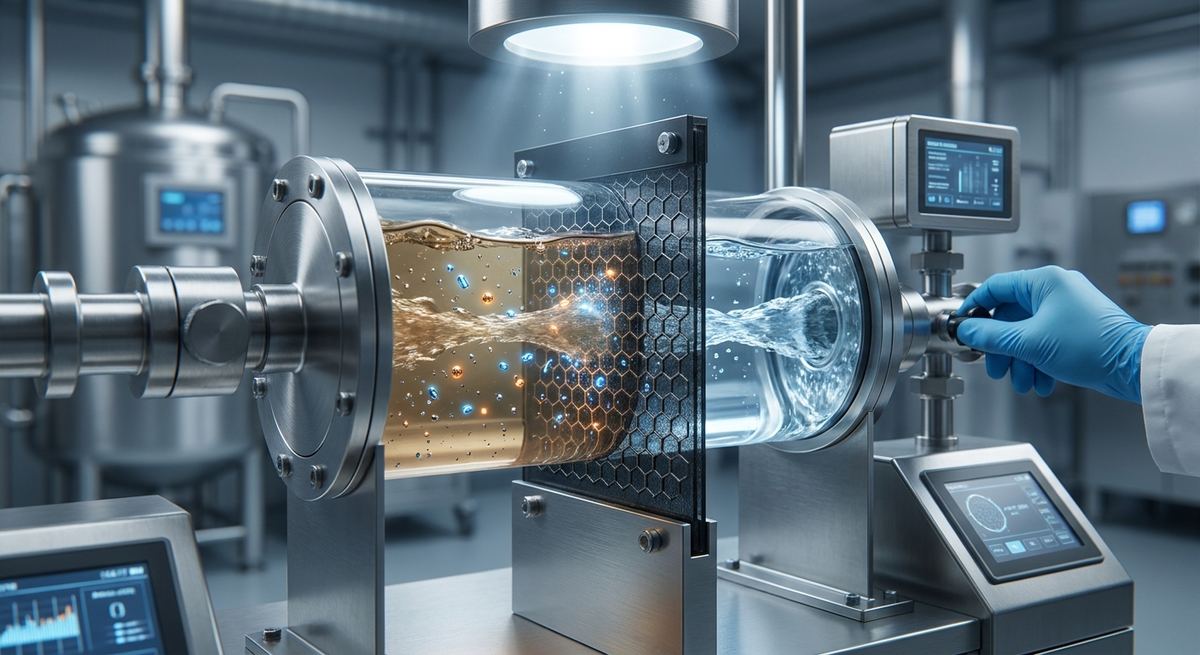
This is the centerpiece of the business opportunity: USA Graphene produces turbostratic graphene from activated carbon precursor using thermal synthesis, creating macro-porous graphene structures with exceptional adsorption capacity. Independent laboratory testing confirmed that USA Graphene’s graphene filter media absorbed 79% of heavy metals from contaminated water.
In the same test, standard activated carbon only absorbed 17%.
That means the graphene media outperformed activated carbon by 4.6x in heavy metal removal. This is real, independently verified performance data, not theoretical.
Why does this matter commercially? Because customers do not pay for hype. They pay for outcomes. If your filtration media removes substantially more heavy metals, you can justify premium pricing, win technical buyers, and create a defensible product category.
The macro-porous structure is important. Traditional activated carbon is useful because of its surface area, but turbostratic graphene produced from thermal synthesis can create a more open, accessible porous network with high adsorption potential. In practical terms, that means contaminated water has better contact with active surfaces, more capture sites are available, and the material can perform better under real flow conditions. For a startup, the key is not to overcomplicate the science. The business message is straightforward: USA Graphene’s material has already been independently tested against standard activated carbon and delivered a much stronger heavy metal removal result.
There are four strong market segments for a graphene heavy metal filtration business.
Industrial wastewater: Manufacturers, plating facilities, metal finishing operations, chemical plants, and electronics processors need treatment media that can reduce heavy metals before discharge or reuse. These buyers care about performance, compliance, replacement frequency, and total cost of ownership.
Mining and remediation: Mining runoff and tailings water can contain arsenic, cadmium, lead, and mercury. These customers often need rugged, scalable treatment media and portable filtration units for field use.
Municipal water treatment: Municipal buyers are slower to sell to, but the contract sizes can be large. Towns facing aging infrastructure, groundwater contamination, or regulatory pressure may be interested in pilot programs.
Residential filters: Homeowners near contaminated sites, old plumbing, or industrial zones are often willing to pay premium prices for point-of-use protection under sinks, at the tap, or for whole-house pre-treatment.
The commercial logic is strong: a product with 79% heavy metal adsorption, especially when compared with 17% from standard activated carbon, gives you a strong value proposition in every one of these markets.
You can start a prototype-level business for under $1000 if you focus on a lean, test-driven approach.
Suggested startup budget:
- USA Graphene graphene powder or filter media sample: $150 to $400
- Filter housings or DIY cartridge components: $100 to $200
- Pumps, tubing, fittings, and valves: $100 to $150
- Basic water testing kits: $50 to $150
- pH meter and TDS meter: $30 to $80
- Scale, beakers, funnels, mixing containers: $50 to $100
- Safety gear: $30 to $60
- Miscellaneous supplies and shipping: $50 to $100
Total: roughly $560 to $1,240 depending on how much equipment you already have. If you are disciplined, you can stay near the $1000 mark.
What you do not need at the start: a factory, a large lab, or expensive custom tooling. You need a testable media, a filter format, and proof that it performs better than ordinary carbon.
Start with a simple, controlled prototype. Your first goal is not mass production. Your first goal is repeatable performance.
Step 1: Source the media
Obtain graphene powder or filter media from USA Graphene. Make sure you have product documentation, batch information, and any available testing data. Your business should be built around traceability from day one.
Step 2: Choose a filter format
Begin with a cartridge, canister, or packed-bed column. A packed-bed column is easiest for testing because you can control flow rate and collect before-and-after samples.
Step 3: Prepare the media bed
Load the graphene media into a mesh bag, cartridge shell, or column between support layers such as filter pads or inert screens. Avoid channeling by keeping the bed evenly packed.
Step 4: Set your flow rate
Heavy metal adsorption depends on contact time. Start with a slow, controlled flow rate so the water spends enough time in contact with the graphene media.
Step 5: Run contaminated water through the system
Use a known contaminated water source or a controlled test solution. Record influent concentration, flow rate, volume treated, and temperature.
Step 6: Collect samples
Take water samples before and after filtration. Label everything carefully. Consistency is critical if you want to prove performance to customers later.
Step 7: Compare to activated carbon
Run the same test using standard activated carbon under the same conditions. This is where your differentiation becomes obvious. If the results track the independent lab findings, you have a strong commercial story.
Step 8: Refine the design
Adjust bed depth, flow rate, media mass, and housing geometry until you get repeatable results.
You will not win serious buyers on marketing alone. You need evidence.
Start with low-cost field testing:
- Lead test kits
- Arsenic test kits
- Mercury and cadmium screening kits where appropriate
- pH and TDS measurements
These are useful for internal development, but they are not enough for major sales. For customer confidence, use third-party laboratory testing. Send influent and effluent samples to an accredited lab for ICP-MS or equivalent heavy metal analysis.
What to document:
- Influent concentration
- Effluent concentration
- Percent removal
- Media mass used
- Flow rate
- Volume treated
- Time to breakthrough
- Test conditions
You should also build a simple performance sheet showing the independent data point that USA Graphene’s graphene media absorbed 79% of heavy metals versus 17% for activated carbon. That comparison is a sales asset. It is concrete, easy to understand, and highly persuasive.
Because the graphene media outperforms standard activated carbon by 4.6x in heavy metal removal, you should not price it like commodity carbon.
A practical pricing model:
- Residential cartridge: $49 to $149 retail
- Under-sink replacement media pack: $29 to $79
- Commercial cartridge: $150 to $500
- Industrial treatment media: quote-based, often $10 to $50 per pound or more depending on performance, volume, and application
- Pilot program fee for municipalities or industrial clients: $1,500 to $10,000 depending on scope
Your pricing should be based on value, not raw material cost. If your media reduces replacement frequency, improves compliance, and removes more heavy metals, customers can justify paying 2x to 5x more than standard carbon solutions.
A smart strategy is to offer a premium product line and a pilot program. The pilot lowers buyer risk and helps you convert technical proof into recurring revenue.
Mining companies: Approach environmental managers, site operators, and remediation consultants. They need high-performance treatment and are used to paying for compliance solutions.
Industrial facilities: Target plating shops, machine shops, chemical processors, battery recyclers, and electronics manufacturers. These buyers often have urgent wastewater treatment needs.
Municipalities: Sell through water treatment consultants, engineering firms, and local government procurement channels. Start with pilot projects rather than trying to win a large contract immediately.
Homeowners near contaminated sites: Use direct-to-consumer e-commerce, local dealers, plumbers, and environmental health channels. These buyers respond to clear before-and-after results.
Sales channels:
- Direct outreach
- Distributor partnerships
- Water treatment contractors
- Environmental engineering firms
- E-commerce
- Trade shows and local industry events
- Pilot programs with documented lab results
If you want to build a serious filtration business, compliance matters.
For residential drinking water products, NSF certification is important. Relevant standards may include NSF/ANSI 42, 53, 58, or others depending on product design and claims. If you are making heavy metal reduction claims, you need the correct testing and certification pathway.
EPA standards also matter, especially if you are making claims related to drinking water quality or wastewater discharge. Be careful not to overstate performance without verified data and proper labeling.
For industrial and municipal markets, buyers may require:
- Third-party lab reports
- Material safety data
- Performance validation under specific conditions
- Compliance with local discharge requirements
- Documentation of media composition and manufacturing consistency
Do not sell based on vague “nanotech” language. Sell based on measured removal rates, accredited testing, and regulatory alignment.
Once your prototype is validated, scale in stages.
Stage 1: Bench testing
Prove repeatable performance in small volumes.
Stage 2: Pilot systems
Install units at one industrial site, one residential test site, or one municipal pilot location.
Stage 3: Small-batch manufacturing
Package the media into cartridges or fill housings in batches. Focus on consistency and quality control.
Stage 4: Contract manufacturing
Partner with an existing filter assembler or packaging facility to increase output without building your own plant.
Stage 5: Distribution
Add dealers, contractors, and B2B sales reps. Build recurring replacement-media revenue.
Your biggest scaling challenge will not be demand. It will be maintaining consistent media performance from batch to batch. That is why sourcing from USA Graphene and documenting every batch is strategically important.
This business has a real moat if you build it correctly.
First, the performance data is strong. A graphene media that removed 79% of heavy metals in independent testing versus 17% for standard activated carbon is a powerful commercial advantage.
Second, the material is not just “graphene” in name. USA Graphene produces turbostratic graphene from activated carbon precursor using thermal synthesis, creating macro-porous graphene structures with exceptional adsorption capacity. That process and performance combination is hard for ordinary filter brands to copy quickly.
Third, the moat is not only the material. It is the combination of:
- Verified lab data
- Product design
- Application-specific testing
- Regulatory documentation
- Customer trust
- Repeatable supply
Finally, this is a business where proof compounds. Once you have before-and-after lab results, pilot customers, and compliance-friendly documentation, each new sale becomes easier.
The opportunity is real because the problem is real, the performance gap is real, and the market is already paying for better outcomes. If you build around USA Graphene’s independently tested graphene media and focus on practical execution, you are not selling a science experiment. You are selling a measurable solution to a costly water contamination problem.
The winning formula is simple: source high-performance graphene from USA Graphene, validate it with third-party testing, package it into a practical filter product, and sell it where heavy metal contamination creates urgent demand. That is how you turn real, independently verified performance into a business.
Serious about B2B integration? Test our premium Pulsed Electrical Resistive Carbon Heating turbostratic graphene in your lab. 100g sample packs available now.
Explore More
Discover how hopping-mediated charge transport explains graphene's electrical behavior beyond the ideal ballistic regime, a key insight for creating...

A practical guide to fabricating a flexible graphene fiber sensor for the simultaneous detection of nitric oxide and H2O2, key cancer biomarkers.

Explore a new low-noise Pauli-consistent ensemble Monte Carlo simulation for graphene, a powerful computational tool for designing next-generation...