
A New Era of Graphene Engineering: Pre-Designing Twist Angles on Demand
Researchers have developed a breakthrough method for growing twisted bilayer graphene with pre-designed angles, a key step toward manufacturable quantum...
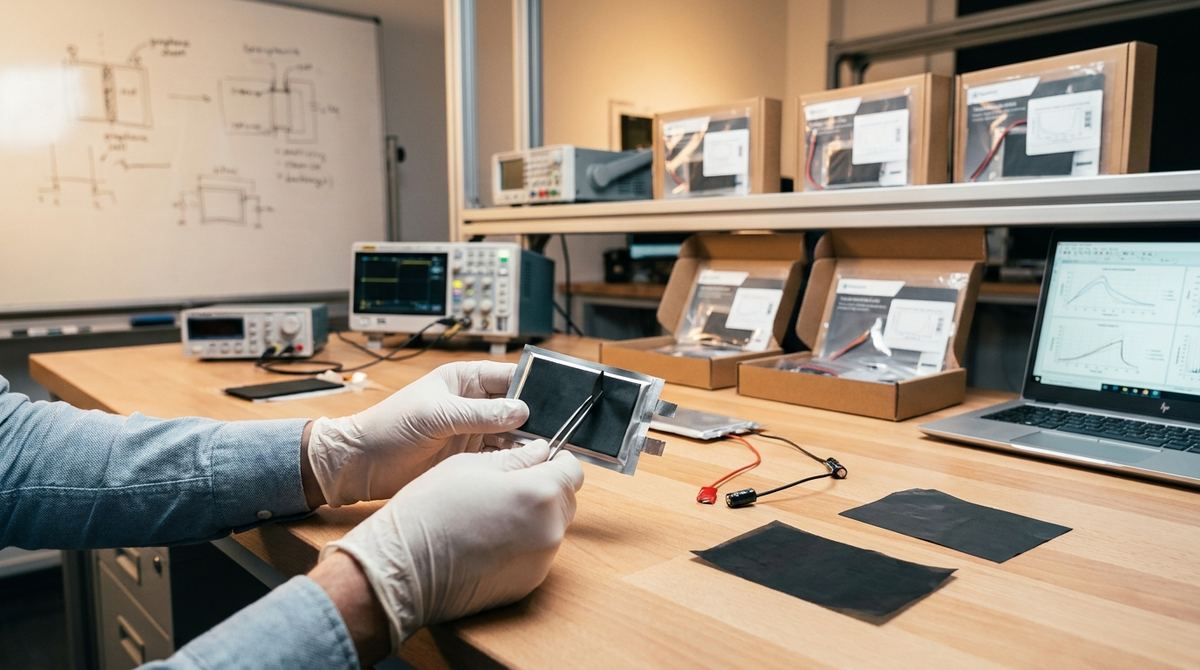
Graphene supercapacitors are energy storage devices that store charge electrostatically rather than through a chemical reaction like batteries. In simple terms, they charge very fast, deliver high power, and can be charged and discharged many thousands of times. The “graphene” part usually refers to graphene-based carbon materials used in the electrodes, often combined with activated carbon or conductive carbon additives to improve performance.
For a maker or classroom kit, the practical value is not that you are shipping lab-grade graphene cells. The value is that you are packaging a hands-on demonstration of modern energy storage in a form that is safe, repeatable, and easy to understand. A good kit helps users build a small supercapacitor bank, measure capacitance, test charging speed, and compare it with a battery.
A useful product definition is:
- Low-voltage, high-cycle-life energy storage kit
- Includes pre-made cells or electrode materials
- Enables simple assembly without specialized equipment
- Designed for experiments with LEDs, small motors, and timing circuits
If you are selling to education, the product should emphasize learning outcomes. If you are selling to makers, emphasize performance, modularity, and experimentation.
Interest in supercapacitors is rising because they fill a gap between batteries and traditional capacitors. Batteries store more energy, but supercapacitors can deliver and absorb power much faster. This makes them useful in:
- Regenerative braking
- Peak power smoothing
- Backup power for electronics
- IoT devices needing rapid charge cycles
- Solar energy buffering
- Robotics and hobby projects
For the market you are targeting, the “revolution” is not about replacing batteries. It is about teaching the future of hybrid energy systems. Students and hobbyists want to understand why a device can charge in seconds and still light an LED after the power source is removed.
Your business angle is strong because the topic is trendy, practical, and visually impressive. A kit that charges a lamp, powers a servo briefly, or runs a clock backup circuit is easy to demo and easy to sell.
Kits sell because they reduce complexity. People want to learn by building, not by reading a white paper.
For education:
- Teachers need curriculum-friendly experiments
- Schools prefer safe, low-voltage systems
- Hands-on kits align with STEM and engineering standards
- A single kit can support multiple lessons: capacitance, RC circuits, energy density, and power delivery
For makers:
- Makers want components they can integrate into projects
- They value modularity and open-ended experimentation
- A kit saves time sourcing parts individually
- A graphene supercapacitor kit feels advanced and novel, which helps sales
For hobbyists:
- They want something impressive and practical
- Supercapacitors are fun to test with solar panels and USB chargers
- They are attractive as backup power or pulse-power modules
The best-selling kits are not the most technical. They are the ones that make the user successful quickly. If the kit can be assembled in 20–40 minutes and produces visible results, customer satisfaction goes up.
You can prototype and launch a small batch under $400 if you keep the first version simple and use off-the-shelf parts.
Example starter budget:
- 10 graphene supercapacitor cells or modules: $80–$140
- Assorted resistors, LEDs, switches, and diodes: $20
- Small solar panel or USB charging module: $10–$20
- Breadboards or terminal blocks: $15–$25
- Multimeter: $15–$30
- Wires, clips, heat shrink, tape, labels: $20
- Packaging materials for 10 kits: $30–$50
- Printed instructions and worksheets: $20–$40
- Safety items and spares: $20–$30
- Small tools if needed: $30–$50
Total: roughly $260–$405 depending on your cell source and packaging quality.
To stay under budget:
- Start with 10 kits, not 50
- Use pre-assembled capacitor modules instead of making electrodes yourself
- Avoid custom PCB costs in version 1
- Use simple printed manuals instead of professional binding
- Sell direct before building inventory
A practical launch plan is to create one “teacher demo kit” and one “maker kit” from the same parts base.
The easiest business model is to assemble kits from purchased cells or modules rather than manufacturing the capacitors yourself. This keeps quality more consistent and reduces technical risk.
A practical assembly workflow:
1. Select the capacitor format
- Small coin-style cells for classroom demos
- 2.7V supercapacitor modules for simple electronics
- Series/parallel packs for higher voltage demonstrations
2. Build a safe voltage range
- Most education kits should stay under 5.5V total
- Use two 2.7V cells in series for 5.4V nominal max
- Add balancing resistors if cells are in series
3. Add a charging path
- USB 5V input with current limiting
- Solar panel input for renewable demos
- Resistor-limited charging for safety
4. Add a load path
- LED with resistor
- Small DC motor
- Timer circuit
- Buzzer or small fan
5. Add measurement points
- Test pads or banana jacks
- Label cell voltage and total pack voltage
- Include a simple discharge resistor for capacitance testing
6. Package the parts
- Separate components into labeled bags
- Include a wiring diagram
- Include a quick start sheet and safety sheet
A simple demo circuit:
- 2 x 2.7V supercapacitor cells in series
- 2 x 100k balancing resistors
- USB 5V charging input through a 10–22 ohm resistor
- LED load with 220–330 ohm resistor
- Momentary switch for discharge test
This is easy to explain and safe for beginners.
A strong kit should include enough parts to succeed without extra shopping.
Recommended contents for a basic education kit:
- 2 x graphene-based supercapacitor cells or modules
- 2 x balancing resistors, 100k ohm, 1/4W
- 2 x LED indicators
- 2 x load resistors, 220–330 ohm
- 1 x charge resistor, 10–22 ohm
- 1 x SPST switch or pushbutton
- 1 x small breadboard or terminal block board
- Jumper wires
- Alligator clip leads
- Printed assembly guide
- Safety sheet
- Experiment worksheet
- Capacitance test worksheet
Optional add-ons:
- Small solar panel, 5V or 6V
- USB charging module
- Multimeter test guide
- Small motor or fan
- Stopwatch or timing worksheet
- Storage box or foam insert
For a more advanced maker kit:
- 4 x cells for series/parallel experiments
- Balance board or protected holder
- Screw terminals
- DC-DC converter module
- Supercapacitor voltage monitor
- Small project enclosure
- Extra wiring and connectors
If you want repeatable results, include the exact capacitor ratings, polarity markings, and expected voltage limits on every label.
Safety matters even at low voltage because beginners often make wiring mistakes. Supercapacitors can deliver very high currents if shorted.
Testing checklist:
- Measure each cell voltage before packing
- Verify polarity markings are correct
- Confirm no cell exceeds the recommended max voltage
- Check for physical damage or swelling
- Test charge and discharge on a resistor load
- Record capacitance or discharge time for quality control
Practical capacitance measurement:
Use a known resistor and a multimeter. Charge the capacitor to a starting voltage, then discharge through a resistor and measure the voltage drop over time.
Formula:
C = t / (R × ln(V0/Vt))
Example:
- R = 100 ohm
- V0 = 5.0V
- Vt = 3.0V
- t = 12 seconds
C = 12 / (100 × ln(5/3))
C ≈ 235 mF
For a classroom kit, you do not need lab-precision numbers. You need consistent, believable results. A simple test sheet can ask students to compare charge time, discharge time, and LED brightness.
Safety guidelines for users:
- Never short the capacitor directly
- Never exceed the rated voltage
- Observe polarity
- Use current-limited charging
- Do not heat, puncture, or crush the cells
- Supervise younger students
- Use only low-voltage sources, typically 5V or less
Include a warning that supercapacitors are not batteries and can dump energy quickly. That helps prevent misuse.
Education and consumer markets need different pricing strategies.
Education pricing:
- Higher price acceptable because it includes curriculum support, worksheets, and reliability
- Schools often buy through purchase orders
- Price per kit: $29 to $79 depending on complexity
- Teacher demo kit: $59 to $129
- Classroom pack of 10: $249 to $499
Consumer or maker pricing:
- Buyers compare against online alternatives
- They want a lower entry price and more flexibility
- Price per kit: $19 to $49 for basic kits
- Advanced maker kit: $39 to $89
A practical margin target:
- Parts cost per basic kit: $8 to $18
- Packaging and printing: $3 to $6
- Total landed cost: $11 to $24
- Retail price: $29 to $59
- Gross margin: roughly 45% to 70%
For schools, you can charge more if you bundle:
- Lesson plans
- Safety documentation
- Replacement parts
- Bulk discounts
- Teacher support email
For consumer sales, focus on:
- Fast shipping
- Clear photos
- Good instructions
- Project ideas
- Optional upgrade packs
Schools:
- Contact STEM coordinators, science teachers, and district procurement staff
- Offer a one-page lesson summary and alignment to learning goals
- Provide a sample kit or demo video
- Make ordering easy with a PDF quote and invoice
- Highlight safety, low voltage, and repeatable experiments
Makerspaces:
- Offer workshop bundles
- Provide kits for group building sessions
- Include extra parts for mistakes
- Give a simple instructor guide
- Sell in packs of 5, 10, or 20
Online:
- Sell on your own site first if possible
- Also use marketplaces where maker products perform well
- Use clear product titles such as “Graphene Supercapacitor STEM Kit” or “High-Power Capacitor Learning Kit”
- Include a short demo video showing charge/discharge behavior
- Use photos of the assembled circuit and the contents list
Best online content:
- 60-second demo video
- Capacitance measurement example
- “What’s in the box” photo
- FAQ about safety and age level
- Project ideas: LED timer, solar charger demo, backup power demo
A useful sales funnel:
1. Short demo video on social media
2. Product page with specifications
3. Downloadable teacher guide or maker guide
4. Email capture for lesson plans or project updates
5. Upsell to larger kits or accessories
Once you have traction, you can move beyond kits into custom energy solutions. This is where the business can become more profitable.
Possible expansion paths:
- Custom supercapacitor packs for robotics
- Backup power modules for sensors and IoT
- Solar smoothing modules
- Peak-power assist packs
- Educational lab systems with sensors and data logging
What customers may ask for:
- Specific voltage and capacitance
- Mounting brackets or enclosures
- USB-C charging
- Integrated voltage monitoring
- Protection circuitry
- Custom branding for schools or distributors
A smart next step is to offer a “prototype-to-product” service:
- Start with your kit platform
- Modify the layout for a specific use case
- Add connectors, monitors, and enclosure options
- Charge consulting or engineering fees separately from hardware
For example:
- A 5V backup module for an Arduino project
- A solar energy buffer for a classroom demo
- A high-cycle demo pack for a museum exhibit
This gives you a path from low-cost kits into higher-value B2B work. The kit becomes your lead product, and custom solutions become your premium offering.
Graphene supercapacitor kits work because they are educational, visually exciting, and practical. If you keep the first version simple, safe, and well documented, you can launch with low capital, sell to multiple customer types, and expand into custom energy products later. The key is to make the technology understandable and useful, not just impressive. That is what turns a science concept into a real business.
Serious about B2B integration? Test our premium Pulsed Electrical Resistive Carbon Heating turbostratic graphene in your lab. 100g sample packs available now.
Explore More
Researchers have developed a breakthrough method for growing twisted bilayer graphene with pre-designed angles, a key step toward manufacturable quantum...

Learn how deep learning is revolutionizing the structural characterization of twisted bilayer materials, accelerating the development of next-generation...

Learn to build a prototype graphene FET biosensor for sensitive DNA detection. This guide covers materials, fabrication, and testing for point-of-care...