
A New Era of Graphene Engineering: Pre-Designing Twist Angles on Demand
Researchers have developed a breakthrough method for growing twisted bilayer graphene with pre-designed angles, a key step toward manufacturable quantum...
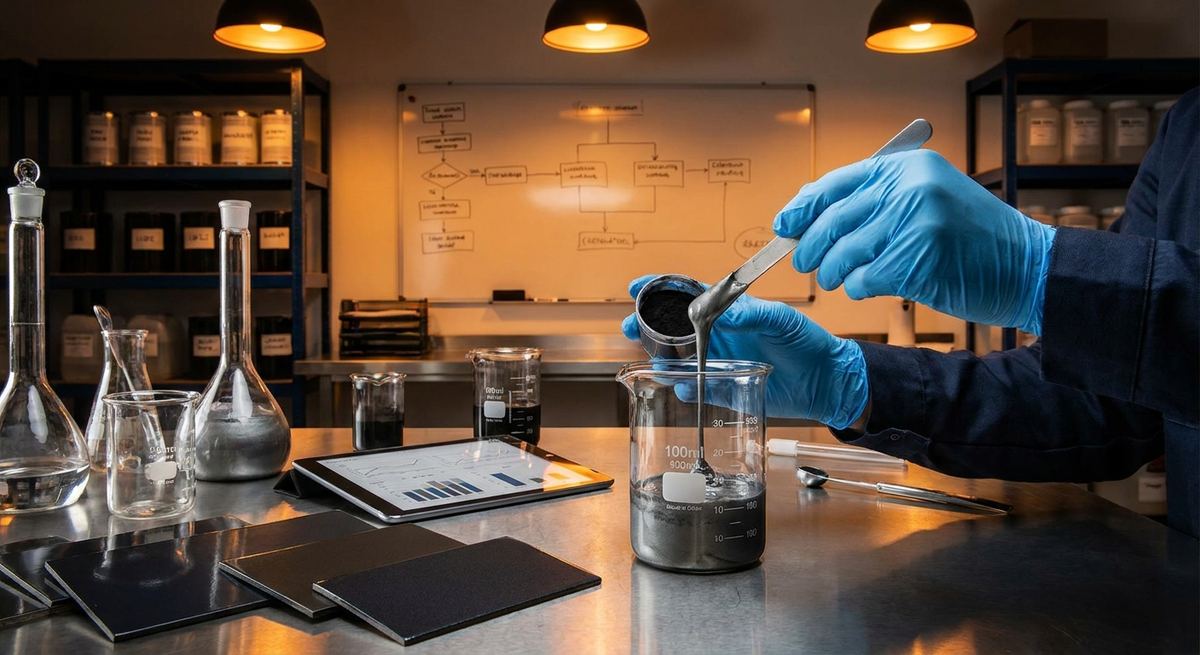
Graphene has become one of the most marketable “performance” ingredients in coatings because it sounds advanced, it feels premium, and it can deliver real practical benefits when used correctly. In simple terms, graphene is a very thin carbon-based material with exceptional strength, high surface area, and useful barrier properties. In coatings, that can translate into better abrasion resistance, improved water resistance, reduced cracking, and sometimes better heat dissipation.
For a small business, the “magic” is not that graphene turns ordinary paint into a miracle product. The magic is that it gives you a story customers understand: stronger, longer-lasting, more weather-resistant, and more professional-looking coatings. That story is valuable in exterior paint, roof coatings, deck sealants, and commercial maintenance applications.
The key is to stay realistic. Graphene should be treated as a performance additive, not a replacement for a good resin system. If the base paint is cheap or poorly formulated, graphene will not rescue it. But if you start with a quality exterior acrylic, elastomeric roof coating, or penetrating deck finish, a small amount of graphene can help create a premium product with a strong margin.
A practical target is 0.25% to 1.0% graphene by total wet weight of the finished coating, depending on product type and dispersion quality. In many small-scale formulations, the best results come from using graphene nanoplatelets or graphene oxide dispersions rather than raw powder, because they are easier to disperse consistently.
Builders, painters, and homeowners pay more when the product solves a visible problem or reduces future labor. Graphene-enhanced coatings can be positioned around four buyer motivations:
1. Longer service life
If a coating lasts longer before chalking, cracking, or peeling, the buyer saves on repainting.
2. Better weather resistance
Exterior buyers care about UV, rain, freeze-thaw cycles, and mildew resistance. A premium coating that performs better in harsh climates has an easy sales angle.
3. Lower maintenance
Decks, fences, roofs, and exterior walls are expensive to maintain. A coating that resists wear and water intrusion is easier to justify.
4. Professional differentiation
Contractors want products that help them stand out. A “graphene-enhanced” line gives them a premium upsell and a modern story for customers.
For homeowners, the premium is usually justified if you frame it as cost per year rather than cost per gallon. Example: a $90 gallon that lasts 2x as long is easier to sell than a $35 gallon that needs replacement sooner.
For contractors, the premium is easier to sell when it improves labor efficiency. If the coating covers well, applies smoothly, and reduces callbacks, contractors will pay more because it protects their reputation.
You can start very lean by making small test batches and selling locally or online before scaling.
A realistic starter budget under $500:
- Quality exterior acrylic paint base: $80 to $120
- Graphene additive:
- graphene nanoplatelet powder or dispersion: $60 to $150
- Mixing equipment:
- paint mixer attachment or drill paddle: $15 to $40
- Measuring tools:
- scale, cups, graduated containers: $20 to $40
- Safety gear:
- gloves, respirator, goggles: $30 to $60
- Sample containers and labels: $30 to $60
- Test panels and brushes/rollers: $20 to $40
- Basic marketing:
- simple website, flyers, sample cards: $50 to $100
The cheapest path is to buy one gallon of a good exterior base, enough graphene to make 5 to 10 test gallons, and a few sample containers. Do not spend money on fancy packaging early. Spend it on testing and customer feedback.
A good first target product is a one-gallon exterior accent or trim coating. It is easier to sell a premium specialty product than a full house-paint line on day one.
The biggest mistake is dumping graphene powder directly into paint and expecting it to disperse. Graphene clumps easily. You need a controlled mixing process.
Best base paints:
- 100% acrylic exterior paint
- elastomeric masonry coating
- water-based roof coating
- water-based deck sealer or stain
- acrylic primer for test batches
Avoid starting with:
- very cheap contractor-grade paint
- heavily solvent-based systems
- products with unknown compatibility
- thickened paints that are already near their maximum solids limit
Practical mixing ratios:
- Start with 0.25% graphene by total wet weight for exterior paint
- Use 0.5% for roof coatings and deck sealants
- Do not exceed 1.0% in early batches unless you have strong dispersion and testing data
Example for 1 gallon of finished paint:
- 1 gallon paint weighs roughly 10 to 12 pounds depending on formulation
- 0.25% graphene = about 0.4 to 0.5 ounces by weight
- 0.5% graphene = about 0.8 to 1.0 ounce by weight
- 1.0% graphene = about 1.6 to 2.0 ounces by weight
Practical method:
1. Pre-mix graphene with a small amount of water or compatible acrylic medium to form a slurry.
2. Add the slurry slowly into the paint while mixing.
3. Use a drill mixer or high-shear mixer for 5 to 10 minutes.
4. Scrape the sides and bottom of the container.
5. Let the batch sit for 15 to 30 minutes.
6. Mix again briefly before application.
If you use a graphene dispersion product instead of dry powder, follow the supplier’s active solids content. For example, if the dispersion is 5% graphene solids, you may need much more liquid by weight to achieve the same final graphene loading.
Good starting formulation ideas:
- Exterior wall paint: 0.25% to 0.4% graphene
- Roof coating: 0.5% to 0.8% graphene
- Deck sealant: 0.3% to 0.6% graphene
- Primer: 0.2% to 0.3% graphene
The goal is not maximum graphene. The goal is stable dispersion and repeatable performance.
You do not need a laboratory to start testing, but you do need a simple, repeatable method.
Basic test plan:
- Apply your graphene coating and a control coating side by side on identical test panels
- Use wood, primed metal, cement board, and shingles if relevant
- Record drying time, gloss, texture, and ease of application
- Place panels outdoors in direct sun
- Compare after 30, 60, and 90 days
What to measure:
- color fade
- chalking
- cracking
- peeling
- water beading
- mildew growth
- abrasion resistance
- heat buildup on surface
Simple durability tests:
- Water spray test: spray panels daily and look for blistering or softening
- Tape adhesion test: score the coating lightly, apply tape, and pull
- Scratch test: use a coin or key to compare resistance
- Heat test: place panels in direct sun and compare surface temperature
- Freeze-thaw test if relevant: cycle panels between cold and warm conditions
Practical success criteria:
- no visible cracking after 60 to 90 days outdoors
- better water beading than control
- less chalking than control
- equal or better adhesion
- no major color shift
If you want to sell to contractors, create a one-page test sheet showing before-and-after photos and your test method. Contractors do not need academic language. They need proof that the coating performs better in real conditions.
Start with three product lines that are easy to understand and easy to demo.
1. Exterior paint
Use a premium 100% acrylic base with 0.25% to 0.4% graphene.
Best use: siding, trim, masonry, fences.
Coverage: 250 to 400 sq ft per gallon depending on surface porosity.
Selling point: better weather resistance and longer repaint cycle.
2. Roof coatings
Use an elastomeric or acrylic roof coating base with 0.5% to 0.8% graphene.
Best use: flat roofs, low-slope roofs, metal roofs, RV roofs.
Coverage: 75 to 150 sq ft per gallon for a proper protective film.
Selling point: improved barrier performance, reduced cracking, better UV durability.
3. Deck sealants
Use a penetrating acrylic or water-based stain/sealer with 0.3% to 0.6% graphene.
Best use: decks, fences, pergolas, outdoor furniture.
Coverage: 150 to 300 sq ft per gallon depending on porosity.
Selling point: water repellency, abrasion resistance, and longer life.
You can also add:
- masonry waterproof coating
- metal rust-inhibiting topcoat
- driveway sealer
- industrial maintenance coating
Keep the line focused. Too many SKUs too early will dilute your testing and confuse buyers.
Premium pricing works if your product is clearly positioned as a performance coating.
Example pricing:
- regular exterior paint retail: $25 to $35 per gallon
- graphene-enhanced premium paint: $75 to $105 per gallon
That is roughly 3x regular paint, which is reasonable if you can show performance benefits and target the right buyer.
Suggested pricing by product:
- Exterior paint: $79 to $99 per gallon
- Roof coating: $89 to $119 per gallon
- Deck sealant: $69 to $89 per gallon
Wholesale pricing for contractors:
- Exterior paint: $49 to $65 per gallon
- Roof coating: $59 to $79 per gallon
- Deck sealant: $45 to $60 per gallon
Your margin comes from the additive story, not from raw material cost alone. A small amount of graphene can add only a few dollars of ingredient cost per gallon, but the perceived value can be much higher if the coating is packaged and marketed correctly.
Be careful not to overclaim. Sell the coating as premium and performance-oriented, not as guaranteed “lasts forever” paint.
Contractors and hardware stores are your best first channels because they already understand paint margins and customer demand.
For painting contractors:
- Offer free sample gallons
- Give them a contractor price sheet
- Provide application instructions
- Show before-and-after panels
- Explain how it helps them upsell premium jobs
Contractors want:
- easy application
- predictable coverage
- good touch-up
- low callback risk
- a product they can explain to homeowners
For hardware stores:
- bring small display samples
- provide shelf-ready labels
- create a simple point-of-sale card
- offer attractive wholesale margins
- keep packaging clean and professional
A good wholesale structure:
- your cost to produce: $20 to $35 per gallon
- contractor wholesale: $49 to $65
- retail shelf price: $79 to $99
That gives enough room for the retailer to make money and still leaves you healthy margins.
Best sales tactic:
- sell one demo gallon first
- ask for a small trial order
- collect feedback
- then expand
Do not pitch graphene as a science project. Pitch it as a premium exterior coating that solves weathering and maintenance problems.
Before-and-after marketing is one of the strongest ways to sell coatings because the result is visual and easy to understand.
Create content showing:
- faded siding before coating
- coated siding after curing
- water beading on treated versus untreated surfaces
- roof panels after sun exposure
- deck boards before and after weathering
What to film or photograph:
- application process
- close-up of texture and coverage
- water test with spray bottle
- scratch resistance comparison
- 30-day outdoor exposure comparison
Marketing message ideas:
- “Built for harsh weather”
- “Premium protection for exteriors”
- “Graphene-enhanced durability”
- “Fewer repaints, better protection”
- “Designed for contractors and demanding homeowners”
The best format is simple:
1. show the problem
2. show your coating being applied
3. show the result
4. show a real-world test
Use local jobs as case studies. A homeowner is more likely to buy if they see a nearby house, deck, or roof that looks better after treatment. Contractors are more likely to buy if you show a job that reduced callbacks or improved finish quality.
Once you have repeatable batches and a few successful local jobs, move into commercial applications.
Commercial buyers include:
- property managers
- apartment maintenance teams
- roofing contractors
- municipal maintenance departments
- warehouse and industrial facility owners
- hotel and resort maintenance teams
Commercial sales require more proof:
- technical data sheet
- safety data sheet
- application instructions
- coverage rates
- cure times
- adhesion and weather testing
- sample projects
Commercial opportunities:
- exterior walls on apartment buildings
- roof maintenance coatings
- parking structure sealers
- metal building topcoats
- utility sheds and equipment enclosures
- marine-adjacent or high-humidity structures
Practical commercial pricing:
- exterior coating: $65 to $95 per gallon wholesale
- roof coating: $75 to $110 per gallon wholesale
- large project pricing: $1.50 to $4.00 per sq ft depending on surface and prep
The secret to commercial growth is consistency. Commercial buyers do not want a miracle. They want a coating that performs the same every time, is easy to apply, and reduces maintenance costs.
If you want to scale, focus on:
- stable formulation
- repeatable dispersion
- documented testing
- professional packaging
- contractor relationships
- local proof of performance
Final practical rule: start with one product, one base, one graphene loading, and one market. Test it, document it, sell it, and only then expand. A small, well-tested graphene coating business can be built with a low startup budget, strong margins, and a premium story that customers understand quickly.
Serious about B2B integration? Test our premium Pulsed Electrical Resistive Carbon Heating turbostratic graphene in your lab. 100g sample packs available now.
Explore More
Researchers have developed a breakthrough method for growing twisted bilayer graphene with pre-designed angles, a key step toward manufacturable quantum...

Learn how deep learning is revolutionizing the structural characterization of twisted bilayer materials, accelerating the development of next-generation...

Learn to build a prototype graphene FET biosensor for sensitive DNA detection. This guide covers materials, fabrication, and testing for point-of-care...