
Beyond Perfection: How Electrons Hop in Real-World Graphene Electronics
Discover how hopping-mediated charge transport explains graphene's electrical behavior beyond the ideal ballistic regime, a key insight for creating...
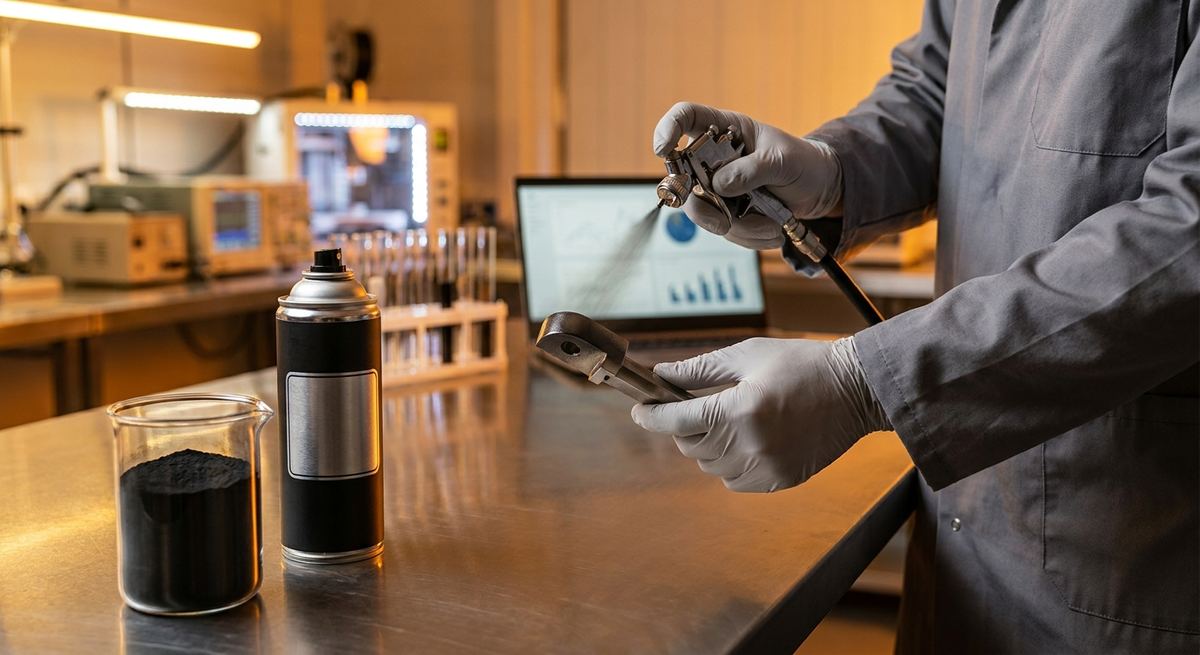
Corrosion is one of the most expensive hidden problems in the global economy. It damages boats, bridges, pipelines, industrial equipment, rail systems, storage tanks, and marine structures. For a business founder, that matters because corrosion is not a niche problem. It is a recurring maintenance budget item across multiple industries.
The direct cost of corrosion is massive, but the indirect cost is often bigger. Downtime, labor, asset replacement, safety incidents, insurance claims, and regulatory penalties all add up. That creates a strong market for products that can extend asset life, reduce maintenance cycles, and perform in harsh environments.
A graphene anti-corrosion spray business fits this pain point well because buyers are not purchasing “a coating.” They are buying fewer repairs, less downtime, and longer service life. That is a much easier value proposition to sell.
The best customers are not looking for the cheapest spray. They are looking for a product that:
- is easy to apply
- works on metal surfaces exposed to salt, moisture, and chemicals
- reduces reapplication frequency
- can be used as part of scheduled maintenance
- offers a visible ROI in labor and asset protection
If you can show even a modest extension in maintenance intervals, the economics become compelling. For example, if a marina spends thousands each season on rust remediation, a spray that reduces touch-up frequency by 30% to 50% can justify premium pricing quickly.
Graphene is attractive because of its barrier properties. In simple terms, it helps create a more tortuous path for water, oxygen, and corrosive ions trying to reach the metal surface. That can improve resistance to rust and oxidation when properly dispersed and formulated.
Compared with traditional coatings, graphene-based systems can offer:
- improved barrier performance
- better mechanical strength
- potential for thinner protective films
- enhanced conductivity in some formulations
- improved resistance to moisture and salt ingress
That said, graphene is not magic. The formulation matters more than the marketing. Poor dispersion, too much graphene, or incompatible binders can make performance worse, not better.
Traditional coatings like epoxy, polyurethane, zinc-rich primers, and wax-based protectants are proven and widely trusted. Your advantage is not claiming graphene replaces every coating. Your advantage is positioning graphene as a high-performance additive system or spray that improves protection for specific use cases, especially where frequent reapplication is a problem.
Practical takeaway:
- Do not overclaim.
- Sell measurable benefits.
- Position the product as a performance upgrade, not a miracle cure.
You can launch a lean prototype business for under $500 if you focus on a small-batch, test-first approach. The goal is not full-scale manufacturing. The goal is to create a credible sample product, validate demand, and start pilot sales.
Sample budget:
- Graphene nanoplatelets or graphene powder: $60 to $120
- Water-based acrylic or polyurethane binder: $40 to $80
- Surfactant/wetting agent: $15 to $30
- Corrosion inhibitor package: $30 to $60
- Deionized water, solvents, or carrier liquids: $20 to $40
- Spray bottles, sample containers, labels: $30 to $60
- pH strips, mixing cups, stir rods, scales: $25 to $50
- Basic rust test materials, steel coupons, salt, humidity setup: $40 to $80
- Safety gear: gloves, goggles, respirator if needed: $30 to $60
- Website/domain/basic branding: $20 to $50
Total: roughly $320 to $590, depending on what you already own.
To stay under $500:
- use a simple water-based formula first
- buy small quantities of raw materials
- use off-the-shelf packaging
- test with local contacts before investing in custom bottles or labels
- avoid expensive equipment until you have repeat customers
Your first goal is not perfection. Your first goal is proof of demand and proof of performance.
A practical formulation should be simple, repeatable, and stable. For an early-stage product, think in terms of a water-based sprayable coating rather than a thick industrial paint.
A starter prototype can be built around four components:
1. carrier
2. binder
3. graphene additive
4. corrosion inhibitor package
A practical starting range:
- water or water/solvent carrier: 60% to 80%
- binder resin: 10% to 25%
- graphene: 0.1% to 1.0%
- corrosion inhibitors and additives: 1% to 5%
- surfactant/dispersant: 0.2% to 2%
- defoamer, preservative, pH adjuster: small amounts as needed
Concentration tips:
- Start low with graphene. More is not always better. In many small-scale systems, 0.2% to 0.5% is a good starting range.
- Use well-dispersed graphene nanoplatelets rather than clumps. Aggregation kills performance.
- Test multiple versions: 0.2%, 0.5%, and 1.0% graphene loading.
- If the spray becomes too thick or unstable, reduce graphene and improve dispersion before adding more solids.
- A compatible binder matters more than chasing ultra-high graphene content.
Simple pilot formula concept:
- 70% deionized water
- 18% water-based acrylic or polyurethane binder
- 0.5% graphene nanoplatelets
- 3% corrosion inhibitor blend
- 1% dispersant/wetting agent
- 0.5% defoamer/preservative/pH adjuster combined
- 7% additional carrier or coalescent as needed for sprayability
This is not a final commercial formula. It is a starting point for testing.
Practical mixing order:
1. Add carrier liquid.
2. Add dispersant/wetting agent.
3. Slowly introduce graphene while stirring.
4. Mix thoroughly until no visible clumps remain.
5. Add binder.
6. Add corrosion inhibitors and other additives.
7. Adjust viscosity and pH.
8. Filter if needed for sprayability.
Use a high-shear mixer if available, but a strong drill mixer can work for prototypes. The key is dispersion. If graphene is not evenly distributed, you are not testing the real product.
Important business note: if you plan to sell, you need to verify chemical compatibility, storage stability, and label compliance. A product that separates in the bottle will damage your brand quickly.
Testing is where many startup coating businesses fail. They rely on claims instead of data. You need a simple but credible test plan.
Start with three levels of testing:
1. visual screening
2. accelerated salt exposure
3. field testing
Visual screening:
- Apply your spray to cleaned steel coupons.
- Compare against a control: bare steel, a standard rust spray, and a competitor product.
- Check for film uniformity, drying time, and surface finish.
- Look for cracking, peeling, or tackiness after curing.
Accelerated salt exposure:
- Use a basic salt spray setup if you can access one.
- If not, create a simplified humidity and salt exposure test for internal screening.
- Record time to first rust, blistering, discoloration, and adhesion loss.
Field testing:
- Put samples on boats, marina hardware, outdoor steel, or industrial fixtures.
- Leave them in real conditions for weeks or months.
- Photograph results weekly.
- Measure before/after condition and reapplication frequency.
What to track:
- adhesion
- time to rust onset
- water beading
- salt residue resistance
- abrasion resistance
- drying time
- ease of application
- compatibility with painted and bare metal surfaces
Create a simple data sheet for every test batch:
- batch number
- formula version
- application date
- substrate type
- environmental conditions
- observations
- photos
This becomes your sales asset. Buyers trust evidence more than adjectives.
Boat owners:
This is the easiest early market. Boat owners understand corrosion pain and often buy maintenance products directly. They care about saltwater exposure, metal fittings, railings, engines, trailers, and deck hardware.
Your message:
- protects against salt spray
- reduces rust on exposed metal
- easy seasonal application
- useful for trailers, hinges, rails, and fasteners
Marinas:
Marinas buy for recurring maintenance and resale to boat owners. They also maintain docks, metal hardware, lifts, and service equipment.
Your message:
- protects shared infrastructure
- lowers maintenance labor
- supports preventative maintenance programs
- can be sold in bulk or private label
Industrial facilities:
These are higher-value accounts. They care about downtime, maintenance schedules, and asset life. Your product may be used on exposed metal parts, storage racks, exterior equipment, and maintenance tools.
Your message:
- reduces corrosion in harsh environments
- supports preventive maintenance
- easy to integrate into existing maintenance routines
- cost-effective compared with equipment replacement
Bridges:
Bridges are a serious but difficult market. Public infrastructure buyers require documentation, compliance, and often approved vendor status. This is not your first market, but it is a long-term opportunity.
Your message:
- corrosion prevention for exposed metal components
- maintenance support product
- field-applied protection for specific approved use cases
Best entry strategy:
Start with boat owners and marinas, then move into industrial maintenance, then pursue infrastructure accounts once you have test data and certifications.
Your pricing should reflect performance and convenience, not raw material cost alone.
Typical market positioning:
- low-cost rust sprays: cheap, widely available, low performance
- mid-tier protectants: moderate price, decent performance
- premium marine/industrial protectants: higher price, stronger claims, better margins
A practical pricing model:
- 12 oz consumer spray: $19.99 to $29.99
- 16 oz premium spray: $24.99 to $34.99
- 1-gallon refill: $79 to $149
- B2B 5-gallon pail: priced by quote, often with 30% to 50% gross margin target
Why this works:
- consumers pay for convenience and brand trust
- B2B buyers pay for reduced maintenance cost
- premium pricing signals performance, but you need proof
If your product is new, do not race to the bottom. A low price can make buyers assume it is just another rust spray. Better to position it as a high-performance maintenance coating with graphene-enhanced barrier protection.
Pricing tip:
Use tiered pricing:
- retail spray
- refill size
- bulk maintenance pack
- private label for marinas or distributors
This lets you serve multiple customer types without changing the core formula.
B2B is where this business can become real. The key is to sell outcomes, not chemistry.
Your sales process should be:
1. identify a corrosion pain point
2. offer a sample
3. run a pilot
4. document results
5. close a recurring supply agreement
Best B2B targets:
- marina operators
- boat repair yards
- industrial maintenance managers
- equipment rental companies
- metal fabrication shops
- facility maintenance contractors
Simple sales pitch example:
“We make a graphene-enhanced anti-corrosion spray designed to extend the life of exposed metal in salt and moisture environments. It’s easy to apply, dries fast, and helps reduce rust-related maintenance. We’d like to give you sample units for a 30-day field test on high-exposure parts.”
Another pitch:
“If you’re spending money every month on rust cleanup, our product is designed to cut that cycle down by creating a stronger protective barrier on metal surfaces. We can pilot it on a few assets and compare results against your current protectant.”
B2B selling tips:
- bring a one-page spec sheet
- show before/after photos
- offer free pilot samples
- track maintenance savings
- ask for the next purchase before the pilot ends
- build recurring orders, not one-time sales
Decision makers care about:
- cost per asset protected
- time saved per application
- compatibility with existing maintenance routines
- safety and compliance
- vendor reliability
Certifications and documentation help you move from hobby product to serious supplier.
Useful items include:
- Safety Data Sheet (SDS)
- product label compliance
- basic ingredient disclosure
- VOC compliance where relevant
- corrosion test reports
- adhesion and durability data
- packaging and transport compliance
Depending on market and geography, you may also need:
- EPA or local chemical regulations compliance
- REACH compliance for European markets
- marine product compliance documentation
- industrial procurement vendor requirements
- ISO-related quality procedures if you scale
Practical advice:
Start with the documents that buyers ask for first:
- SDS
- technical data sheet
- application instructions
- storage and shelf-life guidance
If you want to sell to marinas or industrial facilities, these documents often open more doors than a fancy brand story.
Do not fake certifications. Instead, build a proper compliance folder and test archive. That makes you look credible and reduces sales friction.
The path from garage prototype to manufacturing should be staged.
Stage 1: prototype
- make small batches
- test several graphene loadings
- focus on stability and sprayability
- sell samples locally
Stage 2: pilot production
- standardize a single formula
- use batch records
- improve packaging and labeling
- collect customer feedback
- prove repeat orders
Stage 3: micro-manufacturing
- rent small production space
- buy better mixing equipment
- improve quality control
- negotiate bulk raw material pricing
- formalize SOPs
Stage 4: scale manufacturing
- outsource to a contract manufacturer or invest in your own line
- lock in supply agreements
- expand into private label and B2B contracts
- build distributor relationships
What to systemize early:
- batch numbering
- raw material sourcing
- mixing procedure
- fill weights
- shelf-life testing
- customer complaint handling
- reorder tracking
Your biggest scaling risks are inconsistency and overpromising. A coating business wins when every bottle performs close to the last one.
Final practical advice:
Do not start by trying to invent the perfect graphene chemistry. Start by solving a real corrosion problem for a narrow customer segment. Build a formula that sprays well, protects well, and can be demonstrated with simple tests. Then sell the outcome, not the ingredient.
If you can show that your product reduces rust, extends maintenance intervals, and saves labor, you have a business. If you can repeat that result reliably, you have a scalable one.
The opportunity is real, but the winners will be the founders who combine chemistry discipline with strong sales execution, not the ones who rely on hype. Graphene gives you a story. Performance gives you a company.
Serious about B2B integration? Test our premium Pulsed Electrical Resistive Carbon Heating turbostratic graphene in your lab. 100g sample packs available now.
Explore More
Discover how hopping-mediated charge transport explains graphene's electrical behavior beyond the ideal ballistic regime, a key insight for creating...

A practical guide to fabricating a flexible graphene fiber sensor for the simultaneous detection of nitric oxide and H2O2, key cancer biomarkers.

Explore a new low-noise Pauli-consistent ensemble Monte Carlo simulation for graphene, a powerful computational tool for designing next-generation...