
AI-Powered Characterization of Twisted Bilayer Graphene and 2D Materials
Learn how deep learning is revolutionizing the structural characterization of twisted bilayer materials, accelerating the development of next-generation...
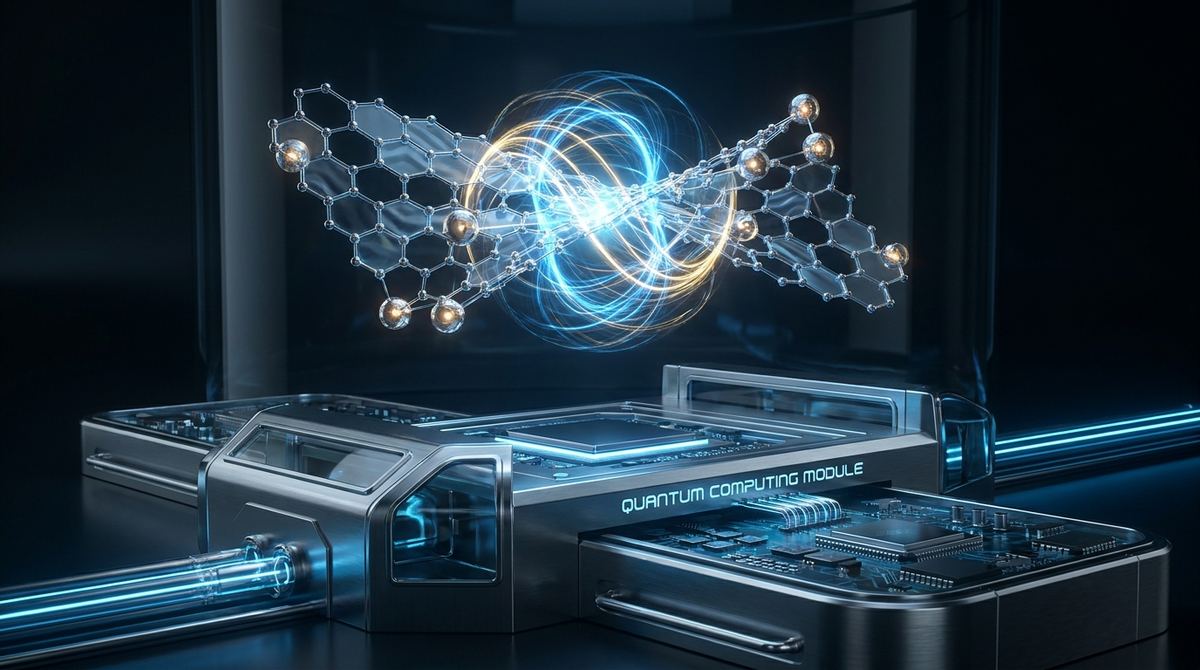
Quantum transport through time-dependent barriers is a central problem in mesoscopic physics, with direct relevance to graphene-based electronics and quantum devices. Here we present an analytical treatment of tunneling through a barrier whose height fluctuates in time according to Gaussian white noise. By mapping the stochastic evolution onto an equivalent time-independent Lindblad equation for the density matrix, one obtains a closed framework in which transmission can be computed exactly for both ordinary Schrödinger particles and massless Dirac fermions in graphene. For Schrödinger particles, the noise acts as a dissipative channel that suppresses Fabry-Pérot resonances and drives the transmission toward an exponentially decaying form. The graphene case is more striking: noise generates an effective complex longitudinal wavevector inside the barrier, thereby attenuating propagating and evanescent components alike and strongly suppressing Klein tunneling, even at normal incidence. This result is technologically significant because pristine graphene ordinarily exhibits near-perfect transparency at normal incidence due to pseudospin matching. The noise-induced breakdown of this effect suggests a route to tunable electron confinement using dynamically disordered barriers. We discuss how such noisy barriers could be incorporated into graphene heterostructures, electrostatic gates, and quantum-dot architectures, and we briefly outline implications for the design of graphene quantum dots as platforms for spin qubits and related solid-state quantum technologies.
Graphene has transformed condensed-matter physics because its low-energy carriers behave as massless Dirac fermions rather than conventional Schrödinger particles. This relativistic-like dispersion produces unusual transport phenomena, including half-integer quantum Hall physics, minimal conductivity, and Klein tunneling. In the idealized clean limit, a sharp electrostatic barrier cannot fully confine normal-incidence carriers: the pseudospin structure of graphene enforces perfect transmission through a sufficiently smooth or abrupt barrier at zero transverse momentum. This transparency, while fundamental and elegant, creates a practical challenge for device engineering. If one wants graphene to function as a switch, barrier, collimator, or quantum-dot host, one must overcome or control Klein tunneling.
A natural route is to introduce time dependence and disorder. Real electrostatic gates are never perfectly static: they fluctuate due to charge traps, circuit noise, substrate dynamics, and environmental coupling. Rather than treating such fluctuations as a nuisance, they can be used as a control knob. Time-dependent barriers may suppress coherent resonances, alter phase accumulation, and induce effective dissipation. In graphene, where transport is highly phase sensitive, even weak stochasticity can qualitatively change the transmission landscape.
The problem becomes especially interesting when the barrier height is modeled as a stochastic process with Gaussian white-noise statistics. White noise is analytically tractable and captures the limit of rapid fluctuations with short correlation time. The central insight is that the stochastic average over barrier realizations can be recast as a deterministic evolution equation for the density matrix. Specifically, the noise-averaged dynamics map onto a Lindblad master equation with a dephasing-like dissipator. This representation eliminates the need for Monte Carlo averaging and allows exact or semi-exact solutions for transport observables.
The present article focuses on the graphene realization of this framework. While the formalism applies equally to Schrödinger particles, the graphene case is more physically revealing because the barrier acts on a Dirac spinor and the longitudinal momentum inside the barrier is modified by both electrostatic potential and noise-induced decoherence. The result is an effective complex wavevector that suppresses transmission even where Klein tunneling would otherwise guarantee perfect transparency. This mechanism provides a route to noise-engineered confinement, potentially enabling improved electrostatic control in graphene nanodevices and quantum-dot structures relevant to spin qubit architectures.
Consider a one-dimensional barrier region of width L with time-dependent height V(x,t)=V0+ξ(t) for 0<x<L, and V=0 outside. The noise ξ(t) is taken to be Gaussian white noise with zero mean and correlator <ξ(t)ξ(t')>=2Dδ(t−t'), where D sets the noise strength. The Hamiltonian is H(t)=H0+V(x,t), where H0 is either the Schrödinger Hamiltonian or the Dirac Hamiltonian appropriate to graphene.
The stochastic evolution of the wave function is not directly closed after averaging, because the random phase accumulated inside the barrier depends on the full history of ξ(t). However, for white noise one can derive a closed equation for the density matrix ρ=<|ψ><ψ|>. The key identity is that averaging over Gaussian white noise converts the stochastic phase factor into a second-order differential operator in the potential coupling. In operator form, the master equation takes the Lindblad-like structure
dρ/dt = −(i/ħ)[H0+V0,ρ] − (D/ħ^2)[W,[W,ρ]],
where W is the operator that couples to the noise, here the barrier projector onto the region 0<x<L. The double commutator is the hallmark of pure dephasing: it preserves trace and positivity while damping coherences between states with different weights in the noisy region.
This mapping is powerful because it replaces a stochastic differential equation with a deterministic linear equation. In transport language, the noise does not merely broaden the barrier; it introduces an irreversible loss of phase coherence that can be interpreted as an effective dissipative channel. For ordinary particles, this yields attenuation of interference fringes. For graphene, the same dissipative term reshapes the pseudospin transport problem and modifies the matching conditions at the barrier interfaces.
For a nonrelativistic particle, the barrier region supports wave numbers k and q determined by the incident energy and the barrier height. In the clean case, transmission through a finite barrier exhibits Fabry-Pérot oscillations due to multiple internal reflections. These oscillations arise from coherent phase accumulation 2qL inside the barrier. When the barrier height fluctuates, the accumulated phase becomes random, and the Lindblad term suppresses off-diagonal density-matrix elements corresponding to left- and right-moving components in the barrier.
The resulting transmission probability can be obtained analytically by solving the transfer equation generated by the master equation. The central effect is that the clean oscillatory denominator acquires a damping factor. Resonant peaks are reduced, their widths broaden, and the envelope of transmission decays approximately exponentially with increasing barrier width or noise strength. In the strong-noise regime, coherent multiple-reflection physics is washed out, and the barrier behaves more like a dissipative absorber than a coherent interferometer.
This Schrödinger case is important as a baseline because it demonstrates that white-noise fluctuations can be encoded as effective dephasing without invoking explicit inelastic scattering. The physical picture is that the barrier no longer simply shifts the phase of a plane wave; it randomizes phase accumulation and destroys the constructive interference needed for high transmission resonances. The graphene case inherits this logic but adds the pseudospin structure and relativistic dispersion, which make the suppression of transmission particularly dramatic.
At low energies, graphene quasiparticles are described by the two-dimensional Dirac Hamiltonian H=vFσ·p+V(x,t), where vF is the Fermi velocity and σ are Pauli matrices acting on the sublattice pseudospin. For a barrier invariant in the y direction, the transverse momentum ky is conserved, and transport reduces to an effective one-dimensional problem for each incidence angle θ, with ky=k sinθ and longitudinal momentum kx=k cosθ outside the barrier.
In the clean static case, the longitudinal wavevector inside the barrier is qx=±sqrt[(E−V0)^2/(ħ^2vF^2)−ky^2]. The spinor matching at the interfaces leads to the celebrated Klein tunneling result: at normal incidence ky=0, reflection vanishes identically, and transmission through an arbitrarily high barrier can be perfect. This is not an accident of kinematics but a consequence of pseudospin conservation. The incoming and transmitted states share the same pseudospin orientation, preventing backscattering.
This property has profound implications. It makes graphene highly transparent, which is desirable for interconnects but problematic for electrostatic confinement. Standard semiconductor quantum dots rely on band gaps and mass barriers to localize carriers. In graphene, the absence of a gap and the presence of Klein tunneling make purely electrostatic confinement difficult. Various strategies have been proposed, including magnetic fields, mass gaps, bilayer graphene, strain engineering, and nanostructuring. Noise-induced suppression of Klein tunneling offers an additional and conceptually distinct route: use temporal disorder in the barrier to destroy the coherence that underlies perfect transparency.
The Lindblad formulation reveals how white-noise fluctuations alter graphene transport in a particularly elegant way. Inside the barrier, the stochastic potential contributes not only a real shift V0 but also an imaginary component in the effective dispersion relation after averaging. Equivalently, the longitudinal wavevector becomes complex: qx→qx+iκ, where κ depends on the noise strength D and the dwell time in the barrier.
This complexification has two immediate consequences. First, propagating modes acquire exponential attenuation over the barrier width L, with factors of the form exp(−κL). Second, even evanescent modes are further suppressed because the noise destroys the delicate phase relations required for resonant tunneling. In graphene, where normal-incidence transmission is normally protected, this means that the noise effectively breaks the perfect matching condition by introducing dephasing between the sublattice components during barrier traversal.
The physical interpretation is subtle but clear. The barrier no longer acts as a purely conservative electrostatic region. Instead, it becomes a dissipative element that converts coherent amplitude into incoherent mixture. Because Klein tunneling relies on coherent pseudospin transport, it is especially vulnerable to this type of stochastic perturbation. The suppression is therefore stronger in graphene than in many conventional systems, since the ideal transmission mechanism is itself a phase-sensitive interference effect protected by symmetry.
Analytically, one finds that the transmission probability decreases rapidly with D and L, and the normal-incidence limit no longer yields unit transmission. This is the key result: noise lifts the topological-like transparency of Dirac carriers and restores the possibility of electrostatic confinement.
Although both systems are governed by the same stochastic barrier statistics and the same Lindblad mapping, their responses differ qualitatively. Schrödinger particles exhibit damped Fabry-Pérot oscillations because the barrier acts as a conventional interferometer. Noise suppresses the oscillations but does not alter the fundamental notion of tunneling through a classically forbidden region.
Graphene, by contrast, features an intrinsically relativistic transport law and pseudospin-momentum locking. The clean barrier already supports unusual angle-dependent transmission, including perfect normal-incidence transparency. Noise therefore does more than damp oscillations: it attacks the mechanism of Klein tunneling itself. The effective complex wavevector inside the barrier means that the barrier behaves as a lossy pseudospin filter. This is technologically appealing because the same electrostatic gate that would be ineffective in the clean case can become a tunable suppressor of transmission when weak temporal fluctuations are present.
This difference suggests a broader design principle for graphene device engineering. Rather than striving for perfectly static gates, one may intentionally introduce controlled noise to tailor transport. A barrier with calibrated fluctuations could act as a dissipative switch, a probabilistic valve, or a phase randomizer. In nanoscale circuits where complete coherence is not always desirable, such functionality may be advantageous.
The most immediate implication concerns graphene transistors and electron optics. Graphene’s high mobility and near-ballistic transport make it attractive for high-frequency electronics, but the same transparency that enables rapid transport complicates current modulation. Noise-suppressed Klein tunneling offers a method to increase barrier effectiveness without requiring a band gap. A dynamically noisy gate could improve on/off contrast in narrow constrictions or barrier-defined channels.
This is also relevant for graphene Veselago lenses, p-n junction optics, and collimators. Such devices rely on angle-selective transmission and refraction of Dirac fermions. If noise is introduced intentionally, the angular transmission profile can be reshaped, potentially enabling adaptive control over focusing and beam steering. Conversely, unwanted environmental noise could degrade device performance by suppressing the very resonances used for electron optics. The present theory therefore provides both a design tool and a diagnostic framework.
From an industrial perspective, graphene is attractive because it is compatible with large-area growth, flexible substrates, and heterogeneous integration. Understanding how fluctuating gate potentials alter transport is essential for reliable device operation. White-noise-like fluctuations may arise from imperfect dielectrics, fluctuating adsorbates, or noisy control electronics. The analytical framework discussed here allows such effects to be modeled without brute-force numerics, helping guide engineering tolerances and noise mitigation strategies.
Graphene quantum dots are of particular interest for quantum information science. Although graphene lacks strong intrinsic spin-orbit coupling and has weak hyperfine interaction in isotopically purified forms, it offers long spin coherence prospects and compatibility with scalable nanofabrication. A major challenge is confinement: because of Klein tunneling, electrostatic barriers alone often fail to isolate carriers sufficiently. Quantum dots require sharp, controllable boundaries, and leakage through the barrier can spoil level quantization and qubit addressability.
Noise-suppressed tunneling changes this picture. If a gate-defined barrier acquires a controlled level of temporal disorder, the effective transmission can be reduced substantially, improving confinement without needing a large band gap. This could help define smaller, better isolated graphene dots with sharper charge stability diagrams. In spin-qubit implementations, improved confinement supports more reproducible exchange coupling, reduced leakage, and better control over tunnel rates between dots and leads.
The idea is not that noise should be maximized, but that its magnitude and spectrum can be engineered. In a quantum-dot context, one may envision using a deliberately noisy barrier as a tunable dissipative boundary during initialization or readout, then reducing noise for coherent manipulation. This suggests a hybrid strategy in which static electrostatic confinement is supplemented by controlled stochastic gating to optimize different phases of qubit operation.
More broadly, the analytical results indicate that dissipative barrier engineering could become a useful tool in graphene quantum technologies. Since the master equation is solvable, one can in principle design barrier parameters to achieve desired transmission suppression while minimizing unwanted decoherence elsewhere in the device. This is particularly attractive for arrays of graphene dots, where uniformity and gate control are critical.
The analytical treatment of noise-suppressed tunneling demonstrates that temporal disorder can be converted from a complication into a control mechanism. In graphene, the effect is especially powerful because the noise destroys the coherence underlying Klein tunneling and produces an effective complex wavevector inside the barrier. The result is a strong, tunable suppression of transmission that persists even at normal incidence, where clean graphene is normally perfectly transparent.
Several extensions are natural. One can generalize the white-noise model to colored noise with finite correlation time, study barriers combined with magnetic fields or mass gaps, and analyze multi-terminal geometries relevant to interferometers and quantum-dot arrays. One can also incorporate realistic device features such as finite temperature, edge disorder, and contact resistance. Even within these more complex settings, the Lindblad perspective remains valuable because it isolates the essential role of stochastic dephasing in transport.
In summary, noise is not merely a source of imperfection in graphene barriers. When treated analytically, it becomes a design variable that can suppress Klein tunneling, enhance confinement, and enable new device functionalities. This opens a pathway toward more controllable graphene electronics and may support future efforts to build graphene quantum dots suitable for spin qubit applications.
Serious about B2B integration? Test our premium Pulsed Electrical Resistive Carbon Heating turbostratic graphene in your lab. 100g sample packs available now.
Explore More
Learn how deep learning is revolutionizing the structural characterization of twisted bilayer materials, accelerating the development of next-generation...

Learn to build a prototype graphene FET biosensor for sensitive DNA detection. This guide covers materials, fabrication, and testing for point-of-care...

Discover how hopping-mediated charge transport explains graphene's electrical behavior beyond the ideal ballistic regime, a key insight for creating...