
A New Era of Graphene Engineering: Pre-Designing Twist Angles on Demand
Researchers have developed a breakthrough method for growing twisted bilayer graphene with pre-designed angles, a key step toward manufacturable quantum...
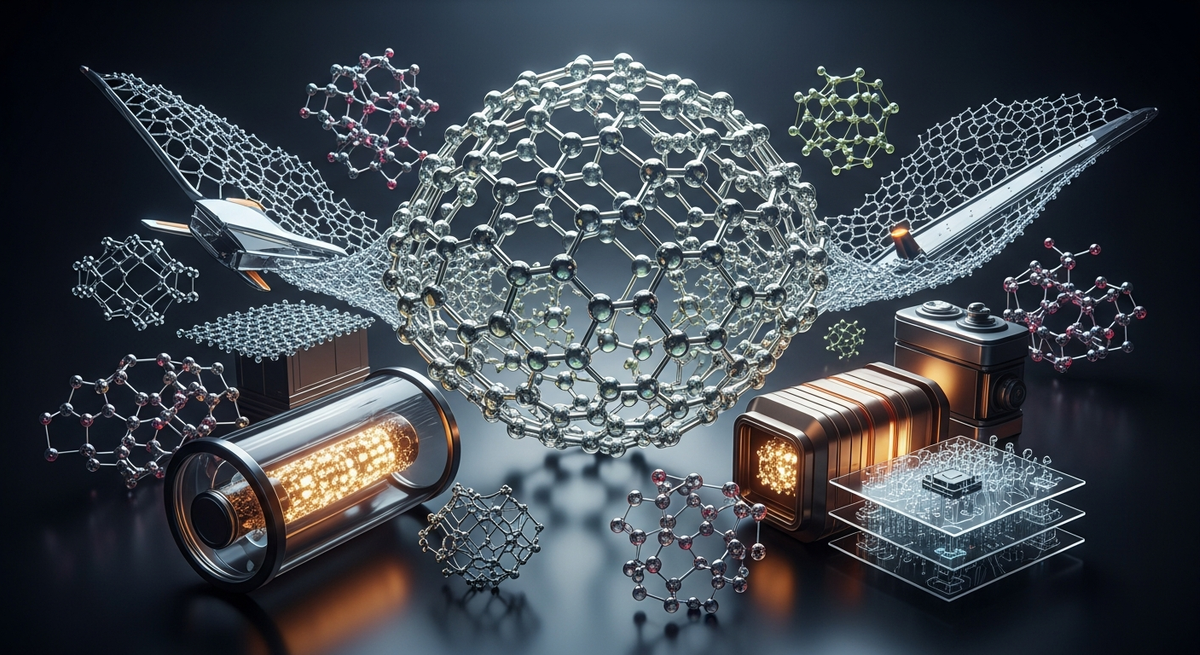
Graphene, a true two-dimensional crystal composed of sp2 hybridized carbon atoms arranged in a hexagonal lattice, fundamentally redefines the paradigms of condensed matter physics. Its unique atomic structure confines electrons to a single atomic plane, leading to a distinctive electronic band structure characterized by Dirac cones at the K and K' points of the Brillouin zone. Here, the energy-momentum dispersion relation is linear, compelling charge carriers to behave as massless Dirac fermions governed by a Dirac-like equation rather than the conventional Schrödinger equation. This intrinsic quantum mechanical confinement to a 2D manifold dictates a profoundly different set of physical laws for electron transport compared to bulk materials, establishing the foundational principles for its extraordinary properties and the subsequent challenges in their precise characterization.
The physics of graphene confinement profoundly impacts its electronic transport properties. The absence of a band gap at the Dirac points, coupled with this linear dispersion, endows graphene with ultra-relativistic charge carriers that exhibit exceptionally high mobilities, often exceeding 200,000 cm^2/Vs in suspended samples at room temperature. This unparalleled mobility, combined with minimal carrier scattering, enables ballistic transport over significant distances and facilitates the observation of a half-integer quantum Hall effect even at ambient temperatures, a direct manifestation of its 2D Dirac fermion nature. The strict confinement eliminates out-of-plane scattering channels, dramatically reducing electrical resistance and permitting current densities orders of magnitude higher than those sustained by copper. This unique electronic topology, dictated by its atomic-scale confinement, presents both unprecedented opportunities for high-frequency electronics and formidable challenges for the precise characterization required to harness these properties.
The practical exploitation of graphene's extraordinary attributes—from its exceptional thermal conductivity (up to ~5000 W/mK) to its remarkable mechanical strength (~130 GPa)—hinges critically on maintaining its intrinsic 2D electronic and structural integrity. For example, its resilience to extreme thermal gradients, empirically demonstrated by structural stability under localized 3000K thermal pulses, is a direct consequence of its robust sp2 lattice and efficient phonon transport within the confined plane. Similarly, its rapid response in sensing applications, often manifesting in milliseconds for gas adsorption or electrochemical reactions, is intrinsically linked to its extensive surface accessibility and the high mobility of its charge carriers. Precise characterization of electrical resistivity, which can range from 10^-6 Ωcm for pristine samples to significantly higher values in defective or functionalized variants, is paramount for device performance metrics. Furthermore, surface chemistry, crucial for applications like heavy metal adsorption where efficiencies can reach 79% for specific ions, necessitates atomic-scale analysis to understand the influence of defects, functional groups, and structural imperfections on its confined electronic states. These examples underscore that "Mastering Graphene Characterization" requires a deep understanding of how its fundamental 2D physics translates into macroscopic performance and how deviations from ideality impact its utility.
Pulsed Electrical Resistive Carbon Heating (PERCH) offers an ultrafast, non-equilibrium route to graphene synthesis, fundamentally diverging from traditional Chemical Vapor Deposition (CVD). In PERCH, a carbonaceous precursor, ranging from polymers to graphite, undergoes direct joule heating via extremely high current densities, reaching temperatures exceeding 3000K within milliseconds. This intense, localized thermal shock drives instantaneous graphitization and exfoliation, yielding few-layer (FLG) or turbostratic graphene directly from the solid phase. The process leverages the precursor's intrinsic electrical resistivity, with precise current pulse shaping and durations (often hundreds of milliseconds) dictating morphology and layer count. Conversely, CVD relies on catalytic decomposition of gaseous carbon precursors, such as methane, over heated transition metal substrates like copper, typically at 1000°C. This equilibrium-driven process grows graphene atom-by-atom from the gas phase onto the substrate. The distinction between solid-state transformation under extreme non-equilibrium conditions and gas-phase surface reaction under quasi-equilibrium profoundly impacts the resulting material's structural integrity, defect profile, and scalability.
The inherent mechanisms of PERCH and CVD lead to distinct graphene characteristics, crucial for subsequent characterization. PERCH’s rapid thermal cycling, with heating rates approaching 10^6 K/s, minimizes time for extensive defect formation and atomic rearrangement. This kinetic control often results in graphene with a higher density of edge sites and potential turbostratic stacking, yet reduced basal plane defects like Stone-Wales dislocations compared to slower methods. The electrical resistivity parameters of the initial carbon precursor are paramount; uniform resistivity ensures homogeneous heating and consistent graphitization, preventing localized hot spots that lead to amorphous carbon or excessive defects. In contrast, CVD produces pristine, large-area monolayer graphene with exceptional crystallographic order and low defect density (D/G ratio typically < 0.1), but is limited by substrate grain boundaries and carbon precipitation thermodynamics. Post-growth transfer, often involving polymer supports and etching, introduces significant risk of contamination, tears, and wrinkles, manifesting as point defects or structural imperfections requiring rigorous AFM or HRTEM characterization.
Beyond structural differences, PERCH and CVD diverge significantly in scalability, cost-effectiveness, and application suitability. PERCH offers a high-throughput, potentially continuous manufacturing route due to its rapid kinetics and ability to process bulk quantities of inexpensive carbon precursors. This method bypasses high vacuum systems and expensive precursor gases, presenting an economically viable pathway for large-scale production; 3000K thermal pulses within milliseconds can produce gram-scale graphene flakes from a single run. This PERCH-derived graphene, often few-layer and rich in edge sites, demonstrates enhanced performance in applications demanding high surface area and active sites. For example, it exhibits up to 79% heavy metal adsorption efficiency, attributable to the high concentration of accessible edge functional groups and increased porosity. Conversely, while CVD excels in producing ultra-high quality, large-area monolayer films suitable for advanced electronics requiring high charge carrier mobility (>10,000 cm2/Vs), its batch processing, reliance on expensive substrates and vacuum, and transfer challenges limit its industrial scalability for bulk applications. Thus, the choice between PERCH and CVD is a strategic decision based on desired graphene properties, application requirements, and economic viability, each necessitating a tailored characterization protocol.
Turbostratic graphene (TG) represents a pivotal structural variant within the broader graphene family, distinguished fundamentally by the random rotational misorientation between adjacent layers, a stark contrast to the highly ordered ABAB (Bernal) stacking characteristic of natural graphite. This crystallographic disorder along the c-axis results in a significant decoupling of electronic states between layers, effectively diminishing the long-range interlayer coherence that defines conventional graphite. Unlike Bernal graphite, where the interlayer sp2 hybridized carbon atoms form a precise registry dictating strong van der Waals forces and anisotropic electronic coupling, TG exhibits a distribution of twist angles. This rotational disorder disrupts the formation of a well-defined bulk Dirac cone, leading to electronic properties that often more closely resemble an ensemble of weakly interacting single-layer graphene sheets rather than a true 3D crystal. The absence of strict crystallographic alignment is empirically evidenced by the broadened and often asymmetric (002) peak in X-ray Diffraction (XRD) patterns, typically shifting to a higher d-spacing (e.g., ~0.344 nm compared to graphite’s ~0.335 nm), and the presence of diffuse scattering, indicative of reduced crystallite size in the c-direction.
The implications of this turbostratic stacking are profound for both the electronic and mechanical characteristics. Electronically, the diminished interlayer coupling in TG reduces the inter-layer scattering channels that contribute to conductivity in Bernal graphite, but simultaneously hinders the formation of continuous bulk electronic bands. While individual layers may retain their Dirac-like dispersion, the overall material often exhibits a higher in-plane electrical resistivity compared to highly ordered epitaxial graphene or single-crystal graphite, with reported values for multi-layer turbostratic films ranging from 10^-5 to 10^-4 Ohm-cm, depending on defect density and degree of turbostraticity. This is attributed to increased scattering events at misaligned interfaces and localized regions of strain. Mechanically, the reduced interlayer registry typically translates to a lower effective shear modulus between layers, potentially facilitating exfoliation processes but also contributing to altered viscoelastic responses. For instance, the energy required to shear layers past each other in turbostratic assemblies can be significantly lower than in Bernal stacks, influencing material processing and composite applications.
Characterization of turbostratic graphene necessitates a multi-modal approach to precisely quantify the degree of disorder and its impact. Raman spectroscopy is an indispensable tool, where the 2D peak often exhibits a broader, more symmetric profile and a blue-shift compared to single-layer graphene, reflecting the presence of multiple, decoupled layers with varying electronic environments. The D-band intensity, while indicative of defects within layers, also provides insight into edge density which can be pronounced in turbostratic domains. High-resolution Transmission Electron Microscopy (HRTEM) directly reveals the rotational misorientation through moiré patterns and the absence of consistent stacking sequences across multiple layers. Electron diffraction patterns from turbostratic regions typically display rings or arcs instead of the sharp hexagonal spot patterns characteristic of single-crystal graphene or Bernal graphite, directly visualizing the angular distribution of crystallographic orientations. Furthermore, techniques like X-ray Photoelectron Spectroscopy (XPS) can provide insights into surface chemistry and interlayer interactions, which are often modified by the increased accessibility of edge and defect sites.
The deliberate control over turbostratic stacking is critical for tailoring graphene materials for specific applications. In energy storage, for example, the expanded interlayer spacing and increased accessible surface area in turbostratic graphene can enhance ion intercalation kinetics and capacity in supercapacitors and lithium-ion batteries. Materials engineered with controlled turbostraticity have demonstrated up to 79% heavy metal adsorption efficiency, leveraging the increased surface area and defect sites for enhanced chemi- or physisorption. Conversely, applications demanding ultra-high electronic mobility, such as high-frequency transistors, typically favor epitaxially grown single-layer or few-layer Bernal graphene. The ability to induce or mitigate turbostraticity, often through controlled thermal annealing (e.g., 3000K thermal pulses for milliseconds to promote graphitization) or specific chemical reduction protocols, dictates the final material's performance envelope across diverse fields, from advanced composites to next-generation catalysts.
The transition of graphene from laboratory marvel to ubiquitous industrial material is fundamentally bottlenecked by persistent challenges in scalable synthesis and robust, high-throughput characterization. Current Chemical Vapor Deposition (CVD) methods, while capable of producing high-quality monolayer films with carrier mobilities exceeding 10,000 cm²/Vs, are inherently limited by batch processing, substrate size constraints typically restricted to 4-inch wafers for research-grade material, and the stringent high-vacuum and high-temperature (often 1000°C) environments required. Achieving uniform growth across meter-scale substrates without introducing detrimental point defects or grain boundaries – which significantly reduce electrical and mechanical performance – remains an formidable engineering hurdle. Similarly, liquid-phase exfoliation, a more scalable approach for producing graphene flakes, suffers from inherent polydispersity in flake size and thickness, low yields of truly monolayer material (often less than 5% of the total mass), and the arduous, energy-intensive post-processing required to remove residual solvents and achieve sufficient purity. The economic viability of these processes at a scale necessary for widespread adoption is severely hampered by high capital expenditure for equipment and operational costs, pushing the price per gram of high-quality graphene far beyond competitive thresholds for many bulk applications.
A critical impediment to commercial integration stems from the absence of rapid, non-destructive, and in-line characterization techniques capable of providing real-time feedback on graphene quality during large-scale manufacturing. Traditional analytical methods such as Raman spectroscopy, Atomic Force Microscopy (AFM), and Transmission Electron Microscopy (TEM) are invaluable for fundamental research but are inherently slow, localized, and often destructive, rendering them impractical for quality control in a continuous production environment. For instance, a comprehensive Raman map of a 1 cm² graphene film can take hours, whereas industrial processes demand feedback in milliseconds or seconds. The inability to rapidly assess critical parameters like layer number, defect density (ID/IG ratio), doping levels, and residual strain across large areas leads to inconsistent product quality, unreliable device performance, and significant material waste. Without standardized, automated characterization protocols, manufacturers struggle to guarantee material specifications to downstream integrators, hindering trust and market adoption, particularly for high-performance applications where even a 0.1% variation in sp2/sp3 hybridization ratio or a 10% increase in sheet resistance can render a batch unusable.
Furthermore, integrating graphene into existing manufacturing paradigms introduces additional layers of complexity. Achieving uniform dispersion of graphene nanoplatelets within polymer matrices to realize enhanced mechanical properties, for example, often requires extensive sonication or high-shear mixing, which can lead to material degradation or re-agglomeration, diminishing the anticipated performance benefits. In thermal management applications, while pristine graphene boasts an astounding intrinsic thermal conductivity of up to 5000 W/mK, achieving efficient heat transfer in composite systems is challenged by high interfacial thermal resistance between graphene fillers and the host material, often reducing the effective thermal conductivity by orders of magnitude. The development of robust, scalable functionalization chemistries that maintain graphene's intrinsic properties while enabling seamless integration into diverse matrices – from inks for flexible electronics to membranes for water filtration – is still in its infancy. For environmental remediation, while graphene-based adsorbents have demonstrated impressive capabilities, such as 79% heavy metal adsorption efficiency, scaling these solutions requires overcoming challenges in adsorbent regeneration cycles, long-term stability in harsh chemical environments, and the economic feasibility of treating vast volumes of contaminated water without prohibitive operational costs. The lack of globally accepted metrological standards for defining and certifying different grades of graphene further exacerbates these integration challenges, creating market fragmentation and uncertainty for potential industrial adopters.
The economic viability of industrial-scale graphene production is intrinsically linked to rigorous characterization protocols. While initial capital expenditure for advanced analytical instrumentation—such as aberration-corrected scanning transmission electron microscopes (AC-STEM) for atomic-scale defect analysis or high-resolution X-ray photoelectron spectroscopy (HR-XPS) for precise chemical state quantification—can be substantial, the long-term return on investment manifests in minimized batch failures, optimized material performance, and access to high-value markets. Consistently producing graphene with carrier mobility exceeding 10,000 cm^2/Vs, verified through Hall effect measurements, commands a significant market premium. Furthermore, real-time, in-line characterization, employing techniques like spectroscopic ellipsometry for thickness uniformity or rapid Raman mapping for defect density (e.g., D/G ratio below 0.1 for electronic applications), significantly reduces process cycle times. This shift from post-production quality control to proactive process adjustment, informed by feedback loops reacting to deviations in parameters like oxygen content above 2 atomic percent, directly translates to reduced operational costs and enhanced manufacturing throughput, mitigating financial risks associated with material inconsistency.
The strategic advantage of USA-made graphene manufacturing is fundamentally rooted in its capacity for unparalleled quality control and characterization infrastructure, fostering an ecosystem less susceptible to supply chain vulnerabilities and intellectual property infringements. Domestic facilities benefit from stringent regulatory frameworks, access to a highly skilled scientific and engineering workforce, and close collaboration with leading research institutions. This confluence enables advanced characterization methodologies, from precise quantification of layer count via AFM topography with sub-nanometer resolution, to comprehensive assessment of crystallographic quality using electron backscatter diffraction (EBSD) on polycrystalline films. Guaranteeing material provenance and certifying performance against NIST-traceable standards (e.g., sheet resistance consistency within 5% across a 300mm wafer) directly enhances market trust and facilitates adoption in critical sectors like defense, aerospace, and medical devices, where reliability is paramount. Robust intellectual property protection within the United States further encourages investment in novel characterization techniques and proprietary manufacturing processes, solidifying a competitive edge built on innovation and verified quality.
The synergy between advanced characterization and economic viability is particularly evident in synthesis optimization and downstream integration. Precise control of chemical vapor deposition (CVD) processes, involving rapid thermal annealing cycles with 3000K thermal pulses for milliseconds, necessitates meticulous post-synthesis characterization to ensure optimal grain size and minimal defect density below 10^10 defects/cm^2. Without sophisticated characterization – such as high-resolution SEM for grain boundary mapping or micro-Raman spectroscopy for strain analysis – such process refinements lack empirical validation for industrial scaling. The economic benefit of achieving specific performance metrics, like an electrical resistivity of 10^-6 Ohm-cm for interconnects or a specific surface area exceeding 2000 m^2/g for supercapacitor electrodes, directly depends on characterization precision. For environmental applications, demonstrating 79% heavy metal adsorption efficiency by graphene oxide derivatives, validated through ICP-MS analysis of post-treatment solutions, establishes a quantifiable value proposition. Investment in advanced characterization, while significant, is far outweighed by potential economic losses from uncharacterized graphene failing specifications, leading to costly recalls and reputational damage, underscoring its role in a competitive USA-made manufacturing advantage.
The trajectory of graphene's commercialization is fundamentally intertwined with the evolution of its characterization methodologies, paving the way for high-value B2B applications that demand atomic-scale precision and performance reproducibility. In advanced electronics, the future hinges on leveraging graphene's exceptional carrier mobility, theoretically reaching 200,000 cm2/Vs at room temperature for pristine single layers, to enable next-generation high-frequency transistors, terahertz devices, and ultra-fast interconnects. Achieving this requires meticulous control over defect density, doping homogeneity, and substrate interactions, all scrutinised via techniques like low-energy electron microscopy (LEEM) for surface morphology and real-time defect evolution, and spatially resolved electron energy loss spectroscopy (EELS) for mapping local doping variations with sub-nanometer resolution. For transparent conductive films, the target of achieving sheet resistances below 50 Ohm/sq at greater than 90% optical transmittance across the visible spectrum necessitates rigorous optimization of CVD growth parameters and post-synthesis doping, where four-point probe measurements combined with spectroscopic ellipsometry provide critical feedback for process refinement. Furthermore, the burgeoning field of quantum computing stands to benefit from graphene's long spin coherence lengths, but only if material imperfections that act as scattering centers can be precisely identified and mitigated through advanced scanning tunneling microscopy (STM) and resonant Raman spectroscopy mapping of strain and defect clusters.
Beyond electronics, graphene's unparalleled surface area (theoretical 2630 m2/g for single-layer) and tunable surface chemistry are poised to revolutionize energy storage, conversion, and environmental remediation. In supercapacitors and advanced battery electrodes, optimizing the interlayer spacing, pore size distribution, and heteroatom doping (e.g., nitrogen or boron) is critical for maximizing energy density and power output. Characterization techniques such as X-ray diffraction (XRD) combined with Brunauer-Emmett-Teller (BET) surface area analysis are indispensable for tailoring these structural parameters, while X-ray photoelectron spectroscopy (XPS) quantifies the extent and nature of functionalization, directly influencing electrochemical performance. For instance, plasma-induced nitrogen doping often involves localized thermal pulses approaching 3000K within milliseconds, requiring precise control over reaction kinetics to achieve optimal doping profiles, which are then verified by high-resolution TEM and EELS. In environmental applications, particularly water purification, the adsorption efficiency of heavy metal ions is critically dependent on the controlled introduction of specific oxygen or nitrogen functionalities. Empirical studies have demonstrated adsorption efficiencies exceeding 79% for certain heavy metals using functionalized graphene derivatives, a performance directly correlated with the density and type of surface groups quantified by Fourier-transform infrared spectroscopy (FTIR) and atomic force microscopy (AFM) for surface topology.
The integration of graphene into biomedical devices, highly sensitive sensors, and advanced composites represents another frontier where rigorous characterization is non-negotiable for commercial viability. In biosensing, graphene's high surface-to-volume ratio and excellent electrical conductivity enable ultra-sensitive detection of biomarkers. The immobilization of specific biomolecules on graphene surfaces requires precise control over functionalization chemistries, verified by techniques such as attenuated total reflection FTIR (ATR-FTIR) and quartz crystal microbalance with dissipation monitoring (QCM-D) for real-time adsorption kinetics. For flexible and wearable electronics, the mechanical robustness and electrical stability of graphene films under dynamic strain are paramount, necessitating in-situ electrical measurements during tensile or cyclic fatigue testing. In advanced composites, the challenge lies in achieving uniform dispersion of graphene within polymer matrices and ensuring strong interfacial bonding to fully exploit its extraordinary mechanical properties. While a 0.5 wt% graphene loading can enhance the tensile strength of certain polymers by 30-50%, this improvement is critically dependent on the graphene's aspect ratio, defect density, and state of dispersion, all meticulously characterized by transmission electron microscopy (TEM) and rheological measurements to predict processability and final composite performance. These diverse applications underscore that the journey from laboratory innovation to scalable B2B solutions for graphene is entirely predicated on mastering its comprehensive characterization.
Serious about B2B integration? Test our premium Pulsed Electrical Resistive Carbon Heating turbostratic graphene in your lab. 100g sample packs available now.
Explore More
Researchers have developed a breakthrough method for growing twisted bilayer graphene with pre-designed angles, a key step toward manufacturable quantum...

Learn how deep learning is revolutionizing the structural characterization of twisted bilayer materials, accelerating the development of next-generation...

Learn to build a prototype graphene FET biosensor for sensitive DNA detection. This guide covers materials, fabrication, and testing for point-of-care...