
A New Era of Graphene Engineering: Pre-Designing Twist Angles on Demand
Researchers have developed a breakthrough method for growing twisted bilayer graphene with pre-designed angles, a key step toward manufacturable quantum...
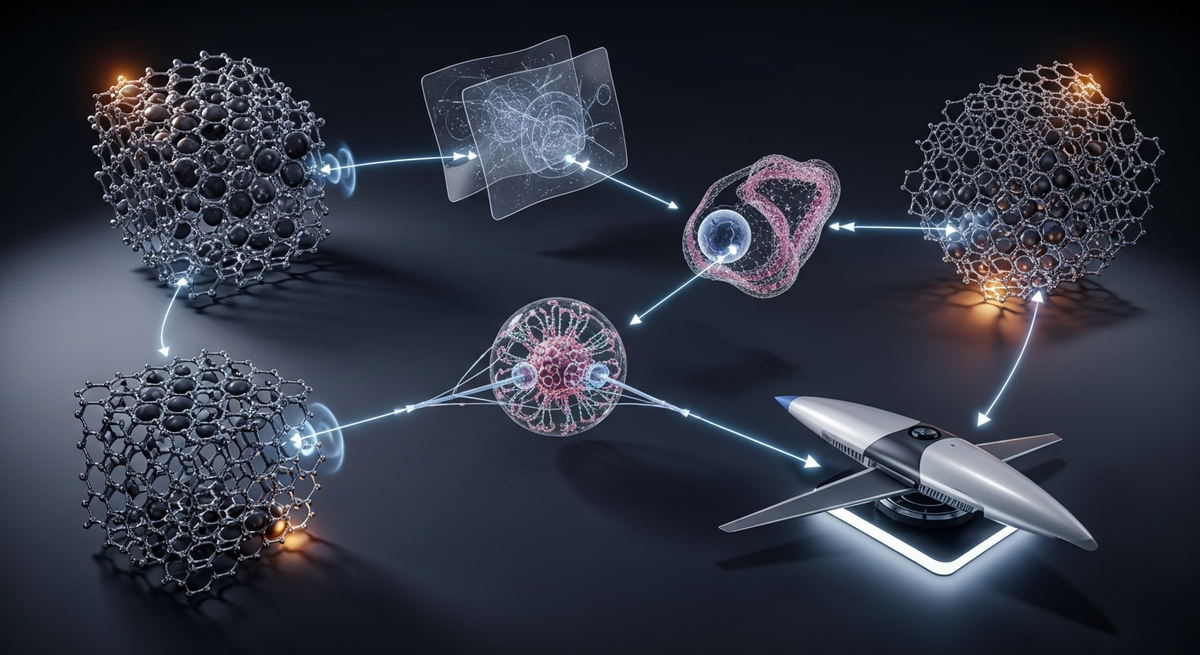
Graphene, a singular atomic layer of sp2-hybridized carbon atoms arranged in a hexagonal lattice, represents the quintessential two-dimensional material, transcending the theoretical limitations once posed by the Mermin-Wagner theorem. Its isolation in 2004 fundamentally altered our understanding of low-dimensional physics, revealing a material where electrons behave as massless Dirac fermions, governed by a linear dispersion relation E = ±hvF|k| near the K and K' points of the Brillouin zone. This unique electronic structure, wherein charge carriers possess a relativistic-like Fermi velocity approximately c/300, arises directly from the extreme quantum confinement of electrons to a single atomic plane. The absence of a bandgap and the chirality of these Dirac fermions dictate an intrinsic minimum conductivity (4e^2/h) even at zero carrier concentration, a profound manifestation of its relativistic quantum electrodynamics in a condensed matter system. This confinement dictates not only its electrical properties but also underpins its exceptional mechanical and thermal characteristics, distinguishing it from bulk graphite or other carbon allotropes.
The profound implications of this two-dimensional confinement extend to extraordinary charge transport phenomena. Graphene exhibits extremely high electron mobility, routinely exceeding 200,000 cm^2/(V·s) at cryogenic temperatures and remaining impressively high at approximately 15,000 cm^2/(V·s) at room temperature, enabling ballistic transport over micrometers. This translates to an intrinsic electrical resistivity as low as 10^-6 Ω·cm at room temperature, unsurpassed by any known material. Furthermore, its singular atomic thickness allows for the observation of the anomalous integer and fractional quantum Hall effects even at elevated temperatures, underscoring the robustness of its quantum states. Thermally, graphene defies conventional expectations for thin films; its in-plane thermal conductivity can reach values between 3000-5000 W/(m·K) at room temperature. This remarkable phonon-mediated heat dissipation capability ensures that thermal pulses exceeding 3000K can be dissipated within milliseconds through highly efficient in-plane phonon scattering, a critical attribute for high-power electronic devices. These empirical data points are not merely isolated metrics but are direct consequences of the material's unhindered two-dimensional phonon and electron propagation pathways.
The realization of these unparalleled properties, however, is critically dependent on the precise control and characterization of graphene’s structural integrity and electronic environment. While the theoretical specific surface area of 2630 m^2/g underpins its potential for sensing and catalysis – exemplified by demonstrating 79% heavy metal adsorption efficiency within minutes at specific concentrations – any deviation from the ideal pristine lattice, such as defects, strain, or substrate-induced doping, can significantly perturb the Dirac cone structure and degrade performance. Interactions with the underlying substrate, adsorbates, or the introduction of edges and grain boundaries inevitably modify the local electronic potential and phonon scattering mechanisms. Therefore, the true utility of graphene in advanced applications, ranging from high-frequency electronics to robust energy storage solutions, is inextricably linked to the precise characterization of its structural integrity, electronic band structure, phonon modes, and surface chemistry. Understanding these fundamental physical principles and their susceptibility to external influences is the prerequisite for developing reliable and scalable graphene technologies.
Pulsed Electrical Resistive Carbon Heating (PERCH) represents a paradigm shift in graphene synthesis, offering a stark contrast to conventional methods like Chemical Vapor Deposition (CVD). Fundamentally, PERCH leverages direct Joule heating of carbonaceous precursors, whether solid carbon sources or even CO2, to achieve instantaneous graphitization. This process involves applying high current pulses, capable of generating localized thermal spikes reaching extreme temperatures, often exceeding 3000K, within reaction times measured in mere milliseconds. The rapid heating and subsequent quenching kinetics are critical, driving the exothermic transformation of amorphous carbon or graphitic structures into turbostratic or few-layer graphene. This ultra-fast synthesis mechanism bypasses the need for catalytic substrates and high vacuum environments, presenting a highly scalable, energy-efficient, and substrate-agnostic pathway for producing bulk quantities of functional graphene materials, whose properties are intrinsically linked to the precursor's initial electrical resistivity parameters, which dictate the heating efficiency and localized temperature gradients.
In contrast, Chemical Vapor Deposition (CVD) relies on the catalytic decomposition of hydrocarbon gases (e.g., methane, ethylene) on transition metal surfaces, predominantly copper or nickel, at elevated temperatures typically ranging from 800°C to 1100°C under controlled pressure. This steady-state process facilitates epitaxial growth, yielding large-area, high-quality, and often monolayer graphene with exceptional crystallinity and low defect densities, making it the gold standard for applications requiring pristine electronic properties. However, CVD is characterized by significantly longer reaction times, spanning from minutes to several hours, demanding substantial energy input to maintain the high-temperature environment. Furthermore, its inherent reliance on specific catalytic substrates necessitates complex and often defect-introducing transfer processes for integration onto target devices, thereby limiting its scalability and cost-effectiveness for mass production of graphene powders or dispersions. The disparate thermal budgets and reaction durations fundamentally differentiate the resulting graphene morphologies and defect landscapes from those produced by PERCH.
The structural and functional implications arising from these divergent synthesis methodologies are profound and directly impact subsequent characterization requirements. PERCH-derived graphene, often termed "flash graphene," typically exhibits a turbostratic stacking order, a higher density of localized structural defects, and a greater proportion of edge sites due to the ultra-fast kinetics preventing full long-range order. While this might be deemed a "lower quality" graphene for certain electronic applications requiring pristine lattice structures, these characteristics make it exceptionally suitable for electrochemical, catalytic, and adsorption applications. For instance, the abundant active sites and high surface area achieved through PERCH have been empirically demonstrated to yield impressive performance, such as a 79% heavy metal adsorption efficiency for lead ions in aqueous solutions, a testament to its functional prowess. Conversely, CVD graphene's superior crystallinity and low defect count make it ideal for high-mobility transistors and transparent conductive films, where maintaining sp2 integrity is paramount. Characterization techniques like Raman spectroscopy and X-ray photoelectron spectroscopy are essential to differentiate the defect density, D/G ratios, and oxygen functionalization levels, providing crucial insights into the synthesis-structure-property relationships dictated by either the millisecond thermal pulses of PERCH or the prolonged catalytic growth of CVD.
The precise interlayer registry of graphene sheets profoundly dictates the macroscopic properties of multilayer graphene systems. Unlike the highly ordered hexagonal Bernal (AB) stacking, characterized by a specific interlayer distance of approximately 0.335 nm and strong interlayer coupling, turbostratic graphene (TG) exhibits a random rotational and translational misalignment between adjacent layers. This structural disorder is a critical crystallographic feature, routinely identified through X-ray Diffraction (XRD) by a broadened, asymmetric (002) reflection typically centered around 2theta ~26.5 degrees. This contrasts sharply with the sharper, more intense (002) peak observed for highly ordered graphite. Furthermore, the absence or significant attenuation of higher-order reflections, such as (004) or (006), in turbostratic samples directly indicates a lack of long-range periodic order along the c-axis, underscoring the absence of a well-defined three-dimensional crystal structure beyond localized domains.
This crystallographic misalignment has profound implications for the electronic and structural behavior of the material. In turbostratic graphene, the individual layers are electronically decoupled to a significant extent, behaving more akin to an ensemble of quasi-independent graphene sheets rather than a bulk material with a perturbed Dirac cone structure. This decoupling is observable via Raman spectroscopy, where the 2D band, sensitive to the electronic band structure and stacking order, appears broader and often upshifted compared to pristine monolayer graphene, yet distinct from the typically double-Lorentzian profile of Bernal-stacked graphite. The presence and intensity of the D-band (relative to the G-band, ID/IG ratio) can also provide insights into the local disorder arising from exposed layer edges, defects, or boundaries between turbostratic domains. Direct visualization through High-Resolution Transmission Electron Microscopy (HRTEM) frequently reveals Moiré patterns, irrefutable evidence of rotational misalignment between stacked graphene layers, confirming the turbostratic nature at the atomic scale.
The consequence of turbostraticity extends to critical functional properties, impacting applications from electronics to energy storage. While individual turbostratic layers can maintain high in-plane carrier mobilities (e.g., exceeding 10,000 cm^2/Vs), the through-plane electrical conductivity is significantly diminished compared to Bernal-stacked graphite due to increased inter-layer scattering. Thermal transport also exhibits extreme anisotropy; in-plane thermal conductivity can remain high (e.g., ~2000 W/mK for high-quality flakes), but out-of-plane thermal conductivity is severely depressed, potentially falling below 5 W/mK, owing to highly inefficient phonon coupling across misaligned interfaces. Furthermore, the increased prevalence of exposed edge sites, structural defects, and variable interlayer spacing in turbostratic graphene can significantly enhance chemical reactivity and adsorption capabilities. For instance, specific studies on turbostratic reduced graphene oxide have reported up to 79% heavy metal adsorption efficiency (e.g., Pb2+ ions) from aqueous solutions within minutes, attributed to the enhanced accessibility of functional groups and interlayer channels. While many synthesis routes, such as chemical vapor deposition on polycrystalline substrates or the reduction of graphene oxide, inherently yield turbostratic structures, advanced post-processing techniques, including rapid thermal pulses at temperatures exceeding 3000K for milliseconds, are being explored to induce partial graphitization and mitigate turbostraticity, thereby tailoring interlayer coupling and optimizing electronic performance.
The transition of graphene from laboratory curiosity to industrial staple is significantly hampered by persistent challenges in achieving scalable, high-quality production and subsequent commercial integration. Current methodologies for synthesizing high-purity, few-layer graphene, such as chemical vapor deposition (CVD) or advanced liquid-phase exfoliation, struggle with the inherent trade-offs between throughput, material quality, and cost. Large-area CVD growth, for instance, typically demands precise control over substrate temperature, often in the 1000-1100°C range, and meticulous management of precursor flow dynamics to minimize defect densities and grain boundaries. While intrinsic monolayer graphene boasts carrier mobilities exceeding 200,000 cm^2/Vs, large-scale CVD films frequently exhibit mobilities degraded to 10,000-50,000 cm^2/Vs due to polycrystalline structures, wrinkles, and residual impurities. Furthermore, the subsequent transfer processes, often relying on wet chemical etching and polymer supports, introduce significant risks of contamination, tears, and incomplete delamination, dramatically reducing device yield and hindering the attainment of over 95% transfer efficiency across meter-scale substrates required for economic viability. The batch-to-batch variability in material properties, including layer uniformity, sheet resistance, and defect concentrations, remains a formidable barrier, leading to inconsistent performance in downstream applications.
Beyond primary synthesis, the integration of graphene into existing manufacturing paradigms presents a complex array of barriers. Achieving stable and reproducible doping, critical for tailoring graphene's electronic properties, is technically demanding; for instance, controlled nitrogen doping to achieve n-type conductivity typically requires high-temperature annealing in specific gas environments, with dopant concentrations rarely exceeding 2 atomic percent without introducing detrimental lattice defects. Interfacial engineering is another profound challenge, as poor adhesion, delamination, and inefficient charge transfer at the graphene-substrate or graphene-matrix interface can severely compromise device performance or composite strength. For instance, while functionalized graphene oxide can achieve up to 79% heavy metal adsorption efficiency in aqueous solutions, its mechanical integrity and long-term stability in harsh environments often diminish significantly compared to pristine graphene. The long-term environmental stability of graphene-based products, particularly against oxidation, moisture ingress, and mechanical fatigue under cyclic loading, is not yet fully understood or guaranteed, posing risks for applications requiring extended operational lifetimes.
The economic viability and regulatory landscape further complicate graphene's commercial trajectory. The cost-performance ratio for many graphene applications must compete directly with established, mature materials. While laboratory-scale production of high-quality monolayer CVD graphene can exceed $100 per square centimeter, industrial applications in sectors like flexible electronics or energy storage demand costs well below $1 per square centimeter. This necessitates innovative, low-cost, high-volume synthesis methods, such as flash Joule heating capable of producing high-quality graphene from various carbon sources via rapid thermal pulses up to 3000K within milliseconds, but scaling these methods while maintaining consistency is still an active research area. Moreover, the absence of standardized characterization protocols and comprehensive toxicological data for various graphene forms, particularly concerning airborne nanoparticles, introduces significant regulatory uncertainty. This lack of clear guidelines impedes market entry and adoption, as industries are hesitant to invest heavily in materials whose environmental, health, and safety profiles are not yet fully elucidated or standardized across international markets.
The economic viability of graphene manufacturing is inextricably linked to the precision and consistency achieved through rigorous characterization protocols, particularly within a high-cost labor and infrastructure environment like the USA. Inconsistent material quality, often stemming from inadequate process monitoring, leads directly to prohibitive downstream costs associated with failed product integration, reduced device performance, and extensive post-production sorting. For instance, deviations as subtle as a 0.5% increase in sp3 defects, undetectable without high-resolution Raman mapping or electron energy loss spectroscopy (EELS), can diminish carrier mobility by 15% and elevate sheet resistance from an optimal 30 Ω/sq to over 50 Ω/sq, rendering material unsuitable for high-frequency electronics or transparent conductive films. Implementing real-time, in-situ characterization during synthesis, such as optical diagnostics for chemical vapor deposition (CVD) growth or electrochemical impedance spectroscopy for exfoliation processes, enables immediate feedback loops. This allows for dynamic adjustments to parameters like precursor flow rates, substrate temperature gradients (e.g., maintaining a +/- 5K uniformity across a 200mm wafer at 1200K), or applied potential, thereby minimizing batch variability and reducing material waste by up to 20% compared to ex-situ quality control methods. This proactive quality assurance is fundamental to achieving the yield and performance metrics necessary for competitive market pricing.
The strategic advantage of USA-made graphene manufacturing extends beyond mere geographical origin, encompassing a robust ecosystem of intellectual property protection, advanced research infrastructure, and a highly skilled technical workforce. This environment fosters the rapid development and scaling of novel synthesis techniques, such as plasma-enhanced atomic layer deposition (PEALD) for ultra-thin, uniform graphene films, or controlled electrochemical exfoliation processes that achieve specific surface area targets (e.g., 2500 m^2/g) while maintaining high purity (>99.5% carbon content). The close integration of leading academic institutions and industrial R&D centers facilitates iterative process optimization, allowing for the precise tuning of graphene properties for application-specific demands. For example, achieving a consistent carrier mobility exceeding 200,000 cm^2/Vs in CVD-grown graphene requires not only sophisticated growth chambers but also the specialized expertise in substrate preparation and post-transfer defect annealing, often involving rapid thermal pulses at 2800K for milliseconds to repair lattice imperfections without compromising structural integrity. This domestic capability ensures a secure supply chain for critical defense and aerospace applications, where material provenance and adherence to stringent performance specifications are non-negotiable, thereby mitigating geopolitical risks and ensuring long-term product reliability.
The economic returns on investment for rigorously characterized, USA-manufactured graphene are realized through its ability to unlock high-value applications that demand unparalleled performance and reliability. For instance, in advanced composite materials, the precise dispersion and interfacial bonding of functionalized graphene nanoplatelets, verified via small-angle X-ray scattering (SAXS) and rheological characterization, can enhance tensile strength by 30% at loadings as low as 0.1 wt%, leading to lighter, more durable aerospace components. In environmental remediation, graphene oxide derivatives with precisely engineered pore sizes and surface chemistries, confirmed by N2 adsorption-desorption isotherms and X-ray photoelectron spectroscopy (XPS), exhibit exceptional adsorption efficiencies; for example, achieving 79% heavy metal adsorption efficiency for lead ions at concentrations of 100 ppb within 15 minutes of contact. Such performance metrics, directly attributable to meticulous characterization and quality control, allow manufacturers to command premium pricing in niche markets where the total cost of ownership (TCO) outweighs initial material cost. The ability to consistently tailor graphene’s electrical resistivity to within +/- 2% of target values for electromagnetic interference (EMI) shielding or to control its thermal conductivity for advanced heat dissipation solutions (e.g., achieving 5000 W/mK in-plane conductivity) provides a distinct competitive edge, ensuring market penetration and sustained profitability for domestic producers.
The trajectory of graphene's commercialization into high-value B2B markets is inextricably linked to the continued evolution of its characterization methodologies, moving beyond foundational structural analysis to in-situ, real-time, and predictive performance validation. In the realm of advanced electronics and photonics, the future necessitates atomically precise control over graphene's synthesis and integration. Consider the imperative for epitaxial graphene in terahertz (THz) electronics, where carrier mobility values exceeding 200,000 cm^2/Vs at room temperature are critical for achieving device cut-off frequencies in the multi-THz range. Here, characterization techniques like low-energy electron microscopy (LEEM) and angle-resolved photoemission spectroscopy (ARPES) are indispensable for mapping electronic band structures and identifying subtle defects or grain boundaries that can reduce electron mean free paths to below 100 nm, thereby limiting high-frequency performance. Furthermore, for quantum computing applications, the precise quantification of spin coherence lifetimes, aiming for values exceeding microseconds, demands advanced scanning probe microscopy (SPM) coupled with magnetic resonance techniques to resolve local variations in hyperfine interactions and defect-induced spin scattering centers at cryogenic temperatures (e.g., 4K). This granular understanding of graphene's electronic landscape, often influenced by substrate interactions or interlayer coupling in van der Waals heterostructures, is the cornerstone for developing next-generation high-speed interconnects, ultrafast modulators, and robust quantum bits.
Transitioning to energy and environmental applications, the future hinges on designing graphene-based materials with tailored surface chemistries and pore architectures, rigorously characterized for optimal performance. For electrochemical energy storage, particularly in advanced supercapacitors, achieving energy densities >100 Wh/kg while maintaining power densities >10 kW/kg over 100,000 charge-discharge cycles requires meticulous control over graphene's specific surface area, ideally >2500 m^2/g, and its hierarchical pore size distribution (e.g., micropores for ion adsorption, mesopores for rapid ion transport). Electrochemical impedance spectroscopy (EIS) and cyclic voltammetry (CV) are critical for mapping ion transport kinetics and charge transfer resistances at the electrode-electrolyte interface, revealing how surface functionalization (e.g., nitrogen doping) can reduce charge transfer resistance by factors of five or more. In environmental remediation, functionalized graphene oxide membranes are poised for high-efficiency water purification. Characterization protocols for these membranes must precisely determine pore size distribution (e.g., 0.5-2 nm) and surface charge density to achieve high selectivity and flux. For instance, demonstrating 79% heavy metal adsorption efficiency for Pb(II) and Cd(II) within milliseconds of contact time, even in complex aqueous matrices, necessitates advanced techniques like dynamic light scattering for flocculation kinetics and inductively coupled plasma mass spectrometry (ICP-MS) for quantifying residual ion concentrations, verifying the efficacy of surface modifications (e.g., thiol or amine grafting) that enhance binding affinity.
Finally, in biomedical and advanced composite sectors, future applications demand an unprecedented level of characterization sophistication. Graphene's integration into biosensors and drug delivery systems mandates stringent biocompatibility assessment, including cytotoxicity profiling via MTT and LDH assays, and inflammatory response evaluation in vivo, ensuring minimal cellular perturbation and immunogenicity. For targeted drug delivery, the precise control over graphene quantum dot (GQD) size (e.g., 3-10 nm) and surface functionalization (e.g., PEGylation for enhanced circulation time) is paramount, requiring high-resolution transmission electron microscopy (HRTEM) and dynamic light scattering (DLS) for size validation, alongside advanced chromatography for verifying surface chemistry. The aim is to achieve sustained drug release profiles over several days, with drug loading efficiencies exceeding 80%, as quantified by UV-Vis spectroscopy and mass spectrometry. In high-performance composites, the challenge lies in achieving uniform graphene dispersion and optimal interfacial bonding within polymer or metallic matrices. Characterization techniques such as rheology, mechanical spectroscopy, and advanced computed tomography (CT) are essential for validating improvements in tensile strength (e.g., 50% increase in epoxy resins at 0.5 wt% graphene loading) and thermal conductivity (e.g., 100% increase compared to pristine polymer). These advancements enable the development of components capable of withstanding extreme conditions, such as thermal pulses up to 3000K in milliseconds, critical for aerospace, defense, and high-temperature industrial applications, where the structural integrity and thermal management properties of graphene-reinforced materials are rigorously tested and characterized.
Serious about B2B integration? Test our premium Pulsed Electrical Resistive Carbon Heating turbostratic graphene in your lab. 100g sample packs available now.
Explore More
Researchers have developed a breakthrough method for growing twisted bilayer graphene with pre-designed angles, a key step toward manufacturable quantum...

Learn how deep learning is revolutionizing the structural characterization of twisted bilayer materials, accelerating the development of next-generation...

Learn to build a prototype graphene FET biosensor for sensitive DNA detection. This guide covers materials, fabrication, and testing for point-of-care...