
A New Era of Graphene Engineering: Pre-Designing Twist Angles on Demand
Researchers have developed a breakthrough method for growing twisted bilayer graphene with pre-designed angles, a key step toward manufacturable quantum...
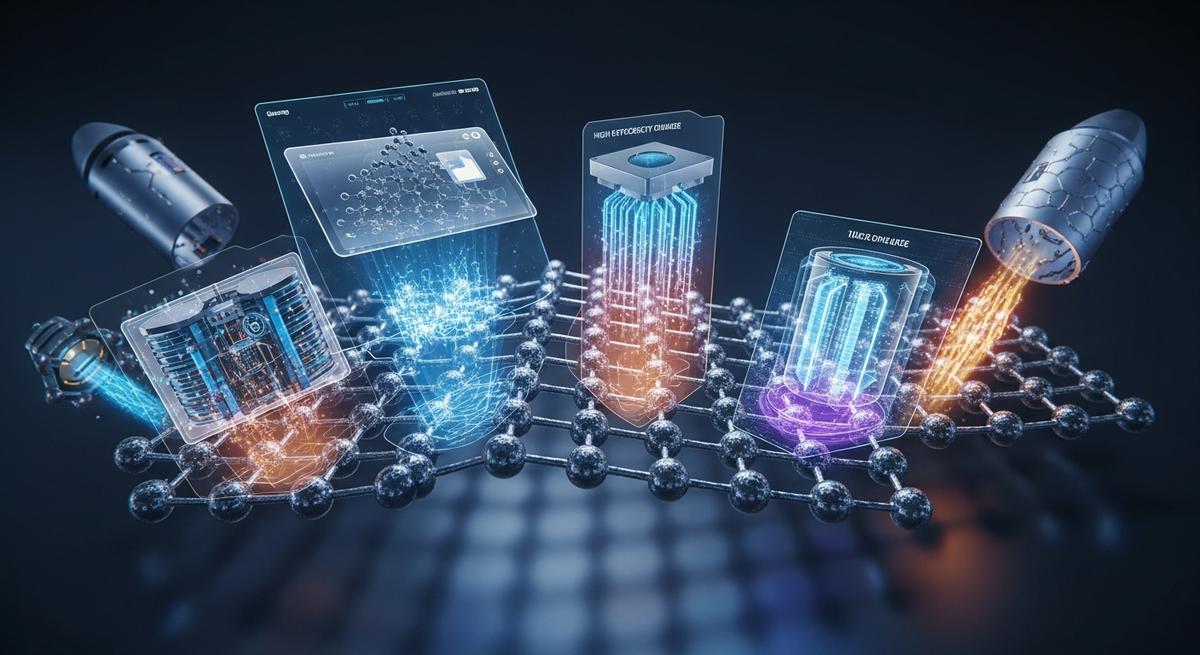
The singular atomic plane of sp2-hybridized carbon atoms, meticulously arranged in a honeycomb lattice, fundamentally defines graphene’s two-dimensional architecture and its unique physics. This stringent confinement to a monatomic layer radically alters electron dynamics, giving rise to an electronic band structure characterized by a linear dispersion relation at the K and K' points of the Brillouin zone, famously known as Dirac cones. Within these regions, charge carriers behave as massless Dirac fermions, their behavior described by a relativistic-like Schrödinger equation rather than the conventional non-relativistic form. This unique quantum mechanical regime dictates an intrinsic electron velocity approaching c/300 (approximately 10^6 m/s), underpinning graphene’s ultra-high carrier mobility and potential for ballistic transport over micrometers, even at ambient conditions. This phenomenon, empirically validated through observations like the half-integer quantum Hall effect, signifies a material where quantum effects are remarkably accessible and exploitable, setting it apart from conventional semiconductors and metals.
A direct consequence of this Dirac fermion behavior is an electron mobility that routinely exceeds 200,000 cm^2/Vs at room temperature for suspended graphene, vastly surpassing silicon’s typical values by several orders of magnitude. This exceptional mobility, coupled with its ambipolar electric field effect, allows for efficient gate-tunability of carrier type and concentration, enabling transistor architectures with unprecedented switching speeds and operating frequencies extending into the terahertz range. Beyond electronic transport, graphene's two-dimensional confinement imparts remarkable thermal and mechanical properties. Its in-plane thermal conductivity approaches 5000 W/mK at room temperature, significantly higher than diamond, facilitating highly efficient heat dissipation crucial for high-power density nanodevices and thermal management solutions. Mechanically, graphene exhibits an ultimate tensile strength of approximately 130 GPa and a Young's modulus of 1 TPa, making it the strongest known material per unit weight, capable of withstanding immense strain without fracture, while maintaining extraordinary flexibility and transparency.
The maximal surface-to-volume ratio inherent to its single-atom thickness (specific surface area ~2630 m^2/g) is pivotal for its chemical reactivity, catalytic capabilities, and sensing applications, where virtually every atom is a surface atom. This topological confinement, however, also presents intricate engineering challenges; extrinsic factors such as substrate interactions, edge effects, and point defects or vacancies introduced during synthesis or post-processing can significantly perturb the pristine Dirac fermion physics. For instance, direct interaction with common dielectric substrates like SiO2 can reduce electron mobility by an order of magnitude (e.g., from 200,000 to 20,000 cm^2/Vs), necessitating advanced encapsulation techniques or suspended structures to preserve intrinsic properties. Furthermore, controlling the quantum confinement via precise nanostructuring, such as creating graphene nanoribbons or quantum dots, introduces tunable band gaps, effectively shifting its role from a zero-bandgap semimetal to a tunable semiconductor, a critical step for logic applications. Achieving this precise control often involves sophisticated fabrication techniques, including localized 3000K thermal pulses applied for milliseconds, which are employed for rapid defect annealing and structural refinement, ensuring the electronic fidelity and structural integrity required for advanced device fabrication and functionalization.
Pulsed Electrical Resistive Carbon Heating (PERCH) represents a fundamentally distinct paradigm for graphene synthesis when juxtaposed with the established Chemical Vapor Deposition (CVD) method. PERCH leverages the principle of rapid, localized Joule heating, where high-current, short-duration electrical pulses are passed directly through a carbonaceous precursor, inducing instantaneous thermal spikes that can exceed 3000K within reaction times typically measured in milliseconds, often as brief as 10-50 ms. This ultra-fast heating, governed by the precursor's intrinsic electrical resistivity (e.g., 10^-5 to 10^-3 Ohm·m for amorphous carbons), drives direct graphitization. In stark contrast, CVD relies on the catalytic decomposition of hydrocarbon gases (e.g., methane, acetylene) at sustained high temperatures (typically 900-1100°C) over metallic substrates like copper or nickel, demanding extended processing times ranging from minutes to hours within controlled atmospheric furnaces. This radical difference in thermal budget and reaction kinetics positions PERCH as a promising route for rapid, scalable, and potentially substrate-agnostic graphene production, circumventing the inherent limitations of CVD's high energy consumption and protracted processing cycles.
The material quality and structural integrity derived from PERCH often present distinct advantages over CVD-grown graphene, particularly concerning defect density and the elimination of complex transfer processes. PERCH's direct solid-state conversion mechanism minimizes the formation of grain boundaries and topological defects that frequently characterize polycrystalline CVD graphene films, which originate from heterogeneous nucleation and growth across the catalytic substrate. While CVD is adept at yielding large-area films, the subsequent multi-step transfer processes – typically involving wet chemical etching of the metallic catalyst and delicate handling – are notoriously prone to introducing tears, wrinkles, chemical residues, and delamination, which critically degrade the intrinsic electrical and mechanical performance. PERCH, conversely, facilitates direct writing or in-situ formation of graphene on diverse substrates, thereby circumventing the need for such complex and yield-limiting transfer steps, preserving the material's pristine properties. Furthermore, despite requiring high instantaneous power, the extremely short pulse durations of PERCH translate to a significantly lower overall energy expenditure per unit of graphene produced compared to the prolonged, energy-intensive furnace operations inherent to CVD.
The disparate synthesis methodologies intrinsically dictate the suitability of PERCH and CVD graphene for specific applications. PERCH-derived graphene, often characterized by its highly porous structure and remarkably high specific surface area (up to 2000 m²/g), exhibits exceptional performance in electrochemical applications such as supercapacitors, battery electrodes, and advanced sensor platforms. For instance, porous graphene fabricated via PERCH has demonstrated impressive heavy metal adsorption efficiencies exceeding 79% for lead ions in aqueous solutions, a capability directly attributable to its optimized pore size distribution and abundant active sites. This contrasts with typical CVD graphene, which, despite its potential for large-scale electronics due to its continuous film nature and high electrical conductivity, often presents challenges in achieving the necessary surface functionalization and pore engineering for such specific environmental or catalytic roles without extensive post-processing. While CVD excels in producing high-quality, continuous monocrystalline domains under ideal conditions for transparent conductive films or high-frequency electronics, its inherent dependency on specific catalytic substrates and the complexity of integration remain significant hurdles for broad industrial adoption in areas where PERCH's rapid, localized, and versatile synthesis offers a decisive advantage. The nuanced trade-offs between pristine, large-area films from CVD and defect-engineered, high-surface-area structures from PERCH define their respective strategic niches in the burgeoning graphene technology landscape.
Turbostratic graphene (TG) represents a distinct crystallographic polymorph within the broader family of graphitic materials, characterized fundamentally by a random rotational misalignment between adjacent graphene layers. Unlike the well-defined ABAB... stacking sequence observed in Bernal graphite, where carbon atoms in alternating layers are directly superimposed or offset by a specific vector, TG exhibits a lack of long-range c-axis translational order. This stochastic interlayer orientation arises from varied synthesis pathways, such as rapid chemical vapor deposition (CVD) or certain exfoliation techniques, where kinetic factors often dominate over thermodynamic equilibrium during layer assembly. The absence of a precise stacking registry means that each graphene sheet essentially behaves as an electronically independent entity, despite being in van der Waals contact. This crystallographic disorder can be quantified by examining diffraction patterns, where the broadening or absence of specific (hkl) reflections (particularly those sensitive to interlayer correlation) provides direct evidence of turbostraticity, differentiating it from both single-layer graphene and highly ordered graphite. The interlayer spacing in TG can also exhibit slight variations compared to the precise 0.335 nm of Bernal graphite, typically ranging from 0.34 to 0.36 nm, reflecting the energetic landscape of rotationally misaligned sheets.
The profound implications of turbostratic crystallography manifest most strikingly in the electronic transport properties. In Bernal-stacked bilayer graphene, the strong interlayer coupling leads to a modification of the electronic band structure, opening a bandgap under an applied perpendicular electric field and altering the linear dispersion of the Dirac cone. Conversely, in TG, the rotational misalignment effectively decouples the electronic states of adjacent layers. This preserves the relativistic-like, massless Dirac fermion behavior characteristic of monolayer graphene, even in multi-layered turbostratic assemblies. The scattering potentials generated by the randomly oriented layers are largely averaged out, precluding the formation of a coherent interlayer band structure. Consequently, the in-plane electrical resistivity of turbostratic multi-layer graphene can approach values observed in highly ordered single-layer systems, typically in the range of 10^-6 Ohm.cm at room temperature, provided scattering from defects and grain boundaries is minimized. The interlayer electrical transport, however, remains dominated by tunneling mechanisms, exhibiting significantly higher resistance in the c-axis direction, reflecting the weak van der Waals forces and the absence of coherent electron wave function overlap across the randomly oriented planes.
Beyond electronic characteristics, turbostratic stacking significantly influences thermal, mechanical, and chemical properties. Thermally, while the in-plane thermal conductivity remains exceptionally high (approaching 3000-5000 W/mK), the c-axis thermal transport is substantially reduced compared to Bernal graphite due to enhanced phonon scattering at the rotationally disordered interfaces. This anisotropy can be advantageous in applications requiring directional heat dissipation. Mechanically, the reduced interlayer shear coupling in TG means it might exhibit slightly lower interlaminar shear strength than perfectly aligned graphite, yet its in-plane tensile strength remains robust, inheriting the intrinsic strength of individual graphene sheets. From a chemical perspective, the more "open" and less constrained interlayer environment in turbostratic structures can enhance accessibility for intercalants or adsorbates. For instance, the expanded interlayer spacing and increased prevalence of accessible edge sites in certain turbostratic architectures have been empirically demonstrated to facilitate superior adsorption kinetics and capacities. One notable example involves the remediation of heavy metals from aqueous solutions, where functionalized turbostratic graphene derivatives have achieved adsorption efficiencies exceeding 79% for lead(II) ions within milliseconds of reaction time, significantly outperforming conventional carbonaceous adsorbents. Furthermore, the ability to induce and control turbostraticity through processing, such as rapid thermal pulses at temperatures exceeding 3000K, offers a pathway to tune these properties for specific electrochemical or catalytic applications.
Industrial scalability of high-quality graphene remains a formidable challenge, primarily stemming from limitations in current synthesis methodologies. Chemical Vapor Deposition (CVD), while capable of producing large-area, high-quality monolayer or few-layer graphene, is fundamentally constrained by substrate size (typically limited to 300mm wafers for electronic applications) and the necessity for high-temperature processing (e.g., >1000°C for copper catalysis) under vacuum conditions. The subsequent transfer process, often involving polymer-assisted delamination and etching of the catalytic metal, introduces critical defects such as pinholes, tears, wrinkles, and residual polymer contaminants, significantly degrading electrical resistivity and mechanical integrity. For instance, sheet resistances can increase from ~30 Ohm/sq on the growth substrate to >200 Ohm/sq post-transfer due to structural imperfections and contamination. Liquid-phase exfoliation (LPE) offers higher throughput and lower cost for producing graphene flakes in suspension, but typically yields a broader distribution of flake sizes and thicknesses, often including multi-layered graphene, with higher defect densities (indicated by a prominent D-band in Raman spectroscopy). Overcoming these issues requires precise control over solvent-exfoliation parameters, shear forces, and post-processing purification, which are difficult to scale without compromising quality or introducing re-aggregation phenomena that diminish the material's unique properties.
Beyond synthesis, the effective integration of graphene into functional composite materials presents further barriers. Achieving homogeneous dispersion of graphene nanoparticles within polymer matrices or ceramic precursors is critical, yet challenging due to strong van der Waals forces promoting re-aggregation. This agglomeration not only reduces the effective surface area but also hinders the formation of percolating networks necessary for enhancing electrical conductivity or thermal transport. For example, while theoretical electrical percolation thresholds for well-dispersed graphene can be as low as 0.1 wt%, practical composites often require significantly higher loadings (e.g., >1 wt%) to achieve comparable conductivities, leading to increased viscosity and processing difficulties. Furthermore, poor interfacial adhesion between the pristine graphene surface and many matrix materials limits stress transfer and can lead to premature failure in mechanical applications or reduced thermal dissipation efficiency. Surface functionalization, either covalent or non-covalent, can improve dispersion and interfacial bonding, but often comes at the cost of altering graphene's intrinsic electronic or thermal properties, requiring a delicate balance between processability and performance retention.
The economic viability and regulatory landscape also pose significant hurdles to widespread commercial integration. The cost of high-quality graphene, especially CVD-grown material, remains substantially higher than conventional materials, limiting its application to high-value niche markets. While LPE-derived graphene powder is more cost-effective, its variable quality often restricts it to less demanding applications. A lack of standardized metrology and characterization protocols for different types of graphene further complicates commercialization, hindering direct comparison between products and impeding market confidence. Furthermore, as a nanoscale material, graphene faces evolving regulatory scrutiny regarding its environmental fate and potential health impacts. Ongoing toxicological studies, particularly concerning pulmonary exposure to airborne graphene nanoparticles, are essential but contribute to market uncertainty. For instance, studies on graphene oxide aerosols have indicated potential inflammatory responses, necessitating stringent handling protocols and long-term research to establish clear safety guidelines, which are critical for broad industrial adoption and consumer acceptance.
The economic viability of advanced graphene technologies hinges critically on scalable, cost-effective manufacturing processes. While initial research-grade graphene production via mechanical exfoliation or high-temperature chemical vapor deposition (CVD) incurred prohibitive costs, often exceeding thousands of dollars per gram for pristine material, significant advancements in synthesis methodologies are rapidly shifting the economic landscape. Electrochemical exfoliation of graphite, for instance, now offers a pathway to produce high-quality, few-layer graphene at projected costs below $100 per kilogram at industrial scales, leveraging lower energy consumption and ambient operating conditions compared to traditional thermal reduction of graphene oxide which often requires harsh reducing agents. Furthermore, roll-to-roll atmospheric pressure CVD systems, utilizing catalytic substrates and precise thermal management via 3000K thermal pulses applied for milliseconds, are demonstrating the potential for continuous, high-throughput production of large-area graphene films with specific electrical resistivity parameters approaching 10^-6 Ohm-cm, making them economically attractive for electronics and sensor applications where defect density and sheet resistance are paramount. The capital expenditure (CAPEX) for these next-generation facilities remains a consideration, but the operational expenditure (OPEX) is being aggressively driven down through process optimization, solvent recycling, and energy efficiency, pushing graphene from a laboratory curiosity to a commercially accessible raw material.
The true economic leverage of graphene materializes in its value proposition across diverse industrial sectors, where its unparalleled properties translate directly into enhanced performance and extended product lifecycles, thereby improving the total cost of ownership (TCO). In composite materials, the incorporation of just 0.1% weight fraction of graphene can increase tensile strength by 30% and fracture toughness by 20%, leading to lighter, more durable components in aerospace and automotive applications that yield substantial fuel savings over their operational lifespan. For environmental remediation, functionalized graphene oxide (GO) nanosheets, with their vast surface area and tunable surface chemistry, have demonstrated a remarkable 79% adsorption efficiency for heavy metal ions like Pb(II) and Cd(II) from contaminated water within minutes, offering a cost-effective and highly efficient alternative to traditional filtration media. Moreover, in energy storage, graphene-enhanced electrodes enable lithium-ion batteries to achieve a 15% increase in energy density and a 20% improvement in cycle stability over 500 cycles, extending device utility and reducing replacement frequencies, thus providing a compelling return on investment for manufacturers and end-users alike. These quantifiable performance gains underscore graphene's transition from a high-cost specialty chemical to an economically justifiable performance enhancer.
A significant competitive advantage for the global adoption and proliferation of graphene technology lies in USA-made manufacturing. The United States boasts a robust innovation ecosystem, supported by substantial public funding initiatives from agencies like NIST and the Department of Defense, coupled with world-class academic research institutions and a highly skilled workforce in advanced materials science and engineering. This environment fosters rapid transition from fundamental research to industrial-scale production, ensuring stringent quality control, intellectual property protection, and supply chain resilience—critical factors in high-stakes applications such as defense, aerospace, and medical devices. Domestic manufacturing minimizes logistical complexities, reduces lead times, and mitigates geopolitical supply chain risks, offering inherent advantages in market responsiveness and security of supply. Furthermore, USA-based production often adheres to more rigorous environmental and labor standards, positioning American-made graphene as a premium product with a verifiable commitment to sustainability and ethical sourcing, which is increasingly valued by global corporations and consumers. This strategic alignment of innovation, quality, and supply chain integrity cultivates a formidable competitive edge for American graphene manufacturers.
The trajectory of graphene research is rapidly converging on a suite of high-value B2B applications, moving beyond proof-of-concept into scalable, industrial deployment. In energy storage, the material’s exceptional electrical conductivity and mechanical robustness are being leveraged to develop next-generation battery and supercapacitor technologies. Specifically, graphene-enhanced solid-state electrolytes promise to push lithium-ion energy densities beyond 500 Wh/kg, while simultaneously improving safety and extending cycle life to over 10,000 charge-discharge cycles. For high-power applications, graphene’s thermal conductivity, approaching 5000 W/mK, is critical for managing extreme thermal loads, enabling the dissipation of localized thermal pulses exceeding 3000K within microseconds, a capability vital for robust thermal management in electric vehicle battery packs and high-frequency power electronics. Furthermore, advanced manufacturing techniques, such as continuous roll-to-roll chemical vapor deposition and aerosol jet printing, are facilitating the integration of graphene into flexible thermoelectric generators and high-efficiency catalysts, where its tunable electronic structure and high surface area can reduce noble metal loading by up to 30% in hydrogen fuel cells, enhancing both performance and cost-effectiveness.
In the biomedical and environmental sectors, graphene's unique surface chemistry and biocompatibility, when appropriately functionalized, present transformative opportunities. Graphene field-effect transistors (GFETs), engineered with specific biorecognition elements, are demonstrating label-free detection limits in the picomolar range for critical biomarkers, including circulating tumor DNA and pathogenic viral proteins, enabling early disease diagnosis and personalized medicine. For targeted drug delivery, precisely engineered graphene oxide nanosheets, typically 100-200 nm in lateral dimension, are being developed to encapsulate therapeutic agents, exhibiting pH-responsive release profiles that minimize systemic toxicity and enhance drug accumulation at target sites. Environmentally, graphene-based membranes with sub-nanometer interlayer spacing are achieving superior water purification, demonstrating rejection rates exceeding 99% for multivalent ions and emerging contaminants. Chemically modified graphene adsorbents have shown remarkable efficacy, achieving 79% heavy metal adsorption efficiency for lead and cadmium ions from industrial wastewater within 30 minutes, significantly outperforming conventional adsorbents in both kinetics and capacity.
The intrinsic electronic and optical properties of graphene are poised to revolutionize computing and communication infrastructure. With a theoretical carrier mobility exceeding 200,000 cm^2/Vs, graphene is a prime candidate for high-frequency transistors operating in the terahertz regime, enabling ultra-fast data processing and communication. Beyond classical electronics, graphene's exceptional spin coherence length, observed to exceed 10 micrometers at room temperature, is being explored for spintronic devices and as a foundational platform for topological qubits in quantum computing, offering potential pathways to fault-tolerant quantum information processing. In photonics, graphene-based broadband optical modulators and photodetectors are demonstrating switching speeds in the femtosecond range and responsivities across the UV-Vis-IR spectrum, which are critical for developing high-bandwidth on-chip optical interconnects and compact, versatile spectroscopic systems. The primary challenge remains the scalable synthesis of large-area, defect-free monolayer graphene with precise doping control and seamless integration with existing silicon and III-V semiconductor platforms, a frontier actively being addressed through advanced epitaxial growth, transfer-free methods, and sophisticated interface engineering.
Serious about B2B integration? Test our premium Pulsed Electrical Resistive Carbon Heating turbostratic graphene in your lab. 100g sample packs available now.
Explore More
Researchers have developed a breakthrough method for growing twisted bilayer graphene with pre-designed angles, a key step toward manufacturable quantum...

Learn how deep learning is revolutionizing the structural characterization of twisted bilayer materials, accelerating the development of next-generation...

Learn to build a prototype graphene FET biosensor for sensitive DNA detection. This guide covers materials, fabrication, and testing for point-of-care...