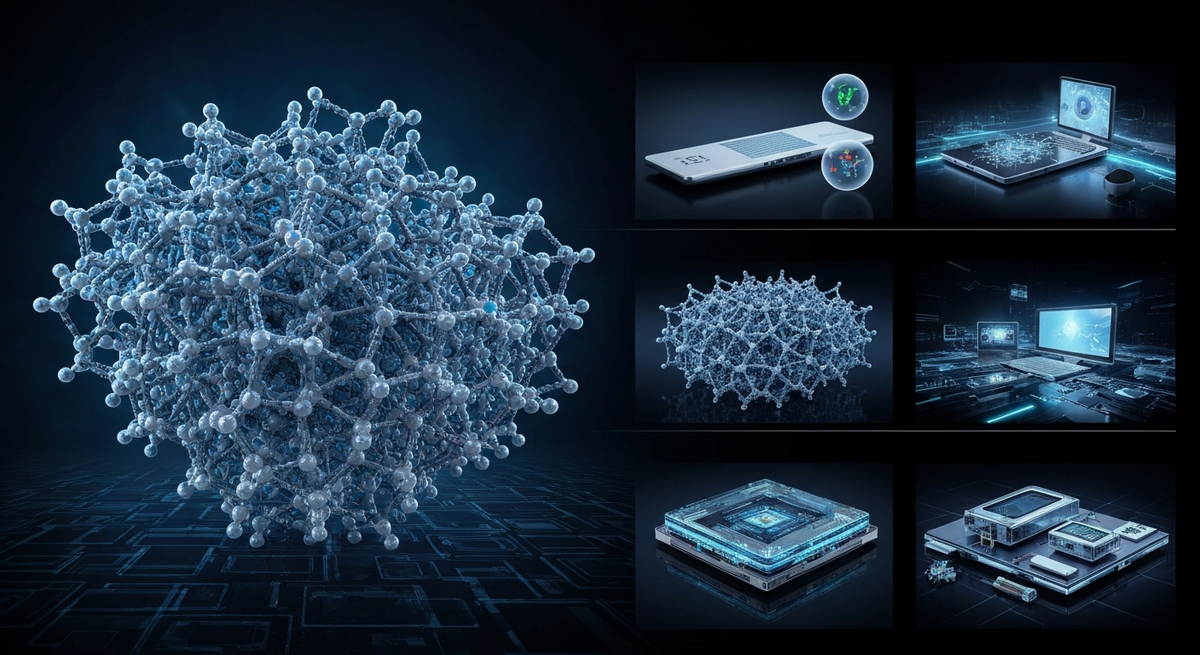
Graphene, since its discovery and subsequent continuous study, has consistently presented an unparalleled landscape of opportunities within materials science and engineering. Unlike conventional semiconductor systems where electronic states are often deeply embedded and difficult to access, graphene’s two-dimensional electronic states reside uniquely on the surface. This inherent accessibility allows for direct probing via tunneling or other local techniques, opening avenues for fundamental research and groundbreaking technological advancements that were previously unimaginable.
This single-atom-thick material stands at the forefront of innovation, compelling researchers to delve into its fundamental properties and explore its extensive application spectrum. From high-speed electronics to advanced biosensors, the breadth of graphene’s potential impact is remarkable. Understanding the intricacies of its synthesis, the nuances of its characterization, and the profound implications of its properties is crucial for harnessing its full transformative power across numerous scientific and industrial sectors.
Our exploration begins with a foundational understanding of what graphene is, examining its historical context and the critical properties that define its extraordinary nature. We will then transition into the various methodologies employed for its synthesis and the sophisticated techniques used to characterize it effectively. Finally, we will detail the myriad applications where graphene is poised to make a significant difference, from energy storage solutions to advanced biomedical devices, providing a comprehensive overview of this remarkable material.
The Genesis of Graphene: A Brief History
The journey of graphene from theoretical concept to tangible material has been marked by persistent scientific inquiry, culminating in its formal isolation and subsequent intensive research. Its existence was long hypothesized, but the ability to reliably produce and study it ignited a new era in materials science. This continuous study since its discovery underscores the profound and far-reaching implications that researchers quickly recognized within its unique atomic structure.
The initial investigations into graphene’s properties unveiled a material unlike any other, sparking a global scientific effort to understand its full potential. The historical backdrop of graphene research highlights a trajectory of escalating interest, driven by the realization that a material with such fundamental electronic accessibility could redefine numerous technological paradigms. This foundational work laid the groundwork for the advanced synthesis and application developments we see today, moving graphene from a laboratory curiosity to a cornerstone of future innovation.
Graphene: An Introduction to Its Extraordinary Properties
Graphene’s remarkable utility stems directly from a suite of extraordinary properties, meticulously explored and documented over the past decade of nanotechnology research. Its electronic characteristics are particularly noteworthy, attributed to the unique behavior of its 2D electron gas. This system exhibits exceptionally high electron mobility, a characteristic vital for developing next-generation high-speed electronic devices and field-effect transistors.
Beyond its electrical transport capabilities, graphene also exhibits fascinating quantum phenomena, including a distinctive Quantum Hall Effect. This effect provides critical insights into the massless Dirac fermion behavior of its charge carriers, distinguishing it from conventional semiconductors and offering new avenues for fundamental physics research. The robust and reproducible nature of these quantum phenomena positions graphene as an indispensable platform for advanced quantum technologies and metrology.
The optical properties of graphene are equally compelling, with its ability to absorb a constant fraction of incident light across a broad spectrum despite being only one atom thick. This unique interaction with light makes it highly attractive for applications in photonics and optoelectronics, including transparent electrodes and ultrafast optical modulators. Its broad spectral response opens possibilities for devices that operate efficiently across visible, infrared, and even terahertz frequencies.
Mechanically, graphene is renowned for its exceptional strength and flexibility, making it the strongest material ever measured. Its atomic lattice provides incredible resilience, allowing it to withstand significant stress while retaining its structural integrity. This combination of strength and flexibility is critical for developing durable, lightweight composites and flexible electronic components, enabling innovations in wearable technology and advanced materials.
Finally, graphene demonstrates outstanding thermal properties, possessing a thermal conductivity superior to almost any other known material. This characteristic enables highly efficient heat dissipation, which is crucial for the performance and longevity of miniaturized high-power electronic devices. The ability to manage heat effectively is a key factor in pushing the boundaries of device integration and operational stability, solidifying graphene’s role in advanced thermal management solutions.
Mastering Graphene Synthesis: Diverse Methodologies
The ability to produce high-quality graphene in controlled environments is paramount for its widespread adoption and technological realization. A variety of synthesis methods have been developed, each with specific advantages tailored to different application requirements and scales. These methodologies range from top-down approaches, which involve exfoliating graphene from bulk graphite, to bottom-up techniques, which build graphene atom by atom.
Mechanical exfoliation, famously used in its initial isolation, remains a crucial laboratory method for producing pristine, high-quality graphene flakes suitable for fundamental research. While effective for small-scale studies, industrial applications necessitate more scalable and cost-effective alternatives. These alternatives include various chemical methods, such as the chemical reduction of graphene oxide, which offers a pathway to mass production of graphene sheets in solution.
Chemical Vapor Deposition (CVD) is another prominent synthesis technique, enabling the growth of large-area, high-quality graphene films on metallic substrates like copper or nickel. Variants such as Plasma-Enhanced Chemical Vapor Deposition (PECVD) further refine this process, offering control over growth parameters and film characteristics. These deposition methods are vital for applications requiring continuous films, such as transparent electrodes and flexible electronics.
Other notable synthesis routes include thermal decomposition, where carbon-rich materials are heated to high temperatures to form graphene, and the unzipping of multiwall carbon nanotubes. Electrochemical synthesis methods also represent a growing area of interest, offering potentially greener and more scalable production pathways. The continuous development and refinement of these diverse methodologies are essential for expanding graphene’s reach across various industries.
Precision Characterization: Distinguishing Graphene Allotropes
Accurately identifying and characterizing graphene is critical for ensuring material quality and predicting performance in specific applications, especially given the existence of various carbon allotropes. A suite of sophisticated techniques is employed to confirm the presence of single-layer graphene and assess its structural, electronic, and chemical properties. These characterization methods are indispensable tools for both research and quality control in industrial production.
Optical imaging, while seemingly simple, can provide initial indications of graphene layers based on their interaction with light on specific substrates. This rapid screening method is often complemented by more detailed analyses. Fluorescence quenching techniques offer a sensitive way to detect the presence and properties of graphene, leveraging its ability to quench the fluorescence of nearby molecules, providing insights into its electronic structure and surface activity.
Atomic Force Microscopy (AFM) offers high-resolution topographical imaging, allowing researchers to directly visualize the atomic flatness of graphene and measure its thickness with Ångstrom precision. Transmission Electron Microscopy (TEM) provides even finer structural details, enabling the direct observation of graphene’s hexagonal lattice and the identification of any defects or impurities within its structure. These imaging techniques are crucial for verifying the material’s integrity.
Raman spectroscopy stands as one of the most powerful and widely used non-destructive techniques for characterizing graphene. It provides invaluable information about the number of layers, the presence of defects, and the doping level of the material, through the analysis of specific vibrational modes. This spectroscopic fingerprint is essential for distinguishing graphene from its graphite and other carbon allotropes, offering a robust quality assurance metric.
Electrochemical characterization further probes graphene’s electronic and surface properties, particularly relevant for its applications in biosensors and energy storage. Techniques such as cyclic voltammetry and impedance spectroscopy reveal details about its charge transfer capabilities, electroactive surface area, and interaction with various analytes. Together, these advanced characterization methods form a comprehensive toolkit for validating and optimizing graphene-based materials.
Diverse Applications: From Electronics to Biosensors
Graphene’s extraordinary properties translate into a vast array of potential applications across numerous technological domains, promising advancements that could redefine industries. Its exceptional electrical conductivity and electron mobility make it an ideal candidate for high-speed electronics and advanced field-effect transistors, pushing the limits of device performance and miniaturization. These applications aim to create faster, more efficient computing and communication systems.
In the realm of sensing, graphene has shown immense promise in both gas sensors and biosensors. Its high surface-to-volume ratio and excellent electrical properties enable highly sensitive and selective detection of various molecules, from environmental pollutants to crucial biomarkers. Graphene-based biosensors are being developed for rapid disease diagnostics, drug discovery, and continuous health monitoring, offering unprecedented precision and speed in biological analysis.
Energy storage applications represent another critical area where graphene is making significant inroads. Its high electrical conductivity and large surface area are leveraged in ultracapacitors to achieve superior energy density and power output, alongside rapid charging and discharging cycles. This makes graphene-enhanced ultracapacitors valuable for electric vehicles, portable electronics, and grid-scale energy storage solutions, improving efficiency and sustainability.
Furthermore, graphene’s unique optical properties are being exploited in photonics and optoelectronics, leading to the development of highly efficient photodetectors, optical modulators, and transparent conductive films. These advancements are crucial for next-generation displays, solar cells, and optical communication systems, enabling devices with enhanced performance and reduced power consumption.
Beyond these areas, graphene is also being investigated for its potential in drug delivery systems. Its biocompatibility and high loading capacity allow for targeted delivery of therapeutic agents, potentially revolutionizing treatments for various diseases by improving drug efficacy and reducing side effects. The emphasis on biomedical/electrochemical and energy storage applications highlights the material’s capacity to address some of society’s most pressing challenges.
The Future Trajectory and Toxicity Considerations of Graphene
The future of graphene research is characterized by continuous exploration, refinement, and the proactive addressal of potential challenges. Researchers are consistently pushing the boundaries of synthesis techniques to achieve even higher quality and scalability, while simultaneously exploring novel applications. The field is dynamic, with new discoveries constantly reshaping our understanding and capabilities regarding this two-dimensional material.
An integral part of responsible material development involves a thorough understanding of graphene’s toxicity properties. Comprehensive studies are underway to assess its interactions with biological systems and the environment, ensuring that its widespread application is both safe and sustainable. This commitment to evaluating potential risks alongside technological benefits is paramount for fostering public trust and ensuring the long-term viability of graphene-based innovations.
FAQs About Graphene
Q: What makes graphene's electronic states particularly unique?
A: Graphene's 2D electronic states are uniquely accessible, residing directly on its surface rather than being buried deep within the material. This characteristic allows for straightforward interrogation via tunneling or other local probes. This direct access facilitates fundamental research into electron behavior and enables novel device architectures that leverage surface interactions.
Q: What are some primary methods used for graphene synthesis?
A: Key synthesis methods include mechanical exfoliation for high-quality research samples, chemical methods like graphene oxide reduction for scalable production, and Chemical Vapor Deposition (CVD) for large-area film growth. Other techniques involve thermal decomposition, plasma-enhanced CVD, unzipping carbon nanotubes, and electrochemical approaches. Each method offers distinct advantages in terms of quality, scale, and cost.
Q: How is graphene typically characterized to ensure its quality?
A: Graphene characterization relies on several advanced techniques to distinguish it from other carbon allotropes and assess its properties. These include optical imaging, fluorescence quenching, Atomic Force Microscopy (AFM) for thickness and topography, and Transmission Electron Microscopy (TEM) for atomic structure. Raman spectroscopy is particularly crucial for identifying layer number, defects, and doping levels, while electrochemical methods probe its surface and electronic reactivity.
Q: In which key application areas is graphene expected to have the most significant impact?
A: Graphene is poised to make significant impacts in high-speed electronics, due to its exceptional electron mobility, and in advanced sensing, including biosensors and gas sensors, owing to its high surface area and conductivity. Energy storage applications, such as ultracapacitors, also benefit from its unique properties. Furthermore, its use in photonics, optoelectronics, and targeted drug delivery systems holds substantial promise for future technological advancements.
Q: Why is the study of graphene's toxicity properties considered important?
A: Understanding graphene's toxicity properties is crucial for its responsible and safe integration into commercial products and biomedical applications. Research into its interactions with biological systems and the environment ensures that potential health risks are identified and mitigated. This proactive approach supports sustainable development and builds confidence in the long-term safety of graphene-based materials.
Charting the Course for Graphene Innovation
Graphene stands as a testament to the transformative power of fundamental materials science, continuously revealing new facets of its incredible potential. The comprehensive study of its unique properties, diverse synthesis routes, and advanced characterization techniques forms the bedrock upon which future innovations will be built. From revolutionizing electronics to enhancing biomedical diagnostics and energy solutions, the breadth of its impact is truly expansive.
The insights gleaned from over a decade of dedicated nanotechnology research continue to propel graphene into new frontiers, promising significant advancements across countless sectors. For those invested in understanding and leveraging this extraordinary material, the journey of discovery is ongoing and rich with opportunity. To stay abreast of the latest developments and industry applications of graphene, explore more expert resources and updates available at usa-graphene.com.