
A New Era of Graphene Engineering: Pre-Designing Twist Angles on Demand
Researchers have developed a breakthrough method for growing twisted bilayer graphene with pre-designed angles, a key step toward manufacturable quantum...
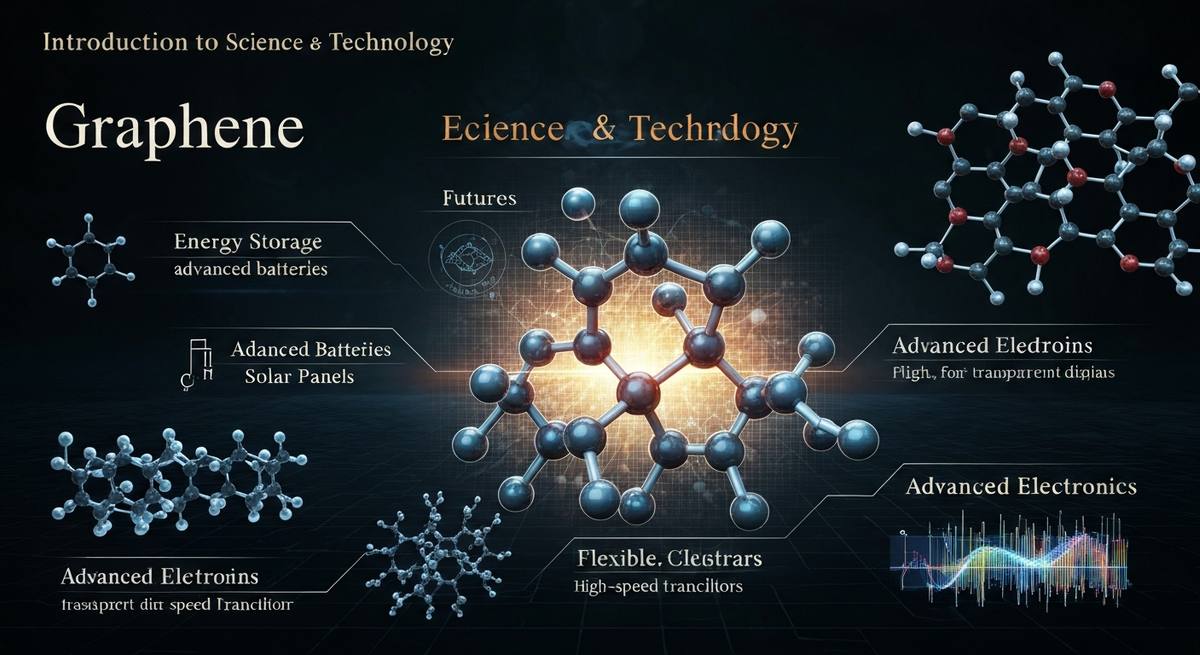
Graphene, since its formal discovery and isolation, has continuously captured the attention of the scientific and industrial communities. This monolayer of carbon atoms arranged in a hexagonal lattice represents a material with truly unique opportunities, fundamentally distinct from most conventional semiconductor systems. Unlike the buried electronic states found in many materials, graphene's two-dimensional electronic states are directly accessible, offering unparalleled ease for investigation via tunneling or other local probes. This direct accessibility is a cornerstone of its immense research potential and its promise for revolutionary technological advancements.
The profound interest in graphene stems from an exceptional combination of properties that are unmatched by other known materials. These characteristics pave the way for its integration into an expansive array of applications, spanning from ultra-fast electronics to highly sensitive biosensors and advanced energy storage solutions. Understanding graphene requires a comprehensive approach, encompassing its intricate synthesis pathways, its multifaceted properties, and the diverse fields where its potential is now being realized. The journey from fundamental research to practical implementation highlights a material poised to redefine numerous industries.
This article provides an in-depth look at the foundational aspects of graphene, drawing insights from leading research in the field. We will discuss its historical context, delve into its defining properties, explore the various methods employed for its synthesis, and examine the crucial techniques used for its characterization. Furthermore, we will highlight some of its most important applications, particularly in biomedical, electrochemical, and energy storage domains, aligning with the emphasis placed by experts with decades of experience in nanotechnology research. This comprehensive overview aims to initiate new thinking and provide a robust resource for those working with graphene and related materials.
Graphene's remarkable suite of properties defines its potential across a myriad of applications, distinguishing it from conventional materials. Its electronic structure is particularly captivating, featuring massless Dirac fermions that exhibit exceptionally high electron mobility, even at room temperature. This intrinsic characteristic makes graphene an ideal candidate for high-speed electronic devices, enabling performance far exceeding silicon-based systems. The unique behavior of these charge carriers also leads to fascinating quantum phenomena, such as the anomalous quantum Hall effect, which provides fundamental insights into two-dimensional physics and offers pathways for novel quantum electronic applications.
Beyond its electronic prowess, graphene demonstrates extraordinary optical properties. It absorbs a surprisingly high percentage of white light, approximately 2.3% per layer, across a broad spectrum, from visible to infrared. This characteristic makes it suitable for transparent conductors, photodetectors, and various optoelectronic devices. Its inherent transparency coupled with its electrical conductivity allows for the development of flexible and transparent electrodes, critical for next-generation displays and solar cells. The interaction of light with graphene's unique electronic structure opens doors for innovative photonic applications, including saturable absorbers and efficient light emitters.
Mechanically, graphene stands as the strongest material ever tested, possessing an impressive tensile strength significantly greater than steel, yet maintaining remarkable flexibility. This combination of strength and flexibility is crucial for developing durable, stretchable electronics and robust composite materials. Its ability to withstand considerable strain without fracturing, coupled with its lightweight nature, makes it attractive for aerospace, automotive, and wearable technology sectors. The material's mechanical resilience ensures longevity and performance in demanding environments, offering structural integrity at an atomic scale.
Furthermore, graphene exhibits unprecedented thermal conductivity, surpassing all other known materials. This property is vital for efficient heat dissipation in compact, high-performance electronic devices, preventing overheating and extending device lifespan. The rapid transfer of heat across its lattice makes graphene an excellent thermal management material, critical for the miniaturization and increased power density of modern electronics. Understanding and harnessing these diverse properties collectively underpins the vast potential of graphene in advancing multiple technological fronts.
The ability to reliably produce high-quality graphene is fundamental to its widespread adoption and application. Over the years, numerous synthesis methods have been developed, each with its own advantages and limitations in terms of quality, scalability, and cost. The initial discovery of graphene was achieved through mechanical exfoliation, famously involving Scotch tape to peel off single layers from graphite. While instrumental for fundamental research due to its ability to produce pristine, high-quality flakes, this method is inherently low-yield and not suitable for industrial-scale production.
To overcome the limitations of mechanical exfoliation, chemical methods have emerged as a significant pathway. One prominent approach involves the oxidation of graphite to create graphite oxide, followed by exfoliation into graphene oxide (GO) sheets. Subsequent reduction of GO, typically using chemical reducing agents or thermal annealing, yields reduced graphene oxide (rGO), which retains many of graphene's desirable properties. This method is highly scalable and cost-effective, making it attractive for applications requiring large quantities of graphene, despite rGO often possessing more defects than mechanically exfoliated graphene.
Chemical Vapor Deposition (CVD) represents another pivotal synthesis technique, particularly for producing large-area, high-quality graphene films on various substrates. In CVD, carbon-containing gases are decomposed at high temperatures over a catalytic metal substrate, such as copper or nickel, leading to the growth of graphene. This method allows for precise control over the number of graphene layers and their quality, making it ideal for electronic and optoelectronic applications where uniformity and purity are paramount. Plasma-enhanced CVD (PECVD) offers a variation that can lower growth temperatures and enhance deposition rates, expanding its applicability.
Other notable synthesis routes include thermal decomposition of silicon carbide, known as epitaxial growth, which produces high-quality graphene directly on a semiconductor substrate. The unzipping of multiwall carbon nanotubes offers a pathway to create graphene nanoribbons with controlled edge structures. Electrochemical synthesis provides a potentially green and scalable method for producing graphene flakes from graphite in liquid solutions. Each of these diverse techniques contributes to the expanding toolkit for graphene production, enabling researchers and industries to select the most appropriate method based on specific application requirements and desired material characteristics.
Accurate characterization is paramount for distinguishing graphene from its carbon allotropes and for ensuring material quality, purity, and structural integrity. Given graphene's atomic thickness, specialized techniques are required to confirm its monolayer nature and assess its properties. Optical imaging, while simple, can provide initial insights into the number of layers on certain substrates by observing differences in contrast, offering a quick preliminary assessment for large flakes.
Atomic Force Microscopy (AFM) is a powerful tool for directly visualizing graphene's topography and measuring its thickness with sub-nanometer precision. AFM scans reveal the surface morphology, edge structures, and the presence of defects or contaminants, providing crucial information about the material's physical dimensions. This technique is indispensable for confirming the single-layer or few-layer nature of graphene samples, which directly correlates with its electronic and optical properties.
Transmission Electron Microscopy (TEM) offers atomic-resolution imaging, allowing researchers to directly observe the hexagonal lattice of carbon atoms and identify structural defects, grain boundaries, and the orientation of graphene flakes. High-resolution TEM can visualize the atomic arrangement, providing definitive proof of graphene's structure. Electron diffraction patterns obtained via TEM also serve as a fingerprint for graphene, confirming its crystalline quality and number of layers.
Raman Spectroscopy is arguably the most widely used and non-destructive technique for characterizing graphene. It provides rich information about the number of layers, doping levels, strain, and defect density by analyzing characteristic peaks (D, G, and 2D bands). The intensity ratio and full width at half maximum of the 2D peak, in particular, are strong indicators of the number of graphene layers. This technique offers a rapid and reliable method for assessing the quality and properties of graphene samples, from research labs to industrial quality control.
Electrochemical characterization techniques, such as cyclic voltammetry and electrochemical impedance spectroscopy, are also vital, particularly for graphene intended for energy storage and biosensing applications. These methods probe the material's electrical conductivity, electroactive surface area, and charge transfer kinetics, directly informing its performance in electrochemical devices. Together, these sophisticated characterization tools form a comprehensive suite necessary for advancing graphene research and development, ensuring that the synthesized material meets the rigorous demands of specific applications.
Graphene's exceptional surface area, high electrical conductivity, and unique electronic properties make it an outstanding material for advanced sensing applications, particularly in biosensors and gas sensors. In the realm of biosensing, graphene-based platforms offer unprecedented sensitivity and selectivity for detecting a wide range of biological molecules. Graphene-based enzymatic biosensors leverage the material's ability to facilitate electron transfer, enhancing the performance of enzyme-catalyzed reactions for detecting glucose, lactate, and other biomarkers with high accuracy.
For DNA biosensors, graphene's ability to interact with nucleic acids, coupled with its electrical properties, enables rapid and label-free detection of genetic material. This is crucial for diagnostics, pathogen identification, and personalized medicine. Furthermore, graphene sensors are being developed for the detection of heavy metal ions, providing highly sensitive and selective platforms for environmental monitoring and public health. The potential for graphene in rapid sequencing of DNA molecules is particularly exciting, promising to accelerate genomic research and clinical applications by exploiting its atomic thinness as a nanopore membrane.
In gas sensing, graphene exhibits remarkable sensitivity to various gas molecules, even at very low concentrations. This high sensitivity arises from its two-dimensional structure, where every atom is a surface atom, maximizing interaction with gas molecules. The adsorption of gas molecules on graphene's surface induces changes in its electrical resistance, which can be precisely measured. Researchers are actively exploring methods to further improve graphene's gas sensing capabilities by introducing dopants or defects, creating more active sites for molecular adsorption and enhancing selectivity towards specific gases like CO, NO, NO2, and NH3. The density of states of the molecule-graphene system and the I-V curves provide critical insights into the sensing mechanism, guiding the design of more effective sensors.
Beyond direct sensing, graphene is also being explored as a membrane for gas separation, offering high permeability and selectivity due to its atomic thinness and precisely controllable pore sizes. This could lead to more energy-efficient and cost-effective processes for separating industrial gases or capturing carbon dioxide. The continuous advancements in graphene-based sensing technologies underscore its potential to significantly impact environmental monitoring, medical diagnostics, and industrial safety, providing real-time, highly accurate detection capabilities.
Graphene's extraordinary electrical conductivity, high surface area, and robust mechanical properties position it as a foundational material for next-generation energy storage and high-speed electronics. In energy storage, graphene is transforming the landscape of ultracapacitors, also known as supercapacitors. These devices utilize graphene's immense surface area to store charge electrostatically, offering significantly higher power densities and faster charge-discharge rates compared to conventional batteries. This makes graphene-based ultracapacitors ideal for applications requiring rapid power delivery, such as electric vehicles, portable electronics, and grid-scale energy storage systems. The material's durability ensures long cycle life, contributing to sustainable energy solutions.
Another critical application in energy is the use of graphene as transparent electrodes. Graphene's high optical transparency and excellent electrical conductivity make it a superior alternative to indium tin oxide (ITO) in flexible displays, organic light-emitting diodes (OLEDs), and solar cells. Its mechanical flexibility allows for the development of bendable and wearable electronic devices, expanding the design possibilities for consumer electronics and advanced sensor technologies. N-doped graphene is also being investigated for oxygen reduction reactions in fuel cells, where its catalytic activity and stability offer a promising pathway to enhance the efficiency and lifespan of these vital clean energy devices.
In the realm of electronics, graphene's unparalleled electron mobility makes it a prime candidate for high-speed electronics and field-effect transistors (FETs) that operate at terahertz frequencies. Its atomic thinness allows for extreme miniaturization and efficient gate control, enabling the development of faster and more power-efficient computing devices. The potential for graphene to replace or augment silicon in advanced integrated circuits is a significant driver of research, promising to push the boundaries of processing speed and data communication. These advancements are crucial for the next generation of computing, artificial intelligence, and telecommunications.
Furthermore, graphene's unique interaction with light extends its utility into photonics and optoelectronics. Its broad linear optical absorption and saturable absorption properties are being exploited in ultrafast lasers and optical modulators. Graphene-based photodetectors exhibit high responsivity and broad spectral response, while its luminescence properties are under investigation for novel light-emitting devices. The integration of graphene into these diverse energy and electronic applications underscores its versatility and its capacity to address some of the most pressing technological challenges of our era, from efficient power management to ultra-fast data processing.
While graphene’s technological applications receive considerable attention, its potential in biomedical fields, particularly drug delivery, and the critical assessment of its toxicity are equally important areas of research. Graphene's high surface area, functionalizability, and biocompatibility make it an attractive platform for targeted drug delivery systems. Researchers are exploring how graphene and its derivatives can transport therapeutic agents directly to diseased cells, enhancing treatment efficacy while minimizing side effects. Its ability to cross biological barriers and its capacity for chemical modification allow for precise control over drug loading and release kinetics, opening new avenues for personalized medicine.
However, alongside these promising biomedical applications, a thorough understanding of graphene's toxicity properties is absolutely essential. Any material intended for internal use or widespread environmental interaction must undergo rigorous safety evaluations. Studies are continuously investigating the potential impact of graphene nanoparticles on biological systems, including cellular uptake, biodistribution, metabolism, and excretion. Factors such as particle size, shape, surface chemistry, and functionalization significantly influence graphene's interactions with living organisms, necessitating a nuanced approach to toxicity assessment.
Early research into graphene’s interactions with various cell types has provided valuable insights, guiding the development of safer graphene-based materials for biomedical use. The goal is to design graphene materials that are highly effective for their intended application while being benign to biological systems and the environment. This includes developing strategies for controlled degradation or safe excretion from the body. Responsible development of graphene technology mandates a proactive and comprehensive evaluation of its potential hazards, ensuring that its widespread adoption is both innovative and safe.
The future of graphene research continues to prioritize both its immense potential and its safe integration into society. Understanding its toxicity is not a barrier but a critical component of its successful translation from laboratory to market. This holistic approach, encompassing both groundbreaking applications and stringent safety protocols, ensures that graphene can truly fulfill its promise as a transformative material for drug delivery and other advanced biomedical solutions, without compromising health or environmental well-being.
---
Q1: What makes graphene's electronic properties particularly unique?
A1: Graphene's electronic properties are unique due to its two-dimensional nature, where electrons behave as massless Dirac fermions. These electronic states are not deeply buried but are directly accessible on the surface. This allows for exceptionally high electron mobility and the observation of fascinating quantum phenomena, such as the anomalous quantum Hall effect, distinct from conventional semiconductors.
Q2: What are the primary methods for synthesizing graphene?
A2: Primary synthesis methods include mechanical exfoliation for high-quality, small flakes, and chemical methods like the reduction of graphene oxide for scalable production. Chemical Vapor Deposition (CVD) is crucial for growing large-area, high-quality graphene films on various substrates. Other methods involve thermal decomposition of silicon carbide and unzipping multiwall carbon nanotubes.
Q3: How is graphene typically characterized to confirm its properties?
A3: Graphene is typically characterized using several advanced techniques. Atomic Force Microscopy (AFM) measures its thickness and morphology, while Transmission Electron Microscopy (TEM) provides atomic-resolution imaging of its lattice structure. Raman Spectroscopy is a widely used non-destructive method that offers information on the number of layers, defects, and strain through characteristic spectral peaks.
Q4: Name two key applications of graphene in energy storage.
A4: Two key applications of graphene in energy storage are ultracapacitors and transparent electrodes. Graphene-based ultracapacitors offer superior power density and rapid charge-discharge cycles due to graphene's high surface area. As transparent electrodes, graphene's conductivity and transparency make it ideal for flexible displays, solar cells, and other optoelectronic devices, potentially replacing materials like ITO.
Q5: Why is studying graphene's toxicity important for its future development?
A5: Studying graphene's toxicity is crucial for its safe and responsible integration, especially in biomedical applications like drug delivery, and for widespread industrial adoption. Understanding how graphene interacts with biological systems, including its cellular uptake, biodistribution, and potential environmental impact, is essential. This research ensures that graphene-based technologies are not only innovative but also biocompatible and environmentally benign.
---
The journey of graphene, from its theoretical conception to its isolation and current widespread research, underscores its profound impact on materials science and technology. Its unique combination of exceptional electrical, mechanical, optical, and thermal properties positions it as a cornerstone for future innovation across an incredible spectrum of applications. From revolutionizing high-speed electronics and advanced energy storage solutions to pioneering sensitive biosensors and effective drug delivery systems, graphene is consistently demonstrating its capacity to transcend the limitations of traditional materials.
As research continues to refine synthesis techniques, enhance characterization methods, and meticulously evaluate long-term safety, the potential for graphene to reshape various industries only grows. The insights gleaned from comprehensive studies, like those detailed by leading experts, provide the foundation for ongoing development and the responsible deployment of this remarkable material. The future of graphene remains bright, promising a new era of technological advancement. Explore more insights and stay updated on the latest advancements by visiting usa-graphene.com.
Serious about B2B integration? Test our premium Pulsed Electrical Resistive Carbon Heating turbostratic graphene in your lab. 100g sample packs available now.
Explore More
Researchers have developed a breakthrough method for growing twisted bilayer graphene with pre-designed angles, a key step toward manufacturable quantum...

Learn how deep learning is revolutionizing the structural characterization of twisted bilayer materials, accelerating the development of next-generation...

Learn to build a prototype graphene FET biosensor for sensitive DNA detection. This guide covers materials, fabrication, and testing for point-of-care...